
Last updated: 7th May, 2026
TL;DR: 77% of teenagers are sleep-deprived, and most parents don’t know what to do about it beyond telling them to relax. This post covers practical, research-backed ways to help your teen handle pressure: better conversations, sleep habits, movement, and knowing when to step back. Tick the checklist at the bottom to see what you’re already doing and what’s worth adding.
Something shifts when your teenager stops talking to you.
Not in a dramatic way. Just quietly. They come home, go to their room, and you’re left wondering if everything’s okay or if you’re reading too much into it.
83% of teens name school and grades as their top stressor, according to the American Psychological Association. And 53% feel pressure to be exceptional in a way that feels impossible to live up to. That’s a lot of weight for a 16-year-old carrying a full homework load and a phone full of social comparison.
The good news? You don’t need a perfect plan. You need a few things that actually work. Here’s what the research says, and what I’ve seen make a real difference.
What Helps Teens Handle Pressure Better?
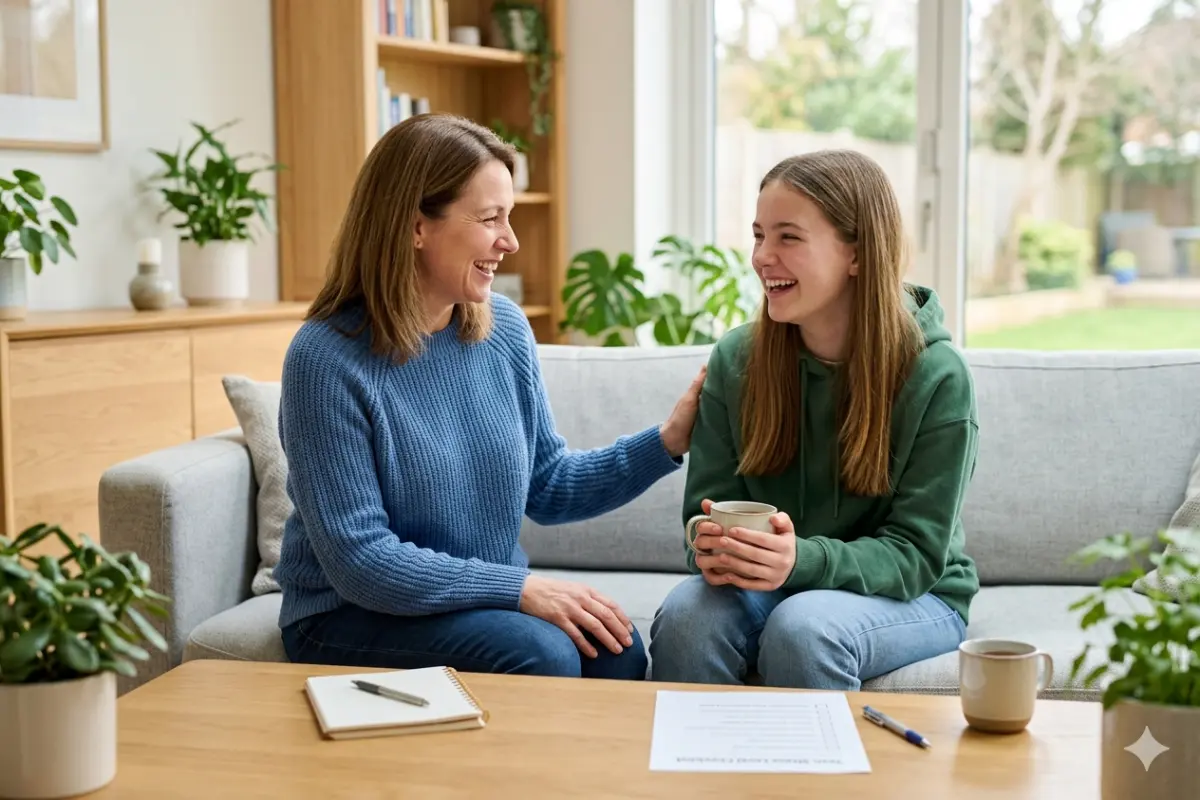
The most effective thing a parent can do is stay close without taking over. Teens manage stress better when they feel supported but still in control of their own problems. That means listening more than fixing, letting them fail sometimes, and keeping the lines of communication open without pressure.
That probably sounds simple. It’s not, especially when you can see your kid struggling and every instinct is telling you to step in.
Cincinnati Children’s Hospital puts it well: teens who hear a parent say, “I’m feeling stressed right now, so I’m going for a walk” are more likely to reach for healthy coping tools themselves. You’re the model. Whether they’re watching or not, they’re watching.
I’ve seen this firsthand. When I started being more open about how I handle my own hard days, talking through it rather than pretending everything was fine, my teenager started doing the same. It took a few weeks. Then one evening, they just started telling me about their day without me asking. That doesn’t happen by accident.
Three things that consistently help teens feel less alone in their stress:
- Eating dinner together, even just a few nights a week. Family routines create emotional safety during high-pressure periods.
- Asking open questions instead of yes/no questions. “What was the worst part of today?” lands differently than “Was school okay?”
- Not dismissing what feels big to them. A falling out with a friend is not a small thing at 15.
Why Sleep Is the One Thing Most Parents Underestimate
Poor sleep makes everything worse. Harder to concentrate, harder to regulate emotion, harder to recover from a bad day.
77% of high school students get less than the recommended 8 hours a night. Most are getting around 6. That’s a two-hour deficit that compounds across the week, and it directly amplifies every other stressor in their life.
A 2026 randomized controlled trial found that teenagers who went through an 8-week mindfulness program showed significant improvements in both sleep quality and academic stress compared to the control group. The connection between sleep and stress runs in both directions. Stress disrupts sleep. Poor sleep makes stress harder to manage. You have to address both.
What actually moves the needle on teen sleep:
Get the phone out of the bedroom at night. Not as a punishment. Frame it as a boundary you’re setting for the whole house. Keeping phones out of bedrooms from 10 pm to 6 am is one of the most concrete recommendations from researchers. It reduces late-night scrolling and the anxiety that follows.
Keep wake times consistent on weekends. Sleeping in two hours every Saturday pushes the body clock forward and makes Monday mornings brutal. Small ask. Big payoff.
Wind down for 30 minutes before bed. Reading, stretching, and a warm shower. Simple things. Keep screens out of it.
For more on how stress and sleep feed each other, our complete stress management guide covers the full picture.
Movement Is Not Optional
Exercise is probably the most underused stress tool available to teenagers.
The American Academy of Child and Adolescent Psychiatry recommends physical activity as one of the primary non-clinical interventions for teen stress. It burns off the cortisol and adrenaline that the body produces under pressure. It improves sleep. It regulates mood. It’s one of the few things with consistent, replicated evidence behind it.
The tricky part with teenagers is that they can’t feel like a prescription. “Go exercise because it’s good for your stress” lands about as well as “just calm down.”
What actually works better:
Find something they already like. Skateboarding counts. Dancing in their room counts. A walk with a friend counts. The form doesn’t matter much. Consistency does.
The APA recommends spending time in nature as a particularly effective stress reliever. Green space has measurable effects on anxiety and depression. Even a short walk outside beats a gym session they’re dreading.
If your teen plays sports, watch for the opposite problem. Overcommitment in extracurriculars is its own stressor. Teens involved in too many activities often show higher stress than those with a more manageable schedule. Help them learn to pace, not just perform.
Teaching Teens to Manage Their Own Thoughts
This one takes time. But it’s worth building.
Cincinnati Children’s Hospital calls it “calm self-talk.” When a teen is running late and spiraling, the skill is asking: What’s actually going to happen if I arrive five minutes after it starts? Usually, nothing catastrophic. The thought is worse than the reality.
You can’t teach this in a lecture. You model it. You practise it out loud when you’re the one who’s late or frustrated.
Research published in JAMA Pediatrics found that childhood anxiety grew 29% and depression grew 27% between 2016 and 2020. Teens who learn to challenge negative thoughts early are genuinely better equipped to handle what comes next.
A few tools that help teenagers manage their own thinking:
Journaling. Research shows that writing about positive experiences and gratitude reduces mental distress and improves well-being. It doesn’t have to be daily. Even occasional journaling builds self-awareness.
Breaking tasks down. A huge project isn’t the stressor. The feeling that it’s unmanageable is. HealthyChildren.org recommends teaching teens to break large work into smaller pieces and check things off as they go. Simple. Works.
Sorting what they can and can’t control. You can’t change the fact that there’s a test on Friday. You can control how much you study before then. Brown University Health frames this as one of the most transferable skills a teenager can develop.
Our post on helping teens cope with pressure covers what to watch for when these tools aren’t enough.
Mindfulness Is More Practical Than It Sounds
A lot of parents hear “mindfulness” and picture incense and meditation cushions. The actual evidence is more grounded than that.
A 2026 randomized controlled trial in Frontiers in Psychology found that an 8-week mindfulness program significantly reduced academic stress and improved sleep quality in teenagers compared to a control group. A scoping review published in 2026 confirmed that mindfulness therapy improves mood, reduces anxiety, improves sleep, and builds resilience in adolescents.
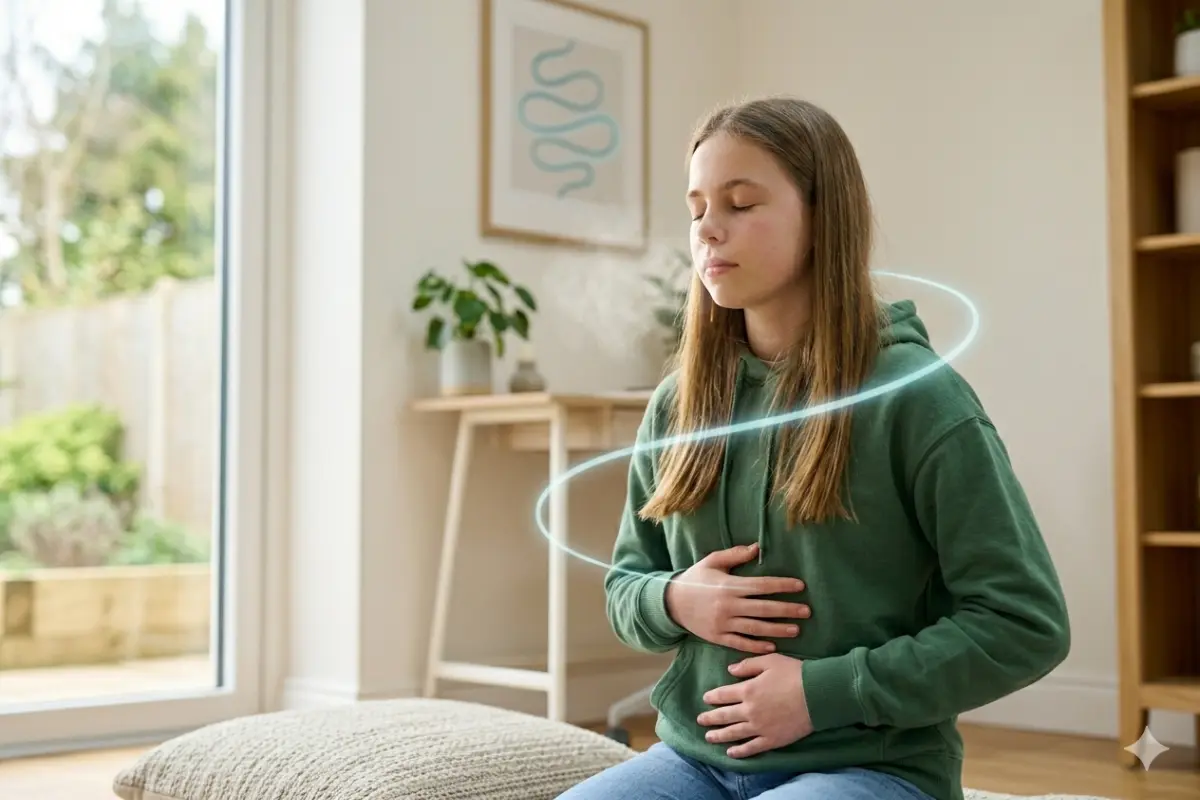
The practical entry point for most teenagers is breathing.
Deep breathing exercises work because they activate the parasympathetic nervous system. Slow the breath, slow the heart rate, lower the cortisol. It takes about 2 minutes and works mid-panic, not just in calm moments.
Apps like Calm or Headspace give teenagers a structured starting point without needing a parent to guide them through it. That independence matters.
Progressive muscle relaxation is another one worth showing them. Tense a muscle group for 5 seconds, release it. Work through the body from feet to face. It’s particularly effective before bed and before high-stakes situations like exams.
A 5-week mindfulness program for teenagers aged 13 to 18 produced significantly less mental distress compared to a control group in peer-reviewed research. You don’t need a full program. Starting with 5 minutes a day is enough.
For a practical daily structure, the daily habits that reduce stress post is a good companion read.
When to Step Back and Let Them Struggle
This one is hard to hear. But it’s important.
Overparenting is a documented contributor to teen stress. When parents solve every problem, teenagers never learn that they can solve problems themselves. The result is a kid who fears failure because they’ve never recovered from one.
MedlinePlus is direct about this: resist solving your teen’s problems. Brainstorm together. Let them lead. Let them fail at low-stakes things so they build the confidence to handle high-stakes ones.
This does not mean stepping back when things are serious. If your teenager is showing signs of persistent sadness, self-harm, or talking about death, get professional help immediately. Those are not moments to wait and see.
But the argument with a friend, the disappointing grade, the social awkwardness of being a teenager: let those breathe. Your kid can handle more than you think. And they need to know that.
Our signs your body needs a reset post can help you distinguish everyday pressure from something that needs more attention.
Conclusion
You’re probably already doing more right than you realise.
Three things to take from this:
First, consistency matters more than intensity. One good conversation a week beats a big heart-to-heart once a month. Steady presence is what teenagers actually need.
Second, your own behaviour is the most powerful tool you have. How you handle stress teaches your teenager how to handle stress. That’s not pressure. That’s an opportunity.
Third, if something feels serious, get help early. The complete stress management guide is a good next step, and your child’s school counsellor or GP can point you toward professional support if you need it.
Go tick the checklist below. See where you’re already strong, and pick one thing to work on this week. That’s enough to start.
Stress Levels in Teens: Parent Checklist
Tick what you are already doing. See your score at the bottom. Pick one area to work on this week.
Connection and communication
Sleep
Movement
Thinking skills
Mindfulness
Stepping back
Your score
You’re already building a solid foundation. Pick one unchecked area to deepen this week.
Good start. Choose 2 or 3 things from the unchecked sections and focus there this month.
Start with the Connection and Sleep sections. Those two alone make a real difference.
Frequently Asked Questions
What is the most effective way to reduce stress in teenagers?
The most consistent evidence points to a combination of physical activity, adequate sleep, and a strong parental connection. The APA’s research shows that teens who feel close to adults in their lives and have structured routines are significantly more resilient to stress. No single fix works in isolation. Sleep, movement, and open communication together produce the most sustained results.
How much sleep do teenagers need to manage stress effectively?
Teenagers aged 13 to 17 need 8 to 10 hours of sleep per night, according to established guidelines. Most are getting around 6. The shortfall compounds daily, amplifying emotional reactivity, reducing concentration, and making stress physically harder to recover from. Keeping phones out of bedrooms and maintaining consistent wake times on weekends are the two highest-impact sleep interventions parents can make.
Does exercise actually help teenagers with stress?
Yes. Exercise lowers cortisol and adrenaline, improves mood, and supports better sleep. The American Academy of Child and Adolescent Psychiatry recommends it as one of the primary non-clinical tools for managing teen stress. The form doesn’t matter much. A walk, a sport, dancing in their room. What matters is consistency, and that it doesn’t feel forced. Overcommitment in structured activities can be its own stressor, so watch for balance.
Can mindfulness really help teenagers with stress?
Yes. A 2026 randomized controlled trial found that an 8-week mindfulness program significantly reduced academic stress and improved sleep quality in teenagers. A 2026 scoping review confirmed mindfulness improves mood, anxiety, sleep, and resilience in adolescents. The practical starting point is a simple breathing exercise, 2 to 5 minutes a day. Apps like Calm or Headspace provide structured guidance that teenagers can use independently.
When should a parent get professional help for a stressed teenager?
Get professional help immediately if your teenager talks about suicide or death, shows signs of self-harm, or has completely withdrawn from all activity and connection. For sustained signs like persistent sadness lasting more than 2 weeks, inability to manage daily tasks, or substance use as coping, consult a school counsellor, GP, or mental health professional promptly. Only 19 to 20% of teenagers with depression receive adequate treatment, which means most struggling teens go unsupported. Early intervention consistently produces better outcomes.
About The Author:
Elena Swan is a freelance health and wellness writer specializing in mental illness. She likes researching complex health topics and presenting the information in a way that everyday people can understand so they can apply it to their own lives. View her portfolio at elenaswanwrites.com.
Medical disclaimer: This content is for informational purposes only and is not a substitute for professional medical advice.