
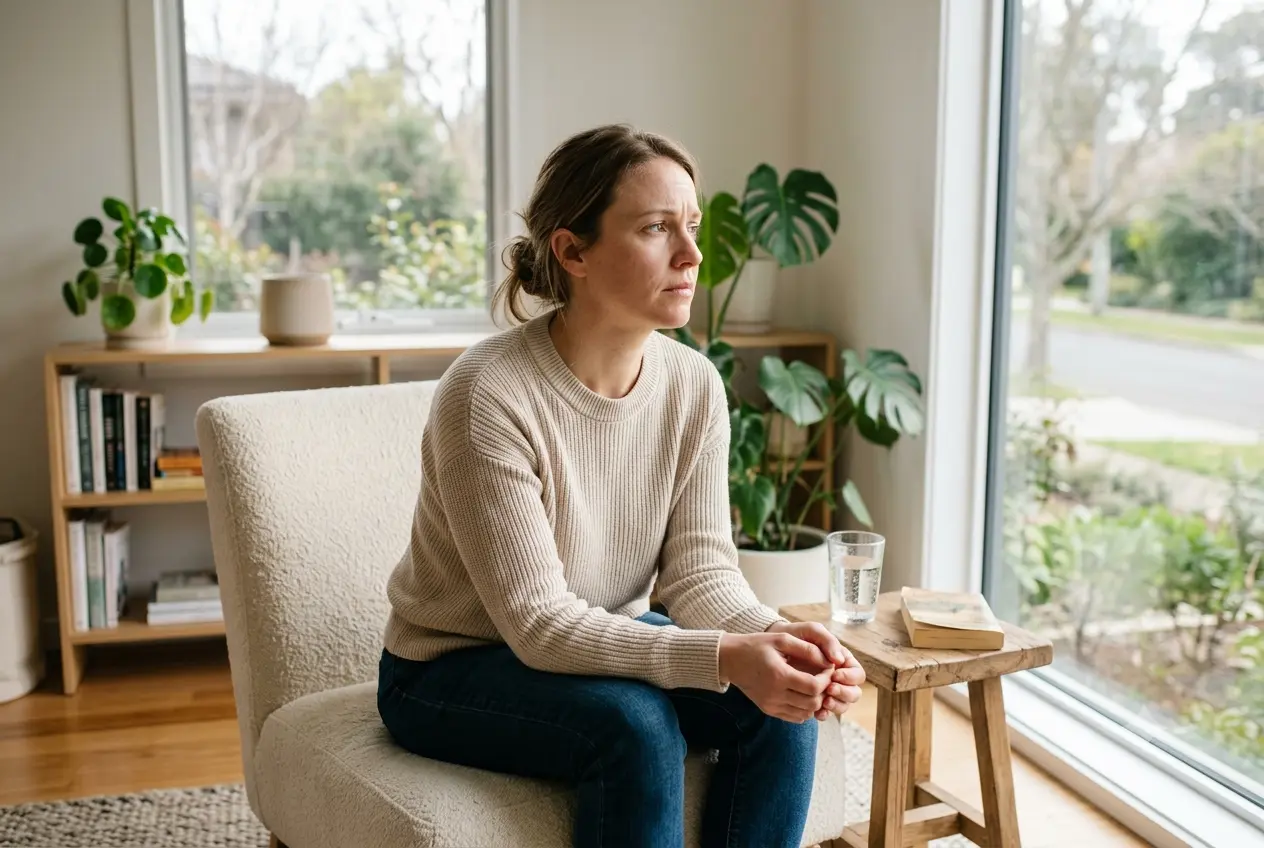
Anxiety is one of the most common human experiences, and the desire to feel less anxious and more genuinely relaxed is something that most people can relate to regardless of whether they have a clinical anxiety diagnosis.
The difference between occasional anxiety, which is a normal response to genuine stressors, and the kind of persistent, disproportionate anxiety that significantly affects quality of life is worth understanding clearly, because the strategies most effective for each are somewhat different.
What is consistent across both is that anxiety does not simply go away through willpower or avoidance; it responds to specific skills, habits, and sometimes professional intervention that address both the physiological and psychological dimensions of the anxious experience.
This article offers a practical, honest guide to the most effective approaches available.
What Happens in Your Body When You Feel Anxious?
Anxiety is not primarily a thought; it is a physiological state that involves activation of the sympathetic nervous system, increases in heart rate and respiration, release of stress hormones, and a cascade of physical sensations that can feel alarming precisely because they are so physical and so intense.
Understanding this physiological dimension of anxiety is genuinely helpful because it explains why trying to think your way out of anxiety using logic and self-reassurance alone is often ineffective, and why physical interventions that directly address the nervous system response are frequently more immediately useful.
Slow, diaphragmatic breathing is one of the most powerful and immediately accessible tools for reducing acute anxiety, because it directly activates the parasympathetic nervous system in ways that counteract the fight-or-flight activation of anxious states.
Progressive muscle relaxation, cold water on the face and wrists, and vigorous brief physical movement are other body-based interventions that can interrupt the physiological anxiety cycle more effectively than cognitive approaches alone, particularly in moments of acute anxiety.
Developing a toolkit of physical interventions gives you genuine agency over the anxious experience rather than leaving you dependent entirely on your ability to think differently while in the grip of a physiological state that makes clear thinking difficult.
How Can You Change the Thought Patterns That Make Anxiety Worse?
While physiological interventions are essential for managing acute anxiety, the thought patterns that consistently trigger or amplify anxious responses also deserve deliberate attention and reshaping if lasting improvement is the goal.
Anxiety is characteristically associated with catastrophizing, which involves treating uncertain outcomes as definitively negative; with overestimating the probability of feared outcomes; and with underestimating one’s own ability to cope with difficulty if it does occur.
Learning to recognize these patterns when they are happening and to examine them with a more balanced and evidence-based perspective is the core of cognitive approaches to anxiety management that have extensive research support.
This kind of cognitive restructuring is a skill that takes practice to develop, and that is most effectively learned in the context of a therapeutic relationship with someone trained to guide the process, but the basic principles can be applied independently by people who understand them clearly.
The goal is not the elimination of all worry or negative thought but the development of a more accurate and balanced relationship with uncertainty that does not treat every unknown as a threat requiring urgent attention.
When Anxiety Relief Strategies Start Making Anxiety Worse
Some anxiety coping strategies can provide quick relief while quietly keeping the anxiety cycle alive. Avoidance, repeated reassurance, constant checking, and making calmness a requirement before doing normal activities can sometimes reduce distress in the moment while strengthening fear over time.
The important distinction is between coping with anxiety and organizing your life around preventing anxiety.
For example, taking slow breaths before an important meeting can help you stay present. Refusing to attend the meeting unless you first feel completely calm is different.
That difference matters because anxiety can teach the brain to treat ordinary discomfort as a problem that must be removed immediately.
Immediate relief is not always long-term progress
Avoiding a feared situation often feels sensible because anxiety drops when the situation disappears. The problem comes when avoidance becomes the main response.
Over time, you may begin to believe that you could not handle the situation without avoiding it. This can gradually shrink the range of activities you feel comfortable doing.
The same pattern can appear with reassurance. Asking someone for support is healthy. Asking the same question repeatedly because the first answer never feels certain enough can become part of the anxiety cycle.
Health-related anxiety can also involve repeated attention to physical sensations and repeated attempts to obtain reassurance.
The goal is not to remove every coping behavior. The goal is to notice whether the behavior helps you move forward or simply helps you escape discomfort.
What Daily Habits Can Help You Feel Less Anxious?
The daily environment and routine in which a person lives has a significant impact on their baseline level of anxiety and their ability to access calm, and making thoughtful adjustments to both can produce meaningful and lasting improvements in overall anxiety levels.
Chronic sleep deprivation, excessive caffeine consumption, irregular meals, constant news and social media exposure, and a schedule without adequate downtime and recovery are all environmental and lifestyle factors that chronically elevate the baseline activation of the nervous system in ways that make anxiety more frequent and more intense.
Addressing these factors systematically, by prioritizing sleep, moderating stimulants, building genuine rest and recovery into the daily schedule, and limiting exposure to the content and situations that consistently trigger anxious responses, creates a physiological baseline from which anxiety is both less likely to arise and more manageable when it does.
Physical movement, time in natural environments, and consistent engagement with absorbing activities that produce genuine absorption and flow are among the most effective environmental supports for a calmer baseline state. Building these supports into the daily routine as consistent practices rather than occasional interventions produces cumulative benefits that grow over time.
Can Mindfulness Really Help Reduce Anxiety?
Mindfulness, understood simply as the practice of deliberately bringing attention to present experience with an attitude of openness and non-judgment rather than automatic reactivity, has one of the strongest research bases of any psychological approach to anxiety management.
The anxious mind characteristically lives in the future, anticipating threats and generating worry about outcomes that have not yet occurred. Mindfulness practice provides a direct antidote by training attention to consistently return to the present moment rather than being carried away by anxious forecasting. Even a few minutes of formal mindfulness practice daily, sustained consistently over weeks and months, produces measurable changes in the brain’s anxiety response that show up both in subjective experience and in neuroimaging studies.
Informal mindfulness, the practice of bringing deliberate, non-judgmental attention to everyday activities like eating, walking, or washing dishes, extends the benefits of formal practice into the full texture of daily life in ways that create a more general quality of present-moment awareness. Like all skills, mindfulness develops with practice and produces more significant results the more consistently and seriously it is pursued.
Mindfulness can help some people, but it should not be presented as a universal cure. NCCIH describes the evidence as showing a small to modest benefit for anxiety-related symptoms, while noting that research on specific anxiety disorders remains more limited.
Anxiety Does Not Always Look Like Worry
Anxiety can appear as physical symptoms, irritability, poor concentration, sleep problems, restlessness, avoidance, or a constant feeling that something is wrong. Some people continue working and meeting responsibilities while experiencing substantial internal distress, so outward functioning does not always show how much anxiety someone is carrying.
The physical first presentation
Some people notice their body before they recognize the emotional pattern.
They may notice a racing heart, muscle tension, stomach discomfort, dizziness, shortness of breath, sweating, fatigue, or difficulty sleeping. These symptoms can occur with anxiety, but they should not automatically be blamed on anxiety.
New, severe, unusual, or persistent physical symptoms deserve appropriate medical attention. MedlinePlus notes that health conditions such as thyroid problems and heart rhythm problems can sometimes be linked with anxiety-like symptoms.
When anxiety looks like overcontrol
Anxiety does not always feel like fear.
It can show up as excessive planning, perfectionism, repeated checking, difficulty making decisions, or an intense need to prevent mistakes.
For some people, controlling every detail becomes an attempt to create certainty in situations that cannot provide certainty.
When you can function but still struggle
A person can go to work, manage a family, attend school, and appear successful while spending much of the day managing anxious thoughts or physical tension.
That is why the effect on daily life matters more than appearances alone. NIMH notes that anxiety disorders can interfere with work, school, relationships, and routine activities.
When Should You Get Professional Help for Anxiety?
Self-directed anxiety management is genuinely effective for many people, but there are situations in which anxiety has reached a level of severity, persistence, or functional impairment that warrants professional evaluation and treatment rather than continued self-management alone.
If anxiety is significantly interfering with work, relationships, daily functioning, or quality of life, or if self-directed strategies have been applied consistently without adequate improvement, professional support from a trained clinician is the appropriate next step.
Connecting with a mental health clinic in Aiea, HI provides access to evidence-based assessment and treatment from clinicians who specialize in anxiety and related conditions and who can provide the kind of personalized, skilled support that produces more rapid and comprehensive improvement than self-directed approaches alone.
Effective treatments for anxiety disorders exist and are well-validated, and there is no reason to continue experiencing significant anxiety-related impairment when professional help is available. Seeking that help is one of the most direct and effective things a person with persistent anxiety can do to improve their quality of life.
When Standard Anxiety Advice Does Not Work
Not every useful strategy works equally well for every person. When anxiety remains high despite reasonable effort, the answer may be a mismatch between the strategy and the problem rather than a lack of discipline.
When relaxation makes you more uncomfortable
Relaxation often sounds like an obvious answer to anxiety. Yet some people become more focused on uncomfortable body sensations when they deliberately turn their attention inward.
NCCIH notes that relaxation approaches are generally considered safe but can sometimes produce increased anxiety, intrusive thoughts, or fear of losing control.
If that happens, it makes sense to discuss another approach with a qualified professional instead of forcing the same exercise harder.
When mindfulness becomes another form of monitoring
Mindfulness should not become a new reason to repeatedly ask whether your heart is beating normally or whether you are feeling anxious enough.
The purpose is to notice experience without automatically reacting to it.
If meditation turns into constant analysis, a more practical approach may involve guided instruction or a different skill.
When lifestyle changes help but do not solve the problem
Sleep, physical activity, caffeine reduction, and other healthy habits can support anxiety management. They do not replace treatment when anxiety is severe or significantly disrupts daily life. NIMH specifically notes that healthy habits can help but cannot replace treatment for an anxiety disorder.
When adding more techniques is not the answer
A common mistake is collecting more and more techniques without identifying what keeps the anxiety going.
A better question is:
What happens immediately before the anxiety, what do I do next, and what happens after that behavior?
That sequence can reveal whether avoidance, reassurance, checking, uncertainty, sleep problems, substance use, or another factor is keeping the cycle active.
When professional assessment becomes the better next step
NICE uses a stepped approach that considers symptom severity, functional impairment, previous treatment response, and individual circumstances. When symptoms continue despite lower intensity approaches or cause marked impairment, higher intensity psychological treatment or medication may be considered with professional guidance.
Advanced Anxiety Management: Build a Personal Feedback Loop
Advanced anxiety management is less about collecting more techniques and more about learning which response helps in a specific situation. A useful feedback loop tracks the trigger, interpretation, physical response, behavior, short-term result, and longer-term result. This turns vague frustration into information you can use to adjust your approach.
Step 1: Detect the trigger
Start with what happened immediately before the anxiety increased.
It could be an email, physical sensation, conversation, deadline, uncertain decision, social situation, or unexpected event.
Step 2: Map your interpretation
Ask what your mind predicted.
Was the thought:
“I am going to fail.”
“Something is seriously wrong.”
“They will judge me.”
“I need certainty before I can continue.”
The goal is not to judge the thought. The goal is to identify it.
Step 3: Identify your behavior
Next, record what you did.
Did you avoid the situation? Did you check something repeatedly? Did you ask someone for reassurance? Did you distract yourself? Did you stay with the activity?
This step is often more revealing than simply rating anxiety from zero to ten.
Step 4: Measure the immediate result
Did the behavior make you feel better?
If yes, that matters. But it is only half the story.
Step 5: Measure the later result
Ask what happened afterward.
Did the behavior make the next similar situation easier? Or did you become more dependent on the same coping response?
This distinction can reveal whether a strategy is helping you build confidence or simply providing temporary escape.
Step 6: Measure recovery instead of perfection
Do not make “I felt no anxiety” the only measure of progress.
Better questions include:
Did I recover faster?
Did I avoid less?
Did I need less reassurance?
Did I continue the activity while anxious?
Did uncertainty become easier to tolerate?
This approach creates a more useful picture of progress.
Step 7: Build a relapse plan
Anxiety can return during stressful periods. That does not automatically mean that previous progress has disappeared.
Identify your early warning signs and the few strategies that reliably help. Then decide what you will do before anxiety becomes disruptive.
This is close to how evidence-based care can use routine outcome measures and ongoing review to determine whether an approach is actually helping. NICE recommends reviewing progress and outcomes as part of anxiety care.
Conclusion
Feeling less anxious and more genuinely relaxed is an achievable goal that responds to a combination of physiological tools, cognitive skill development, supportive environmental and lifestyle adjustments, mindfulness practice, and professional support when indicated.
No single approach works equally well for every person or every type of anxiety, which is why building a diverse toolkit of strategies and being willing to experiment and adjust is important. The most consistent path to lasting improvement is patient, sustained investment in the approaches that work best for your specific situation.
About The Author:
Elena Swan is a freelance health and wellness writer specializing in mental illness. She likes researching complex health topics and presenting the information in a way that everyday people can understand so they can apply it to their own lives. View her portfolio at elenaswanwrites.com.
Disclaimer: This post is for informational purposes only and is not a substitute for professional medical advice, diagnosis, or treatment. If you are experiencing severe stress, mental health difficulties, or thoughts of self-harm, please seek support from a qualified healthcare professional.