
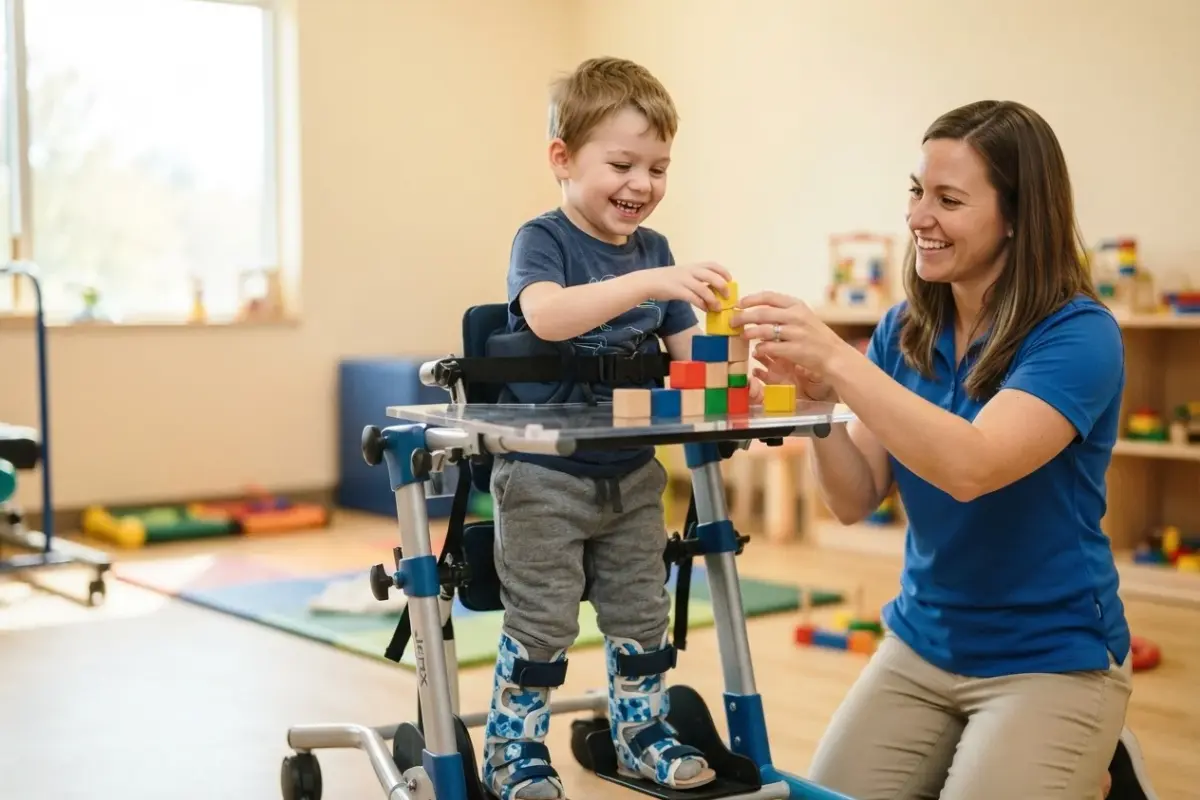
Children with mobility challenges often struggle with the physical and psychological effects of prolonged sitting. Standing programs, also known as standing frames or standing therapy, offer structured opportunities for these children to bear weight on their legs and maintain an upright position with appropriate support.
These programs can range from daily home routines to formal therapy sessions conducted by physical therapists and occupational specialists. Understanding the full scope of benefits associated with standing programs helps parents, caregivers, and healthcare professionals make informed decisions about treatment options for children facing mobility limitations.
How Do Standing Programs Build Stronger Bones in Children?
One of the most significant physiological benefits of standing programs is their positive impact on bone health. Children who participate in regular standing activities experience increased load bearing through their skeletal system, which stimulates bone growth and strengthens the skeletal structure. When bones support the body’s weight, osteocytes and osteoblasts respond by building stronger bone matrix, resulting in improved bone density over time. This benefit becomes especially important for children with mobility challenges who would otherwise have minimal weight-bearing activity in their daily routines.
Low bone density presents a serious health risk for children with certain mobility limitations, potentially leading to fractures from minor falls or bumps that would not injure children without underlying bone weakness. Standing programs can help prevent this vulnerability by maintaining and increasing bone strength through consistent, controlled weight-bearing activity.
Research and clinical experience across pediatric rehabilitation settings have demonstrated that children who engage in regular standing show measurably better bone health outcomes compared to those without such programs. The earlier a child begins standing activities, the more significant the long-term benefits for skeletal development and durability.
How Can Supported Standing Affect Heart and Lung Health?
Standing programs contribute meaningfully to cardiovascular and respiratory health by engaging the body’s major muscle groups and demanding increased oxygen circulation. When a child stands, the heart must work to pump blood against gravity, particularly to the extremities, which strengthens the cardiovascular system over time.
Additionally, an upright posture allows the lungs to expand more fully than when sitting or lying down, improving respiratory capacity and oxygen intake. These functional improvements translate to better overall stamina and reduced fatigue during daily activities.
Children with mobility challenges often experience lower cardiovascular fitness due to limited activity, which can create a cycle of deconditioning and reduced physical capability. Standing programs interrupt this negative cycle by consistently demanding aerobic effort from the body.
For example, a child who stands for thirty minutes daily will develop greater heart rate efficiency and blood pressure regulation compared to one who remains seated for most of the day. The respiratory benefits of upright posture also support better sleep quality and reduced risk of respiratory complications, which are particular concerns for children with certain mobility conditions.
Can Standing Programs Reduce Digestive and Urinary Issues?
The position of the body significantly influences digestive efficiency and healthy urinary function, making standing programs beneficial for these systems as well. When a child stands or maintains an upright posture, gravity naturally assists in moving food through the digestive tract, reducing constipation and promoting more regular bowel movements.
Many children with mobility challenges experience gastrointestinal difficulties related to prolonged sitting, and standing programs can alleviate these issues without requiring medication. Similarly, a standing position supports better urinary function and reduces urinary tract complications that sometimes accompany mobility limitations.
Healthcare providers working with children in rehabilitation settings frequently observe improvements in digestive regularity within weeks of implementing consistent standing programs. These functional improvements reduce discomfort and promote better overall health without invasive interventions.
For example, a child who experiences chronic constipation due to limited activity may see significant improvement simply by incorporating thirty to forty minutes of standing time daily into their routine. Parents and caregivers appreciate these benefits because they reduce the need for stool softeners and other medications, contributing to simpler daily care routines.
Why Eye-Level Social Interaction Matters for Kids
Beyond the physical advantages, standing programs provide important psychological and emotional benefits for children with mobility challenges. When a child stands, they achieve a perspective and vantage point similar to their peers without mobility limitations, which can boost confidence and reduce feelings of isolation or difference.
Standing programs often facilitate more meaningful social interactions because the child is at eye level with standing peers and can participate more fully in group activities or classroom settings. This psychological empowerment should not be underestimated, as confidence and positive self-image are crucial to healthy child development.
Children who participate in standing programs frequently report improved mood and greater motivation for other therapeutic activities. The sense of accomplishment that comes from standing, combined with the increased physical capability it provides, creates positive momentum in a child’s overall rehabilitation journey.
For example, a child who successfully stands for extended periods may become more willing to engage in other challenging therapies or physical activities. The social benefits extend to caregivers and family members as well, as standing programs often provide opportunities for meaningful interaction and shared participation in therapy goals.
How Can Supported Standing Help Muscle Tone and Joint Flexibility?
Standing programs support healthy muscle development by engaging antigravity muscles in the legs, core, and back that might otherwise remain underdeveloped. These muscles strengthen through the work required to maintain balance and posture, even with external support.
Regular standing activities help prevent muscle contractures and maintain flexibility in the lower extremities, addressing one of the common secondary complications of prolonged immobility. As muscle strength improves, children often gain greater independence in transfers, positioning changes, and other functional movements.
Physical therapists design standing programs that gradually increase demands on the musculoskeletal system as a child’s strength and tolerance improve. During these progressive weight-bearing sessions, therapists who work with children diagnosed with spastic diplegia or hemiplegia rely on a pediatric stander for cerebral palsy to safely support proper alignment while gradually building muscle engagement over time. This progressive approach ensures that muscle development occurs safely while building capability at a pace suited to each child’s individual needs. The flexibility benefits prove particularly important for maintaining range of motion in joints that could otherwise become fixed in contracted positions, a consequence of extended immobility.
Practical Advice: How to Plan a Supported Standing Program
- Ask the child’s pediatric physical therapist or rehabilitation team whether supported standing fits the child’s medical and functional needs.
- Set a clear goal, such as comfortable positioning, taking part in an activity, or working on a specific movement outcome.
- Start with a comfortable, clinician-guided tolerance period. Increase time only as advised and as the child remains comfortable.
- Check skin, straps, alignment, and pressure points before and after standing. Stop and seek advice if the child has pain, unusual distress, skin changes, or new symptoms.
- Review the program regularly. A child’s growth, joint range, health, equipment fit, and goals can change.
Standing time and positioning should be individualized. Published dosage recommendations vary by goal and are not a universal prescription for every child.
Conclusion
Standing programs for children with mobility challenges offer a comprehensive range of benefits that extend far beyond the simple act of weight bearing. From improving bone density and cardiovascular function to supporting digestive health and psychological well-being, these structured programs address multiple aspects of a child’s physical and emotional development.
The benefits accumulate over time, with consistent participation producing measurable improvements in strength, function, and independence. For children facing mobility limitations, standing programs represent a valuable therapeutic intervention that caregivers, parents, and healthcare professionals should consider as part of a comprehensive treatment and wellness plan. By investing in standing programs early and maintaining them as part of regular routines, families can help ensure better long-term health outcomes and improved quality of life for children with mobility challenges.
About The Author:
Jose Smith writes about accessible healthcare, preventive wellness, and the value of
informed patient participation. To learn more about family medicine and primary care services.