

Pregnancy and childbirth bring incredible changes, both emotionally and physically. While many women embrace these changes, it is also natural to want to regain a sense of familiarity with their pre-pregnancy appearance. The body goes through significant transformations, including weight fluctuations, stretched skin, and hormonal shifts. Recovery takes time, and every woman’s journey is different.
Regaining appearance is not about perfection but about feeling confident and comfortable again. With the right approach, women can rebuild strength, improve tone, and enhance their overall appearance. A combination of healthy habits and realistic expectations is key to long-term success.
How Long Does It Take to Recover Naturally After Childbirth?
The initial natural recovery phase after childbirth takes at least six to eight weeks, but full tissue and structural healing can take up to a year. Your body requires this time to reverse the intense physical and hormonal stress experienced during pregnancy.
Pregnancy places stress on muscles, joints, and internal systems, which require proper recovery. Rushing into intense routines too soon can lead to setbacks or injury. Gradual recovery allows the body to regain strength at a safe pace.
Rest and patience are essential during this phase. Healing first creates a stronger foundation for long-term results. Time plays a critical role in overall recovery.
What Postpartum Advice Can Actually Backfire on Your Recovery?
Standard fitness advice like “just start walking” or “do core exercises” can backfire if you have underlying structural trauma, such as severe pelvic floor dysfunction or undetected abdominal separation. Forcing traditional exercise routines can worsen these conditions rather than heal them.
Many well-meaning fitness guides push new mothers to jump right into daily walks. However, if you are experiencing hidden pelvic floor dysfunction, the repetitive impact of walking can actually worsen pelvic organ prolapse.
Similarly, rushing into traditional crunches or planks can permanently widen diastasis recti, which is the separation of the abdominal muscles, rather than healing your midsection.
Dieting too aggressively can also impair your physical recovery. Cutting calories too early to lose weight can cause a massive drop in milk supply and trigger intense hormonal fatigue.
Furthermore, if you had a cesarean delivery, deep internal scarring can tether your tissues. This creates a permanent “pouch” appearance that no amount of dieting or exercise can fix without targeted scar tissue massage.
How Do Postpartum Body Myths Compare to Medical Reality?
The postpartum beauty industry frequently sells quick-fix products based on myths, whereas medical reality shows that structural changes like stretch marks, bone widening, and skin laxity are governed by genetics and hormones.
Social media influencers often use filtered angles and high-waisted compression gear to sell a false “bounce back” reality. To navigate your journey successfully, you must understand the clinical facts behind these common misconceptions.
| The Common Postpartum Myth | The Proven Medical Reality |
| Luxury oils and creams will completely erase or prevent your stretch marks. | Stretch marks are genetic and happen deep in the skin; topicals only offer temporary hydration. |
| Breastfeeding is the primary cause of deflated or sagging breasts. | Pregnancy hormones and stretched ligaments cause sagging, whether you nurse or use formula. |
| Doing 100 crunches every day will flatten your post-baby belly. | Crunches exert outward pressure and can worsen abdominal separation. |
| Your hips will return to their exact pre-pregnancy width once you lose the weight. | The hormone relaxin can permanently alter pelvic bone structure and widen your frame. |
What Dietary Habits Best Support Postpartum Healing and Skin Elasticity?
A balanced diet rich in lean proteins, healthy fats, and micronutrients directly supports postpartum tissue repair and skin health. Proper hydration is equally vital for maintaining cellular volume and supporting skin elasticity.
Balanced meals rich in protein, healthy fats, and vitamins help repair tissues and restore energy levels. Hydration also plays an important role in maintaining skin elasticity and overall health. Avoiding processed foods helps improve energy and supports weight management.
Consistent healthy eating contributes to long-term physical improvements. Nutrition is a key element in regaining strength and appearance. A well-balanced diet supports both body and mind.
What Are the Hidden Realities of Postpartum Hair and Skin Shifts?
Postpartum hair loss and skin shifts are driven by a sharp drop in estrogen levels after delivery. This hormonal crash forces hair into a shedding phase and triggers excess melanin production. Most cases peak at four months and resolve naturally within one year without expensive interventions.
During pregnancy, high estrogen levels keep your hair in a permanent growing phase. This is why your hair feels thick and luxurious. Once you give birth, those hormone levels plummet. This sudden drop triggers postpartum telogen effluvium, which is a rapid and shocking shedding of hair. It usually starts around month three or four. No special shampoo can stop this process because it is entirely hormonal.
At the same time, shifting hormones can trigger melasma, a condition often called the mask of pregnancy. This condition causes dark, patchy spots to appear on your face. While these patches often fade after delivery, sun exposure makes them worse. Shifting progesterone levels can also cause severe acne breakouts, and you must avoid advanced anti-aging ingredients like retinol if you are currently breastfeeding.
- Months 1–3 (The Calm Phase): Hormones begin to drop, but skin and hair remain relatively stable. Focus on basic hydration.
- Months 4–6 (The Peak Shedding Phase): Hair falls out in large clumps, especially around the hairline. Switch to a wide-tooth comb and avoid tight hairstyles.
- Months 7–9 (The Regeneration Phase): Hair shedding slows down. You will notice short, fine “baby hairs” growing back along your forehead.
- Months 10–12 (The Stabilization Phase): Skin pigmentation fades, and hair volume returns to its true baseline.
How Do You Choose Between Surgical and Non-Surgical Body Contouring?
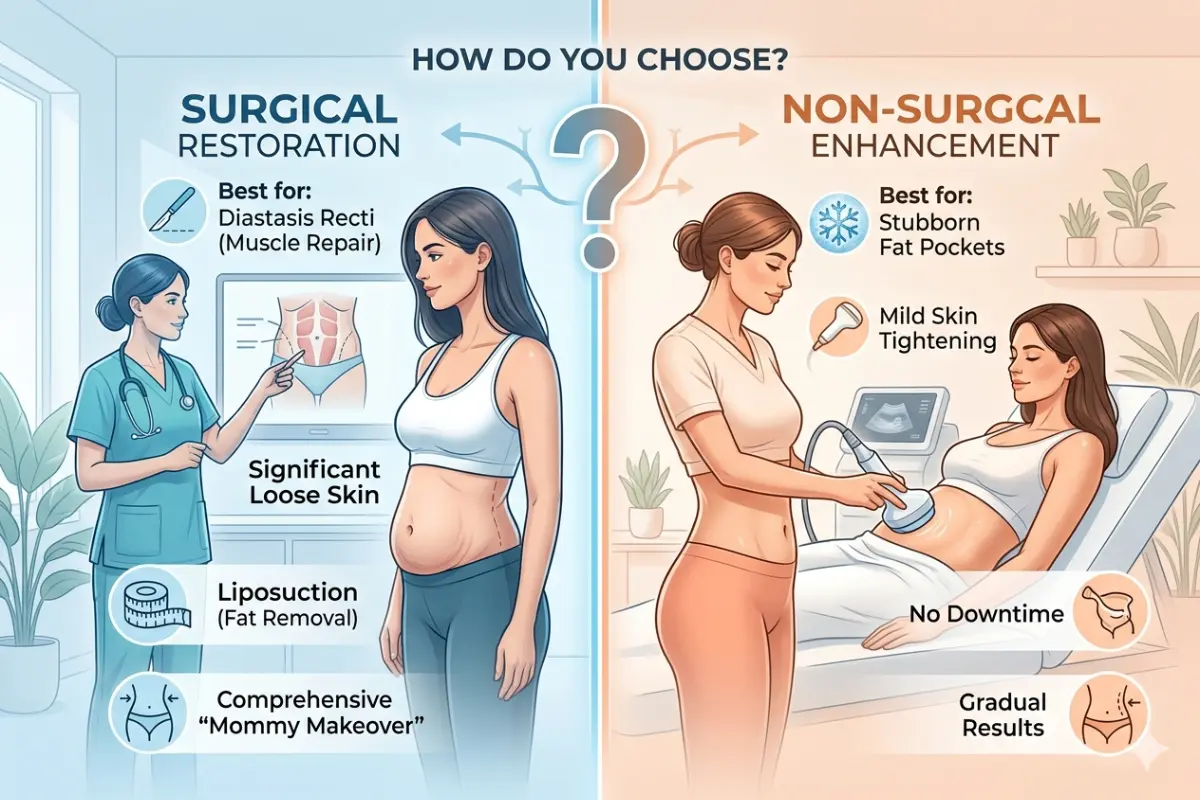
Choosing between surgical and non-surgical treatments depends entirely on your tissue structure. Non-surgical options reduce small fat pockets and slightly tighten skin, while surgery is required to repair separated muscles, remove large amounts of loose skin, and lift sagging breasts.
Many medical spas claim that non-invasive lasers can fix a post-baby belly. However, devices like CoolSculpting only target fat cells right under the skin. They cannot repair stretched abdominal muscles or tighten severely loose skin. If you have significant skin laxity, non-surgical treatments can actually make the skin look more wrinkled.
For true structural restoration, a surgical approach is often the only effective option. A customized mommy makeover plan combines procedures like a tummy tuck and a breast lift.
This approach allows a plastic surgeon to tighten internal muscles and remove excess skin in a single surgery. If you live in the New York area, exploring options like a professional mommy makeover in Long Island can give you access to customized procedures designed to restore your natural body contours safely.
Do you have loose, hanging skin and separated core muscles?
  ├── Yes ──> Are you finished having children?
  │             ├── Yes ──> Best Option: Surgical Mommy Makeover (Tummy Tuck/Muscle Repair)
  │             └── No  ──> Best Option: Wait. Use physical therapy and lifestyle habits for now.
  │
  └── No  ──> Do you have stubborn, isolated fat pockets with good skin elasticity?
                ├── Yes ──> Best Option: Non-Surgical Contouring (Cryolipolysis/Laser Skin Tightening)
                └── No  ──> Best Option: Focus on nutrition and gradual strength training first.
Advanced Postpartum Optimization: The 3-Tier Kinetic and Metabolic Reset
True physical restoration goes far beyond basic diet and exercise. To optimize your long-term physical recovery, you need to understand the complex relationship between your breathing mechanics, pelvic floor pressure, and metabolic rate.
- Tier 1: Master 360-Degree Breathing: Breathe deeply into your ribs and back, not just your chest. This practice lowers the intra-abdominal pressure on your pelvic floor and lower stomach, helping your abdominal wall flatten naturally.
- Tier 2: Kinetic Chain Realignment: Correct the “postpartum slouch” and anterior pelvic tilt caused by carrying a heavy baby. Stand tall without locking your knees or arching your lower back to immediately improve the appearance of a post-pregnancy belly pouch.
- Tier 3: Metabolic Reverse Dieting: Instead of dropping your calories lower when weight loss stalls, slowly increase your food intake to heal your metabolism. This helps you burn energy efficiently without gaining back fat.
- Myofascial Release for Scar Tissue: Gently massage your C-section or perineal scar once it is fully healed. This action keeps your skin moving freely over the underlying tissue and prevents a stuck skin layer.
Why You Must Prioritize Mental and Emotional Well-Being
Confidence and self-image are closely connected to mental health. After childbirth, many women experience emotional shifts that can affect how they feel about their appearance. Taking time to care for mental well-being is just as important as physical recovery.
Support from family, friends, or professionals can make a significant difference. Positive self-perception improves motivation and overall outlook. Emotional balance contributes to long-term confidence. Feeling good mentally helps support physical goals.
Conclusion
Regaining your appearance after having a child is a gradual process that requires patience, consistency, and self-care. Allowing your body time to heal creates a strong starting point for improvement. Nutrition, exercise, and proper care all play important roles in rebuilding confidence and strength.
Professional options can provide additional support when needed. Mental and emotional well-being should remain a priority throughout the journey. Setting realistic goals helps maintain motivation and perspective. With time and the right approach, women can feel confident and comfortable in their bodies again.
Frequently Asked Questions
Why is It so Hard to Lose Weight After Having a Baby?
Postpartum weight loss is often affected by hormonal changes rather than willpower alone. Elevated prolactin during breastfeeding, increased cortisol from stress and sleep deprivation, and conditions such as postpartum thyroiditis can all contribute to weight retention. Research has found links between cortisol levels and postpartum weight changes, making stress management and hormonal evaluation important parts of recovery. Source: PubMed.
How Long Does Postpartum Recovery Take?
Initial postpartum recovery typically takes six to eight weeks, but complete physical recovery can take several months to a year or longer. Hormones, abdominal muscles, pelvic floor function, skin elasticity, and body composition continue changing well beyond the early postpartum period. Recovery timelines vary based on delivery type, overall health, and individual circumstances.
What is Diastasis Recti?
Diastasis recti is the separation of the left and right abdominal muscles along the midline of the abdomen. It commonly occurs during pregnancy as the growing uterus stretches the connective tissue between the muscles. The condition can contribute to a persistent abdominal bulge, lower back pain, reduced core strength, and pelvic floor dysfunction. Source: PubMed.
Can Breastfeeding Prevent Weight Loss?
Breastfeeding burns extra calories, but it does not guarantee weight loss. Some women lose weight while nursing, while others retain fat due to hormonal responses associated with elevated prolactin levels. Research suggests that the relationship between breastfeeding and weight loss is complex and varies significantly among individuals. Source: PubMed.
How Do I Tighten My Stomach After Pregnancy?
Improving abdominal appearance after pregnancy typically requires a combination of nutrition, strength training, core rehabilitation, and patience. Women with diastasis recti often need specialized deep core and pelvic floor exercises rather than traditional crunches or sit-ups. For severe skin laxity or muscle separation, surgical options may be considered after recovery is complete.
When Can I Exercise After Childbirth?
Most women can begin gentle movement, such as walking, shortly after delivery, but structured exercise programs are usually introduced after medical clearance. Vaginal deliveries often allow gradual exercise progression around six weeks postpartum, while cesarean deliveries generally require a longer recovery period. Women with pelvic floor symptoms or abdominal separation may benefit from individualized rehabilitation plans. Source: Oxford Academic.
Will My Skin Return to Normal After Pregnancy?
Many postpartum skin changes improve naturally as hormone levels stabilize, but recovery varies by condition. Melasma, acne, hyperpigmentation, and stretch marks often fade gradually over several months. Consistent sun protection, proper skincare, and professional treatment when needed can improve outcomes and accelerate visible improvement.
What is a Mommy Makeover?
A mommy makeover is a customized combination of cosmetic procedures designed to address physical changes caused by pregnancy and childbirth. Common procedures may include a tummy tuck, breast enhancement, liposuction, or body contouring treatments. The goal is to restore body proportions and improve areas that may not respond fully to diet and exercise. Source: American Society of Plastic Surgeons.
When is the Best Time for a Mommy Makeover?
Most plastic surgeons recommend waiting at least six months after childbirth and until weight has stabilized before considering a mommy makeover. Women who breastfeed are generally advised to wait at least three to six months after weaning so breast tissue can fully settle. Proper timing helps improve results and reduce the likelihood of revision procedures. Source: Dr. Balikian.
Can Diastasis Recti Heal Without Surgery?
Yes, many cases of diastasis recti improve with targeted rehabilitation exercises focused on deep core activation, breathing mechanics, and pelvic floor strengthening. However, severe muscle separation or significant connective tissue weakness may not fully resolve without surgical intervention. A pelvic floor physiotherapist can determine the most appropriate treatment approach. Source: PubMed.
Why Do I Still Look Pregnant Months After Giving Birth?
A persistent postpartum belly can result from several factors, including diastasis recti, retained body fat, loose skin, bloating, or weakened abdominal muscles. Hormonal changes and pelvic floor dysfunction may also contribute to the appearance of abdominal protrusion. Identifying the underlying cause is essential for selecting the most effective treatment strategy.
How Do Hormones Affect Postpartum Weight Loss?
Hormones influence appetite, fat storage, metabolism, and energy levels throughout the postpartum period. Elevated cortisol from stress, prolactin associated with breastfeeding, and thyroid hormone imbalances can all slow weight loss despite healthy habits. Understanding hormonal influences allows women to address the root causes of weight retention rather than relying solely on calorie restriction. Sources: PubMed and American Thyroid Association.
About The Author:
Assistant Professor Dr. Naheed Rana is one of the most experienced and accomplished professionals in the field of Gynaecology. She is often regarded as one of the best gynaecologists in Lahore, Pakistan. Dr. Naheed is an extremely proficient gynaecologist and has expertise in a wide range of services such as Urogynae, Vaginal aesthetic surgery, Gynae cancer surgery, Medical disorders in pregnancy, Complications of early pregnancy, Infertility, and Hormonal disorders. Dr. Naheed is a phenomenon in the professional world of medical consultancy, and her reputation is a trademark of her utmost determination and devotion to her job. She has worked abroad for more than three decades and returned home to share her vast experience for the benefit of the people.
Medical disclaimer: This content is for informational purposes only and is not a substitute for professional medical advice.