TL;DR: First aid training in Newcastle does more than tick a legal box. Trained staff respond faster, make better on-the-spot calls, and genuinely reduce how bad workplace injuries get. But the type of training matters, the certificate alone won’t carry you, and a few widespread beliefs about first aid are quietly wrong. This post covers what most guides skip.
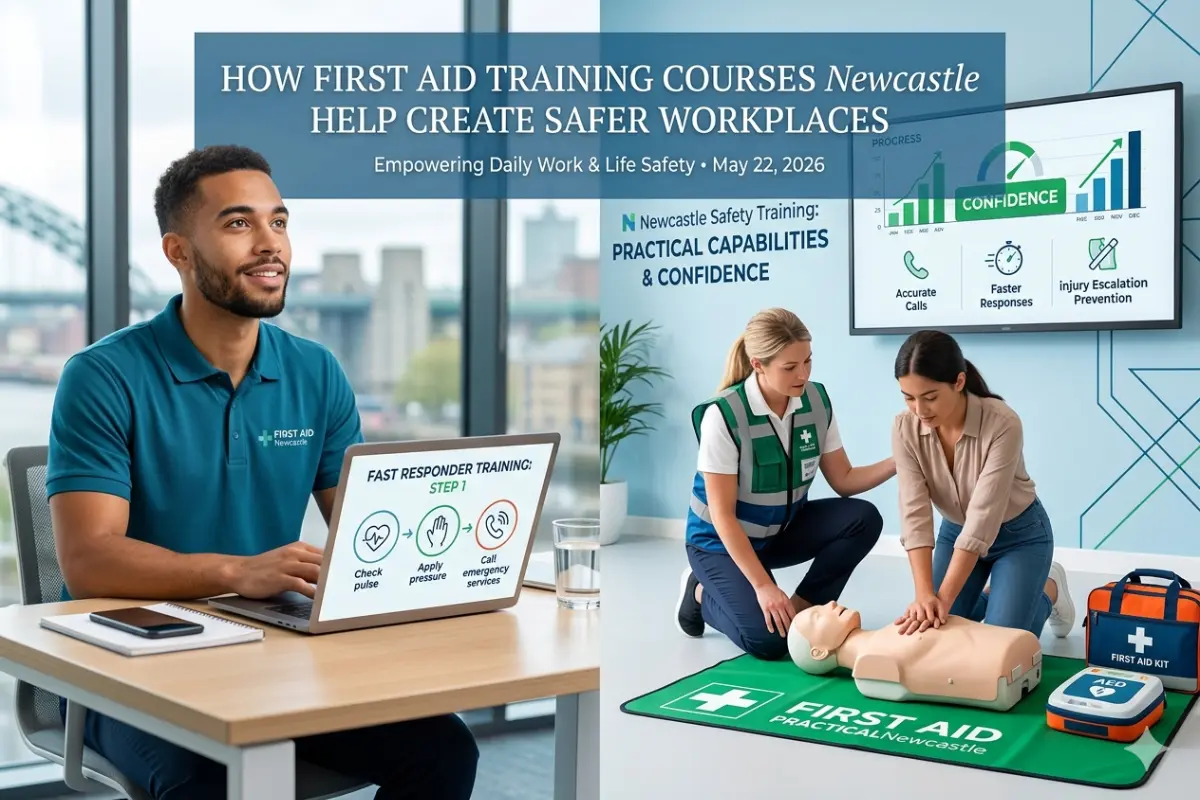
Emergency preparedness is a valuable skill that could prove to be a difference in emergencies. In the workplace, at home, or in social settings, knowing how to respond promptly and accurately can help avoid situations where injuries may escalate. Professional first aid training courses Newcastle equip people with theoretical and practical capabilities as well as confidence to respond to medical emergencies.
Healthcare professionals are not the only ones who can learn first aid. Proper emergency response training can be of benefit to employees, teachers, parents, carers, and business owners as well. These classes assist in making the world a safer place, and people are prepared to take action when it is most required.
When First Aid Goes Wrong
Good intentions aren’t enough. Undertrained responders cause real harm every year, and it’s worth knowing where things go off the rails.
Moving someone with a suspected spinal injury is probably the most common mistake. The instinct to help someone off the floor feels right. A spinal injury, it can cause paralysis.
The rule is simple: if there’s any chance of a neck or back injury, you don’t move them unless there’s immediate danger (fire, water, something actively killing them).
Misreading a diabetic hypoglycaemic episode as intoxication is another one. The person is confused, maybe aggressive, possibly slurring. The responder assumes alcohol. They hold back sugar. The patient deteriorates fast. It happens in offices, on construction sites, and in schools.
CPR done too aggressively on someone who’s still breathing is rarer but documented. Responders who learned the compression technique but didn’t get enough practice at assessment can miss the “are they breathing?” check under pressure.
And then there’s the psychological side. A responder who performed CPR on a colleague, especially one who died, often experiences acute stress reactions in the weeks that follow. Almost no first aid course prepares you for that. It’s probably worth asking your training provider how they handle post-incident support.
Why First Aid Skills Are Essential Today
Medical emergencies and accidents are unforeseeable. The presence of trained people in the area may lead to better results, in addition to offering on-the-spot help before the emergency services reach the location.
1. Supporting Safer Work Environments
Workplaces have the responsibility to ensure that there are safe environments for employees and visitors. Introducing workplace first aid training courses in Newcastle allows companies to enhance the safety level in the workplace and minimise the risks in case of an emergency.
First Aid Risks by Industry: What Newcastle Businesses Actually Face
A hospitality worker in the Bigg Market and a scaffolder in Byker face completely different emergencies. Generic “workplace first aid” training treats them the same.
Here’s how the risk profile actually breaks down by sector:
| Industry | Primary risks | What standard training often misses |
|---|---|---|
| Construction/manufacturing | Crush injuries, height falls, chemical exposure | Scenario drills for multi-casualty incidents |
| Hospitality and events | Alcohol emergencies, drug interactions, and crowd incidents | MDMA/stimulant presentation, body temperature crises |
| Schools and childcare | Paediatric choking, seizures, allergic reactions | Child-specific airway management (meaningfully different from adults) |
| Offices | Cardiac arrest in sedentary workers, mental health crises | AED placement decisions, stress-related collapse |
| Lone/delivery workers | Injuries with zero bystander support | Self-treatment protocols, remote emergency communication |
The practical takeaway: before booking a course, tell the provider exactly what your workers actually do. A good provider will adjust the scenarios accordingly. If they don’t ask, that’s a signal.
2. Faster Emergency Response
Immediate response to medical emergencies like choking, burns, or a heart attack can help save lives. First aid training provides the participants with the skills to evaluate situations without panic and give first aid.
3. Increased Public Confidence
Individuals possessing first aid expertise tend to be more relaxed in an open environment since they are aware of what to do in case of an emergency. This self-assurance has the potential to influence work and life positively.
Key Areas Covered in First Aid Courses
Professional first aid training programs involve both theory and practical exercises to equip the learners with real-life situations.
1. Basic Life Support and CPR
The participants get to know the life-saving CPR skills along with the proper use of automated external defibrillators (AEDs) during heart attacks.
2. Treating Injuries and Illnesses
Common injuries (cuts, fractures, burns, and bleeding), in addition to medical emergencies (seizures and allergic reactions) courses are taught in courses.
The choice of emergency first aid courses for employees will equip them with the ability to tackle a variety of events safely and efficiently.
3. Accident Prevention and Risk Awareness
The education is also designed to identify potential hazards and prevent accidents that occur. This is particularly crucial in more hazardous workplaces.
Myths That Keep Circulating (and What’s Actually True)
Myth: CPR restarts the heart. CPR keeps oxygenated blood moving to the brain and vital organs. It maintains life until a defibrillator or paramedics arrive. It doesn’t restart cardiac function on its own. The Resuscitation Council UK is clear on this, but the myth persists because it’s a more satisfying story.
Myth: You can be sued for helping someone. The Social Action, Responsibility and Heroism Act 2015 provides legal protection for people who act in good faith during emergencies in England and Wales. You’re not exposed by stopping to help a stranger. The UK Government’s guidance on the Act spells this out plainly.
Myth: Your skills stay sharp for 3 years. The certificate lasts 3 years. Your practical skills don’t. Research published in Resuscitation journal shows CPR quality degrades significantly within 3 to 6 months without practice. The certificate is a credential. Regular drilling is what keeps you actually ready.
Myth: Online first aid courses are equivalent to in-person. For theory and awareness, they’re fine. For physical competency, they can’t be. You can’t learn the correct chest compression depth by watching a video. The Health and Safety Executive specifies that the Emergency First Aid at Work qualification requires practical assessment.
Who Should Consider First Aid Training?
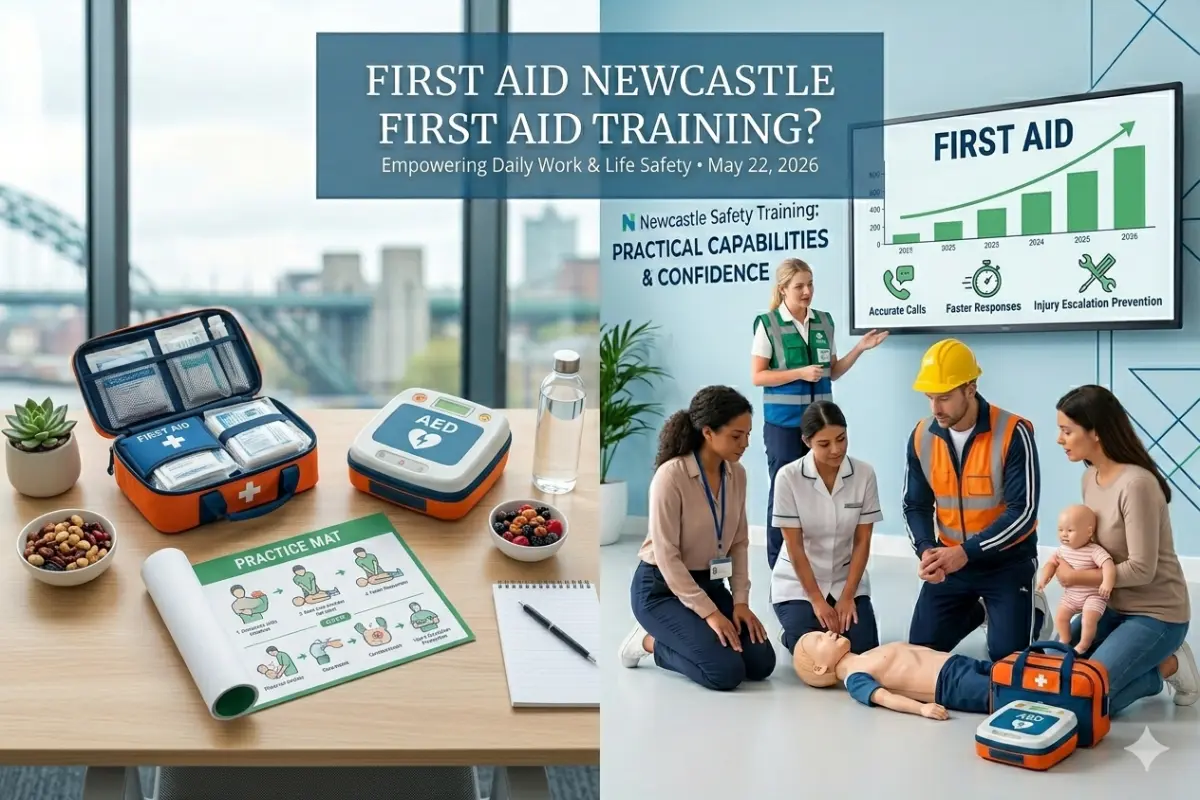
First aid training can be useful to individuals regardless of their background or industry. Employers tend to demand trained first aiders, and parents and carers gain knowledge of emergency response methods to secure family safety.
Professional training can also enhance the preparedness of teachers, childcare workers, sports coaches, and hospitality staff. Investing in professional first aid certification assists individuals in acquiring practical skills in life that will be beneficial over the years.
When Standard Advice Doesn’t Apply
First aid protocols are written for common scenarios. A few situations break the rules in ways that matter.
Cardiac arrest in hypothermia. The standard rule is: no pulse, begin CPR. In a severely hypothermic patient, that doesn’t hold. The body slows so dramatically that pulse detection becomes unreliable. The rescue medicine principle is “not dead until warm and dead,” meaning you continue resuscitation through rewarming. Stopping early in these cases has killed people who could have survived.
AED use on children under 8. Most people hesitate. They shouldn’t. Most modern public-access AEDs carry paediatric pads or a paediatric mode. If paediatric pads aren’t available, adult pads can be used, placed front and back instead of chest/side. The British Heart Foundation covers this directly. Hesitation kills; the AED itself won’t deliver a shock if none is needed.
Language barriers during casualty assessment. AVPU (Alert, Voice, Pain, Unresponsive) and standard assessment rely partly on verbal responses. When a casualty can’t communicate in English, the responder has to work more on physical signs: skin colour, temperature, breathing rate, and responsiveness to physical stimulus. This comes up more often than courses acknowledge, especially in Newcastle’s construction and hospitality sectors.
The unconscious but breathing patient with suspected spinal injury. The recovery position is the standard response to unconscious breathing. Spinal injury suspicion overrides it unless the airway is immediately compromised. Choosing between those 2 outcomes in real time, without imaging, is genuinely hard. A good instructor will run you through the decision process rather than just teaching you one rule.
Building a First Aid System That Actually Works (for Safety Managers and Employers)
The certificate gets you compliant. A functioning first aid system requires a bit more work.
HSE ratios are a floor, not a formula. The HSE’s first aid needs assessment guidance gives you minimums based on headcount and hazard level. What it doesn’t account for is shift patterns. A business with 80 staff across 3 rotating shifts might need more qualified first aiders than a 120-person single-shift office, because the 80 might have as few as 12 workers on site at any given time.
Equipment has its own expiry dates. Defibrillator pads typically expire every 2 years. Gloves degrade. Epinephrine in auto-injectors has a shelf life. Most businesses audit their first aid box annually (if that), and almost none track AED consumable expiry dates separately. Build that into your maintenance schedule.
Skills decay faster than you think. Run a 20-minute practical drill every 6 months. You don’t need an external trainer for this; a senior first aider can lead it. The drill doesn’t have to be elaborate: a scenario, a mannequin if you have one, and a debrief. That alone meaningfully slows the competency drop that hits every responder after certification.
Post-incident review is where the real learning happens. After any first aid event, gather the responders within a week. What happened, what they did, what slowed them down, what they weren’t sure about. Write it up. That feedback loop does more for your next incident than any refresher course.
Mental health first aid belongs in the same programme. The HSE’s Working Minds campaign has pushed workplace mental health into the mainstream. Businesses running separate physical and mental health first aid programmes often find their mental health first aiders handle situations their physical first aiders aren’t equipped for, and vice versa. One combined cohort, trained together, builds a more joined-up response.
Conclusion
Knowledge of first aid is a useful skill that enables people to act with confidence in case of emergencies, as well as establish safer workplaces and societies. The professional training courses at Inspirational Training offer practical skills, qualifications, and life-saving skills that could prove to be a significant change during life-threatening situations. Education on proper first aid is long-term beneficial to both individuals and organisations.
FAQs
Does a First Aid Certificate Expire?
Yes. Most first aid at work certificates are valid for 3 years, after which you need a renewal course. But the certificate and your actual skill level are 2 different things. Research published in the Resuscitation journal shows CPR quality degrades significantly within 3 to 6 months without practice. The renewal keeps you compliant; regular drilling keeps you competent.
Can You Use an AED on a Child?
Yes, and you should. Most public-access AEDs carry paediatric pads or a paediatric mode. If paediatric pads aren’t available, adult pads can be placed front and back instead of chest and side. The British Heart Foundation confirms AEDs are safe to use on children under 8. The device analyses the heart rhythm before delivering any shock, so it won’t fire unnecessarily.
Are You Legally Protected if You Help Someone in an Emergency?
In England and Wales, yes. The Social Action, Responsibility and Heroism Act 2015 protects people who act in good faith during emergencies. You’re covered as long as you’re acting responsibly and trying to help. The fear of lawsuits stops a lot of bystanders from stepping in, but the legal risk for a good-faith responder is genuinely low.
How Many First Aiders Does a Workplace Legally Need?
The HSE’s first aid needs assessment sets the minimum requirements, which vary based on headcount, hazard level, and work environment. Low-hazard offices with fewer than 25 staff may need just 1 appointed person; higher-risk sites need a qualified first aider regardless of size. Shift patterns matter too: your ratio should account for minimum staffing levels, not just total headcount.
Is Online First Aid Training Accepted by the HSE?
For awareness-level courses, online training is generally acceptable. For regulated qualifications like Emergency First Aid at Work (EFAW) or First Aid at Work (FAW), the HSE requires practical, hands-on assessment to confirm physical competency. You can’t adequately demonstrate correct CPR depth, airway management, or bandaging technique through a screen-based test alone.
About The Author:
Beth Shamaiengar is a contributing editor at Health Journal. She holds a Bachelor’s degree in Journalism from the University of North Carolina at Chapel Hill and, before joining the Health Journal, became an award-winning writer and editor during 11 years with other publications. She also spent nearly a decade volunteering in PTA leadership roles in local schools, building her skills in marketing, event planning, project management, and communicating with a variety of audiences.
Disclaimer: This content is for informational purposes only and is not a substitute for professional medical advice.