
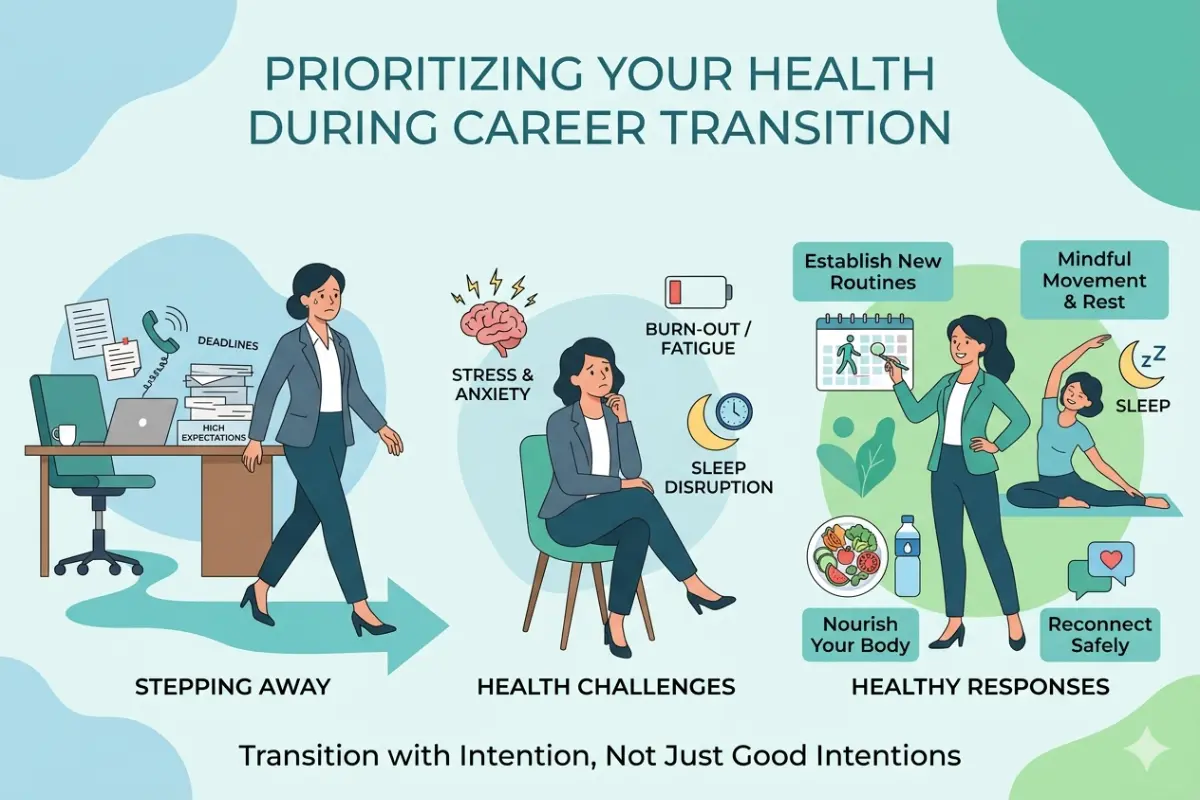
Stepping away from a demanding career can feel both exciting and overwhelming. After years of deadlines, high expectations, and non-stop pressure, a slower pace sounds like relief. But the transition also brings real health challenges, ones most people don’t see coming until they’re already in them.
Prioritizing your health during this phase isn’t just about eating better or joining a gym. It requires understanding what your body and mind are actually going through, and responding with intention, not just good intentions.
Why Does Your Body Still Feel Stressed After You’ve Left?
Your stress hormones don’t clock out when you do. After years of chronic pressure, your body’s cortisol system stays dysregulated for months, sometimes longer. This isn’t a psychological weakness. It’s a measurable physiological state, and ignoring it can quietly undermine every healthy habit you’re trying to build.
According to the Mayo Clinic, long-term activation of the body’s stress-response system can disrupt almost all of the body’s processes, raising the risk of digestive problems, sleep disorders, heart disease, and depression. These effects don’t reverse overnight just because the stressor is gone.
There’s also a structural issue. Research shows cortisol follows a diurnal pattern, high in the morning, gradually declining across the day. When demanding careers flatten that curve (elevated evening levels, blunted morning rise), research links the disruption to poorer mental and physical health. And that flattened pattern persists well after leaving.
Here’s where most people go wrong: they immediately launch an intense exercise program. But exercise physiologists warn that without proper recovery, intense exercise can elevate cortisol further, producing symptoms of physical stress even when you’re not working out. The smarter move is low-intensity, restorative activity first, which works with your natural circadian rhythms to reduce resting cortisol and improve sleep quality.
Practical sequence for the first 6 months:
| Phase | Priority | Exercise Approach |
|---|---|---|
| Months 1–3 | Nervous system recalibration | Walking, yoga, stretching |
| Months 3–6 | Rebuilding baseline fitness | Light strength, swimming |
| Months 6+ | Progressive intensity | Add HIIT or structured training |
Can Having Too Much Free Time Actually Hurt Your Health?
Surprisingly, yes. Completely unstructured days don’t automatically lead to rest and renewal. For many people, the sudden absence of external demands triggers a specific pattern of sedentary behavior, social withdrawal, and low-grade anxiety that researchers have linked to depression, even in people who looked forward to stepping back.
A study on retirement sedentary behavior found that involuntary sedentary time, sitting because there’s nothing to do, was consistently linked to poorer health. Voluntary sedentary time (chosen rest, reading, relaxation) was not. The difference isn’t the sitting. It’s the meaning behind it.
A systematic meta-analysis of 19 studies found a mixed relationship between retirement and life satisfaction, not the universal improvement most people expect. Outcome depends heavily on how much identity, purpose, and social connection a person has tied to their work.
The fix isn’t filling every hour. It’s filling hours intentionally. Scheduled commitments with other people, what researchers call “obligated leisure”, consistently outperform pure open time for wellbeing outcomes.
Unstructured Day vs. Intentionally Designed Day
| Factor | Unstructured | Intentionally Designed |
|---|---|---|
| Energy levels | Drift downward | Stable |
| Social contact | Passive/accidental | Built in |
| Sense of purpose | Low | Moderate–high |
| Depression risk | Elevated | Reduced |
| Sedentary hours | 9+ (avg in studies) | 5–6 |
Resetting Your Daily Routine for Real Balance
Without a fixed schedule, days can feel shapeless. That shapelessness isn’t just uncomfortable, it’s a genuine health risk. A balanced routine doesn’t need to be rigid. But it does need a rhythm.
A healthy daily structure should include time for movement, meals, social connection, and something that produces a sense of accomplishment. Even simple anchors, such as a morning walk, a consistent meal time, and a regular sleep schedule, have measurable positive effects.
The key is replacing the achievement once tied to your career with something else that produces it. Hobbies, creative pursuits, learning new skills, or community involvement all serve this function. The activity matters less than the sense of progress it provides.
What Happens to Your Health When You Lose Your Professional Identity?
For high-achievers, career identity isn’t just what you do, it’s who you are. When that role ends, the identity disruption produces measurable health consequences: disrupted sleep, elevated inflammation, and depression symptoms that standard wellness advice doesn’t address. Rebuilding identity, not just daily routine, is what actually drives recovery.
Research on major career transitions identifies three core components of healthy adjustment: identity rebuilding, social interaction, and independence, all anchored by meaningful activity engagement. Skip any one of these, and the others lose their footing.
The timeline matters too. Studies on elite athletes, whose identity loss closely mirrors that of high-achieving professionals, found that identity showed its steepest decline at three months post-retirement. Mental health symptoms follow a U-shaped curve: peaking at three months, then improving. Knowing this helps people stop interpreting normal transition pain as permanent decline.
Research also shows that people with broader identity portfolios, those who have interests, social groups, and roles outside their careers, navigate transition far better. The implication: the time to diversify your identity is before you leave, not after.
The Identity Reconstruction Sequence:
- Acknowledge the loss: Name what the career gave you (status, structure, community, purpose). Grief is valid and necessary.
- Inventory transferable identity assets: Skills, relationships, and values that survive the role change.
- Explore provisional identities: Try activities, roles, and communities without committing. Let a new identity form through experience.
- Build social breadth: Diversify across family, community, interest groups, and mentorship rather than concentrating in one relationship type.
- Anchor to contribution: Volunteering, mentoring, or advising gives the brain the same neurological reward as professional achievement.
Supporting Physical Health Through Active Living
Physical health needs renewed attention during this transition. Many demanding careers involve long hours of sitting and chronic high stress, both of which take a significant toll. But the solution isn’t simply “exercise more.”
Start with consistency, not intensity. Walking, swimming, yoga, and light strength training all improve cardiovascular health, flexibility, and energy. Research is clear that frequent low-to-moderate activity anchors a healthy stress-hormone rhythm and sleep, especially in the first year post-transition.
Nutrition is another lever. A slower-paced life gives you real time to cook, eat deliberately, and reduce reliance on processed convenience foods. Staying hydrated and eating balanced meals supports both energy and mood more than most people expect.
Don’t delay routine medical checkups. Monitoring conditions, staying current on screenings, and addressing concerns early can prevent complications that are far harder to manage later.
5 Pieces of Health Advice That Often Backfire After Leaving a Demanding Career

Most career-transition health advice is well-meaning but incomplete. Here’s where it breaks down:
Myth 1: Just relax, your body will reset naturally.
Reality: Disrupting your natural circadian rhythm through irregular schedules, late caffeine, or poor sleep timing can dysregulate the HPA axis and increase the risk of metabolic and sleep problems, and this doesn’t fix itself without deliberate intervention.
Myth 2: Start an intense exercise program right away.
Reality: High-intensity training without adequate recovery elevates cortisol further and can produce chronic symptoms of physical stress. Begin gently, then build.
Myth 3: Sleep in, you’ve earned it.
Reality: A research study tracking retirees for three years found that drifting to later bedtimes and wake times persisted long after transition. Irregular sleep timing, not just duration, causes the cognitive fog and low energy many retirees misattribute to aging.
Myth 4: Keeping busy is the key to happiness.
Reality: Activity volume doesn’t predict well-being. Meaningful activity does. Frantic busyness without purpose is itself a cortisol driver.
Myth 5: Retirement is universally good for mental health.
Reality: A large study using Health and Retirement Study data found that involuntary retirees, both men and women, experienced poorer mental health than those who chose to leave. The circumstances of your exit matter as much as the exit itself.
Managing Emotional and Mental Well-Being
Emotional adjustments are often the most underestimated part of this transition. Beyond identity loss, the simple reduction in daily social contact, meetings, team conversations, and shared purpose creates a quiet form of isolation that accumulates over weeks and months.
Building and maintaining a strong support system is essential. Stay connected with friends, family, and former colleagues. Social interaction provides emotional support and reinforces a sense of belonging that can’t be replaced by solo wellness habits.
Mindfulness practices, meditation, journaling, and time in nature help reduce stress and improve emotional self-awareness. They work best when paired with the identity and community work described above, not as standalone fixes.
Planning Your Financial Health to Reduce Stress
Financial security directly affects physical and mental health during this transition. Research consistently shows that retirees with greater financial stability experience better mental health and are more likely to maintain physical activity, while those with financial stress show higher rates of sedentary behavior and adverse health outcomes.
Budgeting is the practical foundation: understand your expenses and income sources, and build a plan that accounts for both current needs and long-term goals. Reviewing savings, retirement accounts, and investment strategies ensures your resources align with the life you’re designing.
Seeking professional guidance from a financial advisor, especially for retirement planning, provides confidence and reduces the anxiety that often accompanies major life transitions. For example, individuals exploring retirement planning in Buckeye or their area can gain valuable insight into managing assets, planning withdrawals, and preparing for future needs. When financial concerns are addressed proactively, the mental bandwidth freed up is itself a health intervention.
Building a Post-Career Health Operating System (Advanced)
This section is for people who already have the basics down and still feel like something isn’t working. The issue is usually architecture, not effort.
Biological phase-matching: Structure your most cognitively or physically demanding activities around your natural cortisol peak, typically 30–60 minutes after waking. This is when alertness, strength, and focus are naturally highest. Timing activity to match your biology produces better outcomes than forcing workouts into arbitrary time slots.
Sleep architecture, not just duration: Older adults spend less time in deep and REM sleep compared to younger adults, experiencing more awakenings and longer time to fall asleep. The target isn’t just “8 hours.” Protect deep and REM stages through consistent wake times, morning light exposure, and evening light reduction.
The social portfolio framework: Treat social connection like a diversified investment portfolio. Research shows that belonging to more social groups, not just having closer relationships, predicts better mental health outcomes during transition. Diversify across family, community, interest-based groups, and mentorship roles.
Quarterly health reviews: Apply the same discipline to personal health that you applied to your career. Every 90 days, track sleep quality, energy, mood, and physical benchmarks. Identify what’s drifting and adjust. Progress compounds when it’s measured.
The minimum effective dose principle: Studies show that moderate, consistent physical activity produces significantly better mental health outcomes than sedentary behavior, but the threshold is lower than most people assume. Define your floor, protect it, and build from there rather than chasing maximum output.
Creating a Sustainable Long-Term Wellness Plan
Health isn’t a one-time reset. It’s an ongoing practice that requires the same thoughtfulness and adjustment you brought to your career.
Set realistic, specific goals. Small, achievable steps outperform ambitious overhauls. Track progress over months, not days. Celebrate what’s working, reinforcing positive behavior matters more than punishing lapses.
Build flexibility into your plan. Life circumstances change, and your wellness approach should change with them. The people who sustain healthy habits long-term aren’t the most disciplined, they’re the most adaptable.
About The Author:
Beth Shamaiengar is a contributing editor at Health Journal. She holds a Bachelor’s degree in Journalism from the University of North Carolina at Chapel Hill and, before joining the Health Journal, became an award-winning writer and editor during 11 years with other publications. She also spent nearly a decade volunteering in PTA leadership roles in local schools, building her skills in marketing, event planning, project management, and communicating with a variety of audiences.