
Reading Time: 9 Minutes
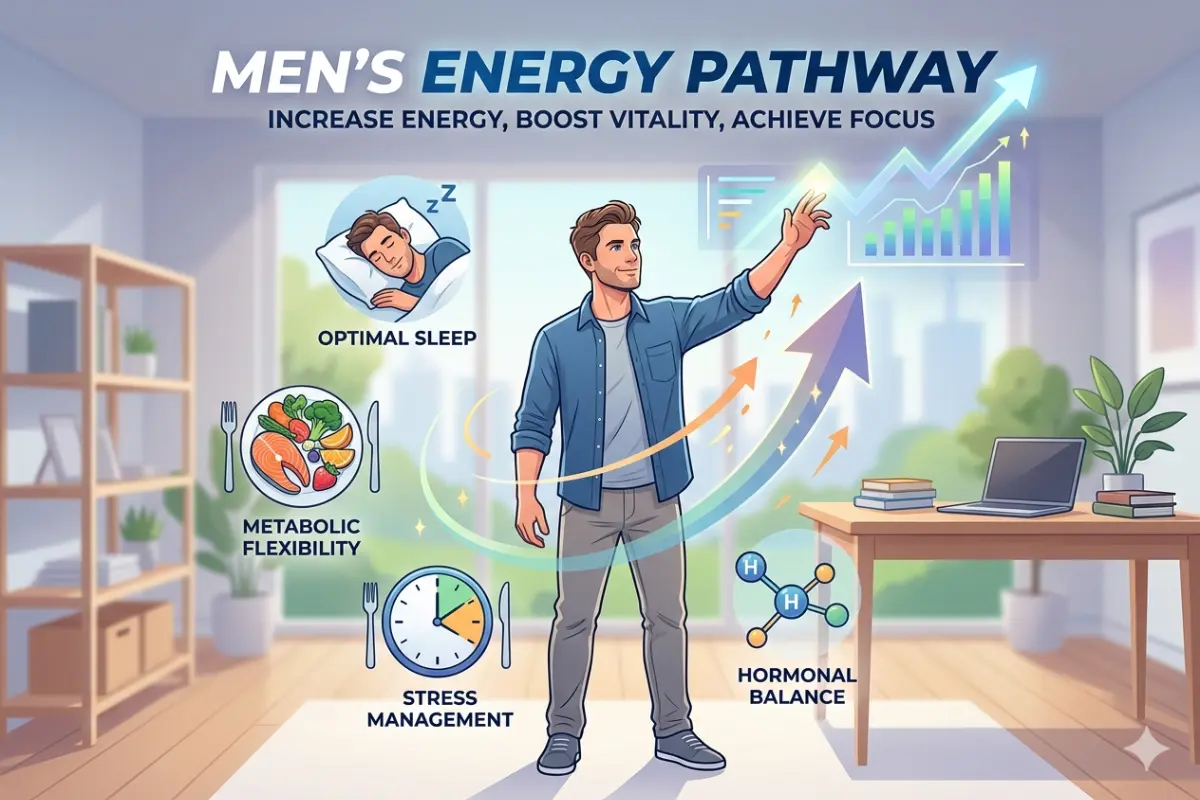
TL;DR: Low energy in men usually comes down to a handful of fixable problems: poor sleep, bad food, too much stress, and hormones that have quietly drifted out of range. But the stuff most articles skip, like metabolic flexibility, hidden lab markers, and the adaptation plateau that kills good habits at week 3, is where the real answers live. Fix the basics, then go deeper if the basics aren’t enough.
Many men experience a noticeable drop in energy levels as they age or face increased daily demands. Fatigue can affect productivity, mood, and overall quality of life. While occasional tiredness is normal, consistent low energy can signal deeper lifestyle or health issues.
Improving energy is not about quick fixes but sustainable habits and proper support. Men who take a proactive approach often see significant improvements. Understanding the main causes of low energy is the first step toward lasting change. With the right strategies, energy levels can be restored and maintained.
What Should Men Eat to Increase Energy Levels?
Nutrition plays a critical role in overall energy levels. Poor eating habits can lead to blood sugar fluctuations and fatigue. Balanced meals that include protein, healthy fats, and complex carbohydrates support steady energy.
Hydration is equally important for maintaining focus and stamina. Processed foods and excess sugar often lead to energy crashes. Whole foods provide more consistent fuel throughout the day. Better nutrition supports both physical and mental performance.
The metabolic flexibility factor (why 2 men can do everything the same and feel completely different)
You’ve probably met someone who can skip breakfast, train fasted, and feel sharp all morning. And you’ve met someone who skips breakfast and wants to murder everyone by 10 am.
The difference is metabolic flexibility: your body’s ability to switch between burning glucose and burning fat depending on what’s available. Metabolically inflexible men are almost entirely dependent on glucose for fuel. When blood sugar dips between meals, their energy craters.
Research published in Cell Metabolism shows that metabolic flexibility is closely tied to insulin sensitivity, which is itself driven heavily by muscle mass and activity level. Men with poor insulin sensitivity can eat a “clean” diet and still feel sluggish because their cells aren’t efficiently taking up glucose from the bloodstream.
Signs you might have low metabolic flexibility: you crash hard 90 minutes after lunch, even when you ate well, you feel irritable and foggy when a meal is delayed by an hour, and you can’t exercise fasted without hitting a wall fast.
Resistance training is the most direct way to fix this. Specifically because it upregulates GLUT4 transporters in muscle tissue, improving glucose uptake independent of insulin. More muscle means more metabolic flexibility, which means more stable energy across the day.
The “eat every 3 hours to keep energy stable” advice that circulated for years can actually worsen metabolic flexibility over time in men who already eat frequently. Structured meal spacing (say, 2 solid meals + 1 lighter one) trains the body to access stored fuel between meals rather than depending on constant refueling.
How Much Sleep Do Men Need for Better Energy?
Sleep is one of the most important factors in maintaining high energy. Inadequate or poor quality sleep leads to fatigue and reduced concentration. Establishing a consistent sleep schedule improves restfulness.
Limiting screen exposure before bed supports better sleep cycles. A comfortable sleep environment enhances recovery. Deep sleep allows the body to recharge effectively. Prioritizing sleep leads to noticeable improvements in daily energy.
Does Exercise Actually Increase Energy in Men?
Exercise is essential for boosting energy over time. While it may feel counterintuitive, physical activity actually increases stamina. Regular movement improves circulation and oxygen delivery. Strength training and cardio both contribute to long-term energy gains.
Exercise also supports better sleep quality. Consistency matters more than intensity when starting. Active lifestyles reduce fatigue and improve overall vitality.
Why Your Energy Fix Stops Working after 3 Weeks
You started sleeping better, cleaned up your diet, and maybe even hit the gym consistently. Two weeks in, you felt great. Then week 3 happened, and the improvement flatlined. You probably blamed yourself.
It’s the adaptation trap, and it gets almost every man who tries to fix his energy.
Your body treats new habits as stressors before it treats them as normal. The HPA axis (hypothalamic-pituitary-adrenal axis) has to recalibrate around your new inputs, and that process takes time. During that window, you can feel like you’ve regressed even when you’re doing everything right.
Sleep debt compounds this. If you ran on 5-6 hours a night for years, 2 weeks of solid sleep won’t erase that. Research from the University of Pennsylvania shows that cognitive deficits from chronic sleep restriction accumulate and recover slowly, often taking 3-4 weeks of consistent sleep to meaningfully reverse.
The plateau you hit around week 3 is biological, not personal failure.
Supplements have the same problem. Magnesium, ashwagandha, B-vitamins: your body adjusts to consistent inputs. The perceived benefit fades even when the physiological effect continues. Cycling protocols (taking a week off every 6-8 weeks) help more men maintain the subjective benefit than continuous daily use.
There’s also a difference between a false plateau and a true ceiling. A false plateau means you need more time, maybe 4-6 more weeks. A true ceiling means the current intervention has done everything it can do, and you need to add something new. Most men bail during a false plateau.
How Does Chronic Stress Drain Male Energy Levels?
Stress is a major contributor to low energy levels. Chronic stress can drain both physical and emotional reserves. Mental fatigue often presents as physical tiredness. Stress management techniques such as meditation or breathing exercises can help.
Taking breaks during the day improves focus and recovery. Maintaining work-life balance supports long-term energy. Emotional health directly impacts physical stamina.
Can Low Testosterone Cause Fatigue in Men?
Hormonal balance plays a significant role in male energy levels. Testosterone naturally affects strength, mood, and motivation. Declining levels may contribute to fatigue and reduced drive.
Medical guidance can help determine whether hormone levels are within a healthy range. Options such as affordable testosterone therapy in Boca Raton may be considered when appropriate. Proper evaluation ensures safe and effective treatment. Balanced hormones support sustained energy.
What Your Labs Probably Missed: 4 Clinical Causes of Fatigue That Get Skipped
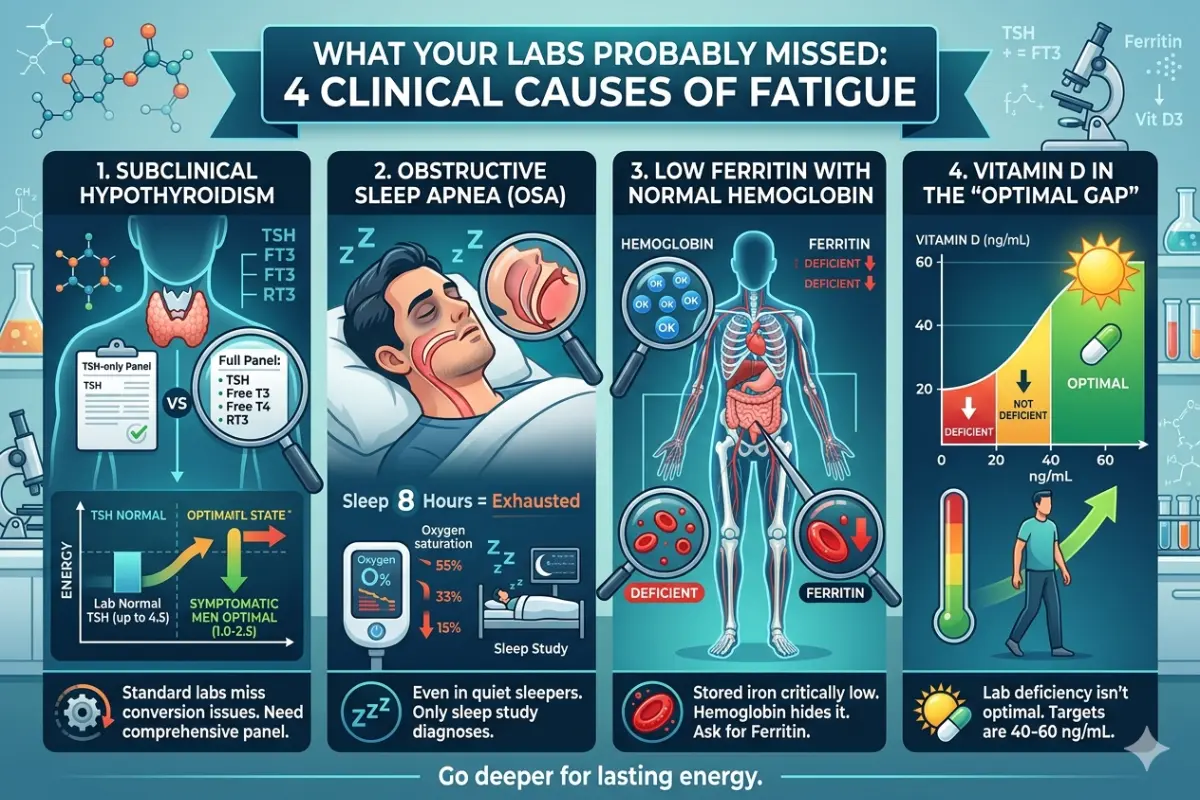
If you’ve “fixed everything” and still feel wrecked, there’s a decent chance something clinical is running underneath. These 4 things get missed constantly.
1. Subclinical Hypothyroidism
Standard thyroid testing is a TSH-only panel. Most labs flag anything below 4.5 mIU/L as normal. But research in the Journal of Clinical Endocrinology & Metabolism suggests symptomatic men often function better with TSH between 1.0 and 2.5. Ask for a full panel: TSH, Free T3, Free T4, and reverse T3. A single number won’t tell you much about how your thyroid is actually converting and using hormones.
2. Obstructive Sleep Apnea in Men Who Don’t Snore Loudly
About 80% of moderate-to-severe OSA cases go undiagnosed. The American Academy of Sleep Medicine estimates 26% of adults aged 30-70 have sleep apnea. You can sleep 8 hours and wake up exhausted every single morning if you have it. The only real diagnostic tool is a sleep study, not a lifestyle audit.
3. Low Ferritin with Normal Hemoglobin
Standard CBC panels check hemoglobin and call it a day. But ferritin (stored iron) can be critically low while hemoglobin looks fine. A study in the British Journal of General Practice found that ferritin below 50 ng/mL consistently correlates with fatigue in non-anemic patients. Most GPs won’t test ferritin unless they suspect anemia. Ask for it specifically.
4. Vitamin D in the Gap Between “Not Deficient” and “Optimal”
Labs flag deficiency below 20 ng/mL. But research on hormonal and neurological function in men points to optimal levels around 40-60 ng/mL. The gap between 22 and 50 is where a lot of unexplained fatigue, low mood, and poor recovery sit. The Endocrine Society’s clinical practice guidelines acknowledge that 1,500-2,000 IU/day is often needed to maintain levels above 30 ng/mL in deficient adults, which most standard supplementation advice undershoots.
How Does Alcohol Affect Energy and Sleep in Men?
Lifestyle habits can either support or drain energy levels. Excessive alcohol consumption often disrupts sleep and recovery. Smoking and poor dietary habits contribute to fatigue over time. Reducing these behaviors improves both short-term and long-term energy. Healthier habits allow the body to function more efficiently. Small changes can produce meaningful improvements. Consistency leads to lasting results.
Myth vs. Reality: What the Energy Industry Gets Wrong
Myth 1: More Caffeine = More Energy.
Caffeine borrows. It blocks adenosine receptors, which stops you from feeling tired, but the adenosine keeps accumulating underneath. You pay it back eventually, usually as that thick afternoon fatigue or the fact that you need coffee just to feel baseline. Regular caffeine use above 400mg/day is associated with increased cortisol levels, which degrade sleep quality even when it doesn’t prevent you from falling asleep.
Myth 2: Exercise will Immediately Make you feel more Energetic.
Acute exercise depletes glycogen and spikes cortisol. If you train hard and feel drained for the rest of the day, you’re not doing it wrong. The energy payoff is a 24-48 hour lagging effect, largely mediated by improved mitochondrial density over time. You don’t feel it the same afternoon; you feel it next month.
Myth 3: If your Testosterone is “Normal,” low T isn’t Your Problem.
Lab reference ranges are built on population averages, including men who are sedentary, overweight, and unhealthy. A result in the bottom third of “normal” (say, 320 ng/dL) can still drive real fatigue, low motivation, and poor recovery in a man whose optimal range is higher. The number matters, but so does where you function well. A conversation with a physician who looks at your symptoms alongside your labs is more useful than a blanket “you’re fine.”
Myth 4: Energy Drinks give You Energy.
They give you stimulation, which is pharmacologically different. Real energy is mitochondrial ATP production. Energy drinks bypass that entirely and hit your adrenergic system directly. The crash afterward is real. The American Academy of Sleep Medicine has explicitly linked energy drink consumption to disrupted sleep architecture, even when consumed 6+ hours before bed.
Why Does a Consistent Daily Routine Improve Energy?
Routine plays an important role in energy management. Irregular schedules disrupt natural body rhythms. Consistent meal times and sleep patterns support stability. Structured days improve productivity and reduce fatigue. Planning activities helps maintain balance. Predictable routines reduce stress and improve focus. Stability contributes to sustained energy.
Periodizing your Energy like an Athlete (for Men who Already do the Basics)
Elite athletes don’t train at maximum output year-round. They build in deliberate recovery phases, and performance actually improves because of the recovery, not despite it.
Most high-performing men run at full output constantly and then wonder why they crash every few months. The crash is predictable. It’s the bill coming due.
The concept is simple to apply. Structure your year in 10-12 week blocks: 8-9 weeks of high output followed by a 2-week deliberate pullback. During the pullback, you’re not slacking; you’re reducing social commitments, sleeping an extra 30-45 minutes, training at maybe 60% intensity, and dropping caffeine by half. You do this before you’re burned out, not after.
Nutritionally, you can match intake to output. Higher carbohydrate intake during demanding work phases supports the prefrontal cortex, which runs almost exclusively on glucose and accounts for roughly 20% of total brain energy consumption. During recovery phases, shifting toward lower carbohydrate, higher fat eating promotes the cellular repair processes (autophagy, mitochondrial biogenesis) that higher-output phases suppress.
The hardest part is tracking leading indicators, not lagging ones. By the time you feel burned out, you’re already weeks behind. Resting heart rate elevation of 5+ beats above your baseline, HRV dropping below your personal floor, and waking up tired despite 7-8 hours of sleep: these are the 5-10-day early warning signals. A basic wearable, like a Garmin or Whoop, tracks all 3.
The goal is never reactive recovery. It’s building the recovery before the crash happens.
How Does Dehydration Cause Fatigue in Men?
Hydration is often overlooked but essential for energy. Even mild dehydration can cause fatigue and reduced concentration. Drinking water consistently supports physical and mental performance.
Caffeine should not replace proper hydration. Monitoring intake ensures adequate fluid levels are maintained. Hydration impacts nearly every bodily function. Staying hydrated supports overall vitality.
Conclusion
Increasing energy requires a combination of healthy habits and proactive care. Proper nutrition, sleep, and exercise form the foundation for improved stamina. Managing stress and maintaining routines support long-term results. Lifestyle choices play a major role in daily energy levels.
Hormonal balance may also influence performance and well-being. Small changes create cumulative improvements over time. With consistency and the right approach, men can regain and maintain strong energy levels.
FAQs
How Long Does it Actually Take to Feel More Energy after Changing your Habits?
Most men see some improvement within 1-2 weeks, but the meaningful shift usually takes 4-6 weeks. That’s because your body treats new routines as stressors before adapting to them, and research from the University of Pennsylvania shows that cognitive deficits from chronic sleep restriction can take 3-4 weeks of consistent better sleep to reverse. If you’re at week 2 and don’t feel transformed, that’s normal. Stick with it.
Can Low Testosterone Cause Fatigue Even If my Levels are Technically “Normal”?
Yes. Lab reference ranges are built on population averages that include sedentary and unhealthy men, so “normal” covers a wide range of function. A man with testosterone at 320 ng/dL (technically normal) can still experience real fatigue, poor recovery, and low motivation if his personal optimal is higher. A physician who reviews your symptoms alongside your actual numbers will give you more useful information than a blanket “you’re fine” based on range alone.
What Blood Tests Should I Ask for if I’m Always Tired Despite Good Sleep and Diet?
Beyond the standard CBC, ask specifically for ferritin (stored iron), a full thyroid panel (TSH, Free T3, Free T4, reverse T3), and vitamin D (25-OH). Research in the British Journal of General Practice found that ferritin below 50 ng/mL consistently correlates with fatigue even in non-anemic patients. Yet, most GPs skip it unless anemia is already suspected. These 3 panels catch the majority of clinical causes that lifestyle changes alone won’t fix.
Why do I Crash in the Afternoon, Even When I Eat a Healthy Lunch?
Afternoon crashes after a solid meal are often a sign of low metabolic flexibility, meaning your body relies heavily on glucose and struggles when blood sugar dips between meals. Poor insulin sensitivity is the main driver, and it’s closely tied to muscle mass and activity level. Research published in Cell Metabolism links metabolic flexibility directly to insulin sensitivity. Resistance training is the most direct fix because it improves how efficiently your muscle cells take up glucose from the bloodstream.
Is it Possible to Have Sleep Apnea if I don’t Snore Loudly?
Yes, and this is probably the most underchecked cause of persistent fatigue in men. The American Academy of Sleep Medicine estimates that around 80% of moderate-to-severe sleep apnea cases go undiagnosed. You can sleep 7-8 hours and wake up exhausted every day if you have it. Loud snoring is one symptom, but plenty of men with apnea sleep quietly. A home sleep study is the only way to rule it out definitively.
About The Author:
James Bennett is a freelance health writer and researcher with a passion for translating complex medical information into clear, engaging content. With a background in journalism and a special interest in men’s health, James has spent the past decade crafting articles that empower readers to take charge of their well-being. His work often focuses on critical topics like prostate cancer, radiotherapy, and advancements in medical care, helping to demystify these issues for a wide audience. Outside of writing, James enjoys hiking, reading, and volunteering with local health advocacy organizations to promote awareness of early detection and preventive care.
Medical disclaimer: This content is for informational purposes only and is not a substitute for professional medical advice.