
Evaluating a treadmill for sale requires more than checking specifications or comparing discounts. Treadmills vary significantly in construction quality, performance capability, space efficiency, and long-term reliability. For Australian buyers, understanding these differences is essential to selecting equipment that will be used consistently and remain functional for many years.
This guide presents a clear, factual overview of treadmill features, classifications, and purchasing considerations, helping readers make informed decisions based on objective criteria rather than marketing language.
The Ongoing Relevance of Treadmills in Home Fitness
Treadmills continue to play a central role in home fitness environments because they offer predictable, controlled cardiovascular exercise. They allow walking, jogging, and running regardless of weather, time constraints, or external safety conditions. For many households, a treadmill for sale represents a reliable solution for maintaining regular physical activity. In addition to convenience, treadmills support structured training by allowing precise control over speed and incline. This makes them suitable for rehabilitation, weight management, endurance training, and general health maintenance.
Understanding Treadmill Categories
Treadmills sold in Australia are typically classified as domestic, semi-commercial, or commercial. Domestic treadmills are intended for light to moderate use and usually prioritise compact design and affordability. Semi-commercial models offer increased durability and are designed for more frequent usage, while commercial treadmills are built to withstand continuous operation in gym environments. When reviewing a treadmill for sale, selecting the correct category based on expected usage is crucial. Equipment used beyond its design capacity often experiences reduced performance and a shorter lifespan.
Motor Design And Sustained Output
Motor quality is one of the most important determinants of treadmill performance. Continuous-duty ratings provide a more accurate measure of real-world capability than peak power figures. Walking treadmills require less sustained output, while running places higher and more consistent demands on the motor. A treadmill for sale with sufficient continuous power will deliver smoother belt movement, maintain speed accuracy under load, and operate with reduced noise. These characteristics contribute directly to long-term reliability.
Running Deck Dimensions And Comfort
The size of the running surface influences both comfort and safety. Shorter or narrower decks may be suitable for walking but can feel restrictive at higher speeds. Treadmills designed for jogging or running typically feature longer belts to accommodate natural stride length. Deck cushioning systems are engineered to manage impact forces while maintaining stability. Proper cushioning reduces joint stress without creating an unstable or uneven feel during use.
Speed Range And Incline Capability
Speed control and incline adjustment expand the range of workouts a treadmill can support. Incline functionality allows users to increase workout intensity without increasing speed, which is particularly useful for low-impact training or strength-focused walking. A treadmill for sale with smooth electronic incline control and consistent speed adjustment supports interval training, endurance workouts, and progressive fitness development.
Space Efficiency And Storage Considerations
Many Australian homes require efficient use of space. Folding treadmills allow the running deck to be raised when not in use, reducing the machine’s footprint. Assisted folding mechanisms improve safety and make daily handling more manageable. Before purchasing a treadmill for sale, buyers should assess operating dimensions, folded height, and ceiling clearance, especially if the incline will be used regularly.
Console Layout And User Interaction
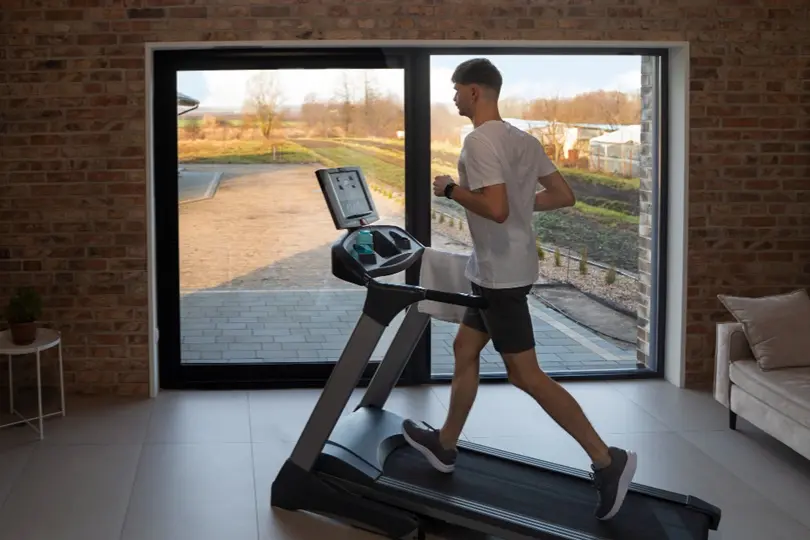
Console designs range from minimal displays to advanced interactive systems. While connectivity and entertainment features may enhance engagement, clarity, and ease of use remain the most important factors for everyday training. Key information such as speed, time, distance, and incline should be visible at a glance. A treadmill for sale should allow adjustments to be made quickly without disrupting movement or focus.
Frame Construction And Load Capacity
Maximum user weight ratings offer insight into a treadmill’s overall construction quality. Higher ratings typically indicate stronger frames, thicker decks, and more durable components. Even lighter users benefit from sturdier treadmills due to improved stability and reduced vibration.
Selecting a treadmill for sale with a solid frame improves comfort, lowers noise levels, and extends the usable life of the equipment.
Warranty Terms and Ongoing Support
Warranty coverage reflects manufacturer confidence and reduces ownership risk. Strong coverage on the motor and frame is particularly important, as these components are costly to repair or replace. Australian buyers should also consider access to local servicing and spare parts. A treadmill is a long-term investment, and support availability significantly affects overall value.
New Versus Pre-Owned Treadmills
While second-hand treadmills can reduce upfront cost, they often come with unknown usage history and limited support options. Wear on motors, belts, and electronics may not be immediately visible. A new treadmill for sale provides predictable performance, modern safety standards, and warranty protection, which can offer better value over the long term despite a higher initial price.
Choosing a Reliable Australian Retailer
Retailer credibility influences product quality, warranty handling, and after-sales support. Specialist fitness retailers typically provide clearer specifications, better guidance, and stronger service networks than general retailers. For those researching a dependable treadmill for sale, selecting an established Australian supplier can simplify purchasing and reduce long-term ownership risk. The most suitable treadmill is one that aligns with the user’s fitness goals, frequency of use, and available space. Walkers, runners, and multi-user households all have different requirements. By prioritising motor durability, deck size, frame strength, and warranty coverage, buyers can select a treadmill that delivers consistent performance and supports long-term health outcomes.
Frequently Asked Questions
What should be prioritised when selecting a treadmill for sale? Motor durability, frame strength, deck size, and warranty coverage are the most critical factors.
Are folding treadmills suitable for regular exercise? Yes, if they are designed with adequate motor power and structural stability.
How much space is required for a home treadmill? Space should include the treadmill footprint, rear clearance, and ceiling height for incline use.
Are treadmills appropriate for apartment living? Higher-quality treadmills generally operate more quietly and with less vibration.
Is incline functionality necessary? Incline is optional but increases workout variety and training intensity.
How long does a good treadmill typically last? With proper care, quality treadmills can remain functional for many years.
Does retailer support matter after purchase? Yes, access to servicing and replacement parts is essential for long-term use.
Can one treadmill suit multiple household members? Yes, if it has sufficient deck size and weight capacity.
Are advanced display features essential for results? No, consistent usage matters more than technology features.
Is buying a new treadmill for sale safer than buying used? New treadmills offer warranty protection and predictable performance.
Photo Credit:
Photo 1, Credit to Freepik || Photo 2, Credit to Freepik (CC0 1.0)