
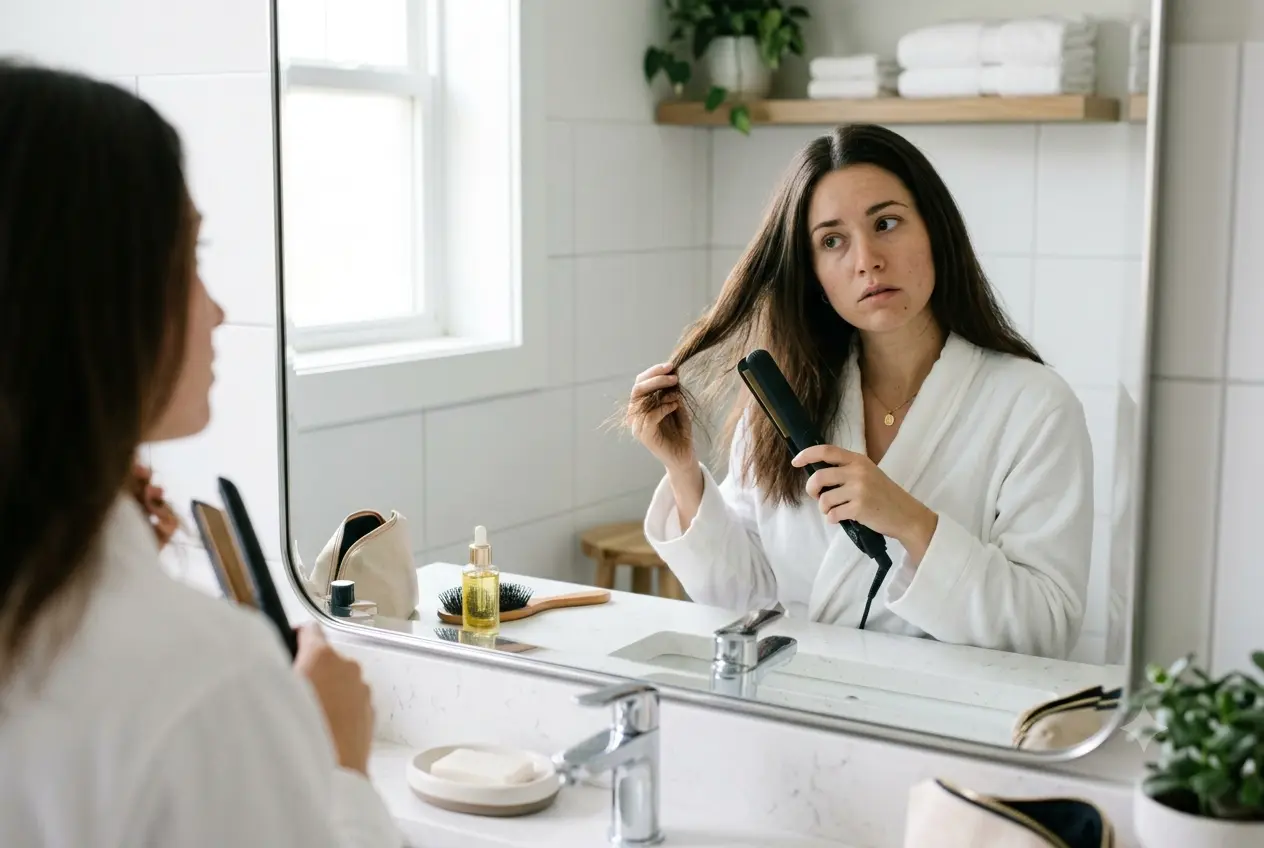
Hair styling is an important part of many people’s daily routines. Whether preparing for work, a special event, or simply maintaining a polished appearance, styling can help boost confidence and enhance personal style. However, frequent use of heat, chemical treatments, and improper styling habits can gradually weaken hair, leading to dryness, breakage, and dullness.
The good news? Beautiful styles and healthy hair aren’t mutually exclusive. The right techniques and products make both possible at the same time. The key is understanding where the real damage comes from, and that’s not always where you think.
What Does a Healthy Hair Care Routine Actually Look Like?
Healthy styling begins with healthy hair. No matter how skilled you are at creating different looks, damaged hair is often difficult to manage and style effectively. Establishing a strong hair care routine can significantly improve both the appearance and resilience of your hair.
Choose a shampoo and conditioner that are appropriate for your hair type. Individuals with dry hair may benefit from moisturizing formulas, while those with fine or oily hair often prefer lightweight products. Deep conditioning treatments can provide additional nourishment and help restore moisture lost through styling.
Regular trims matter more than most people realize. Split ends don’t just stay at the tip, they travel up the hair shaft and cause breakage further and further from the end. Trimming every eight to twelve weeks prevents that progression and keeps your hair looking fuller and healthier.
Diet plays a role too. Nutrients like biotin, iron, zinc, and vitamins D and E directly support hair structure and growth from the follicle. No topical product compensates for a nutritional gap at the root level.
Why Does the Same Hair Advice Work for Some People and Wreck Others’ Hair?
Standard hair advice fails a large percentage of readers because it ignores the most important variable: your hair’s porosity. Porosity determines how your hair absorbs and retains moisture, and it makes identical products and techniques produce opposite results on different people.
Low-porosity hair has tightly closed cuticles. Products sit on the surface rather than being absorbed. Moisture takes longer to enter but stays longer once it’s in. High-porosity hair has raised or damaged cuticles that absorb quickly and lose moisture just as fast. Medium-porosity hair is the closest thing to “average”, and it’s less common than most articles assume.
The Protein-Moisture Balance Problem
Both protein and moisture are essential for healthy hair. But too much of either causes real damage, and the symptoms look almost identical to deficiency, which is why people keep adding more of the wrong thing.
Protein overload makes hair stiff, snappy, and brittle. It breaks into short pieces when handled. Moisture overload, called hygral fatigue, makes hair mushy, stretchy, and unable to hold a style. If your hair feels worse after adding more conditioner, hygral fatigue is the likely culprit. If it feels worse after a protein treatment, you’ve oversaturated on protein. The fix for each is the opposite of what instinct suggests.
Porosity Changes How You Should Deep Condition
High-porosity hair benefits from frequent deep conditioning, it absorbs moisture readily but loses it fast, so regular replenishment makes a visible difference. Low-porosity hair is a different story. Long conditioning sessions on low-porosity hair largely sit on the surface, doing nothing useful. Worse, they accelerate product buildup that blocks future treatments from penetrating.
Low-porosity hair responds better to heat during conditioning, a warm towel wrap or hooded dryer gently lifts the cuticle enough for moisture to enter. Without that step, the same deep conditioner that transforms high-porosity hair leaves low-porosity hair coated and weighed down.
The Scalp-Versus-Length Disconnect
An oily scalp with dry ends is one of the most common hair conditions. The advice for each contradicts the other. Moisturizing shampoos help the ends but worsen oiliness at the scalp. Clarifying shampoos fix the scalp but strip already-dry ends.
The practical solution: shampoo at the scalp only, letting the lather rinse through the lengths without direct application. Condition from mid-length to ends only, keeping product off the scalp. This two-zone approach treats both problems without forcing a compromise that serves neither.
How to Actually Test Your Porosity
You don’t need a professional to assess your porosity. Take a clean strand, no product on it, and drop it into a glass of room-temperature water. Watch for two minutes. A strand that floats is likely low porosity. One that sinks quickly is likely high porosity. Medium porosity sits in the middle of the water column.
This float test gives a rough baseline. Pair it with observation: does your hair take a long time to fully wet in the shower (low porosity)?
Does it dry unusually quickly (high porosity)?
Does it feel rough after protein treatments (already protein-saturated)?
Your hair tells you what it needs, the float test just gives you a framework for reading those signals correctly.
How Do You Minimize Heat Damage When Styling Your Hair?
Heat tools such as curling irons, flat irons, and blow dryers can create beautiful results, but excessive heat exposure is one of the most common causes of hair damage. Repeated use can weaken the hair cuticle, leading to brittleness and breakage.
Always apply a heat protectant before using any thermal tool. These products form a barrier between the tool and the hair shaft, slowing moisture loss and reducing direct thermal contact. They’re not optional, they’re the difference between controlled styling and cumulative structural damage.
It is also beneficial to lower heat settings whenever possible. Many people use higher temperatures than necessary, especially for fine or already processed hair. Using moderate heat often produces similar styling results while causing significantly less stress on the hair.
Allowing hair to air dry partially before blow-drying can further reduce exposure. Limiting heat styling to only a few times per week can also help preserve natural moisture and elasticity.
Which Styling Tools Cause the Least Hair Damage?
The tools used during styling can make a significant difference in the overall health of your hair. Brushes, combs, and styling devices should be selected carefully to minimize unnecessary stress and breakage.
For wet hair, always use a wide-tooth comb. Wet hair stretches up to 30% more than dry hair before breaking. Applying a regular brush to saturated strands creates enough tension to snap individual hairs at weak points. Start from the ends and work upward in sections.
Investing in quality hair styling tools can also contribute to healthier styling habits. Modern tools often feature advanced technologies designed to distribute heat more evenly, reducing the risk of hot spots that can damage strands. Similarly, brushes with flexible bristles can help minimize pulling and breakage during daily grooming.
Keeping styling tools clean is another important but often overlooked practice. Product buildup, oils, and debris can accumulate over time and transfer back onto the hair, affecting both scalp health and styling performance.
How Do Protective Hairstyles Help Keep Hair Healthy?
Constant pulling, brushing, and restyling can place unnecessary stress on hair. Protective and low-manipulation hairstyles help limit daily wear and tear while still allowing individuals to maintain an attractive appearance.
Styles such as loose braids, buns, twists, and ponytails can reduce friction and help preserve moisture. These styles are particularly beneficial during periods of harsh weather, when hair may be more susceptible to dryness and environmental stress.
However, it is important to avoid excessively tight hairstyles. Tight braids, ponytails, or extensions can place strain on the hair follicles, potentially leading to breakage or even traction-related hair loss over time.
Changing hairstyles regularly can also prevent repeated tension in the same areas of the scalp, promoting healthier growth and reducing stress on individual strands.
What Professional Stylists Notice That Clients Never Think to Mention
Some of the most impactful hair insights aren’t about products or techniques at all. They’re about daily habits most people never connect to their hair health, until a professional sees the pattern across hundreds of clients and traces the damage back to its source.
The Pillow Problem Nobody Talks About
The majority of mechanical hair damage in people who sleep on cotton pillowcases happens overnight, not during styling. Cotton creates friction as your head moves during sleep, enough to lift cuticles, create tangles along the nape and hairline, and cause consistent breakage in a pattern that experienced stylists identify immediately.
A satin or silk pillowcase reduces friction dramatically. So does a satin bonnet or sleep cap. Neither requires changing your entire routine. Either one removes a significant nightly damage source that no heat protectant, deep conditioner, or styling product can address, because the damage happens while you’re asleep.
How Your Water Is Working Against Everything You Apply
Hard water, water high in calcium and magnesium minerals, leaves a mineral film on the hair shaft that dulls color, creates a resistant coating that blocks conditioning ingredients from penetrating, and makes hair feel rougher than it actually is. Studies on hard water and hair confirm measurable differences in hair tensile strength and surface texture in hard water versus soft water regions.
In hard-water areas, clients spend money on treatments that significantly underperform because the water itself is working against absorption. A shower filter reduces mineral exposure at the source. A chelating shampoo, specifically formulated to remove mineral deposits, used every four to six weeks, clears the buildup and allows your regular products to actually work. Stylists who know their local water quality can often predict which product complaints they’ll hear most often.
The Stress-to-Shedding Timeline Most People Miss
Telogen effluvium, hair shedding triggered by physical or emotional stress, illness, surgery, or major hormonal shifts, typically appears three to six months after the triggering event, not immediately. Clients who notice increased shedding in spring often had a high-stress period the previous fall and don’t make the connection. They spend months buying products and supplements to address shedding that isn’t caused by a deficiency; it’s caused by a physiological event that has already passed.
Understanding the lag time matters for two reasons. First, it allows you to identify the actual cause instead of chasing symptoms. Second, it offers genuine reassurance, telogen effluvium is self-limiting in most cases. Once the stressor resolves, regrowth follows within six to twelve months without intervention.
What Your Hairline Is Telling You
Consistent thinning along the edges, breakage concentrated around the hairline, or a recession that appears in the same location year over year is almost always a mechanical story. Tight hairstyles, repeated tension in the same spot, or edge products with high alcohol content are the most common culprits. Traction alopecia from chronic tension is one of the most preventable forms of hair loss, and one of the most commonly misdiagnosed as genetic hair loss. If you’re losing hair along the hairline and wearing tight styles regularly, the style is the variable worth examining first.
Why “This Used to Work” Is a Meaningful Signal
Hair changes. Hormonal shifts, aging, seasonal transitions, medication, and cumulative chemical history all of it alters the hair’s current porosity, protein needs, and moisture retention. A conditioner that worked perfectly three years ago may be the wrong formula for what your hair actually is today. Your hair type at 34 isn’t the same as your hair type at 24. Stylists reassess a client’s hair profile periodically. Most people never do this at home, they continue with routines built for hair they no longer have and wonder why results have changed.
How Do You Choose Hair Products That Style Without Causing Damage?
Hair products play a major role in achieving desired styles, but using too many products or selecting unsuitable formulas can negatively affect hair health. Product choice should be based on both styling goals and hair needs.
Lightweight styling creams, mousses, and sprays can provide hold and definition without leaving excessive buildup. Overusing heavy products may weigh hair down and require more frequent washing, which can strip away natural oils.
Clarifying treatments can be used occasionally to remove buildup from styling products and environmental pollutants. This helps restore hair’s natural shine and improves the effectiveness of conditioners and treatments.
It is also wise to pay attention to ingredients. Products formulated with nourishing oils, proteins, and moisturizing ingredients often support healthier hair while delivering styling benefits. Creating a balance between styling performance and hair care can lead to better long-term results.
Hair Myths vs. Reality: What the Industry Gets Consistently Wrong
A lot of hair advice gets repeated so often that it sounds authoritative. Some of it was never accurate. Some was accurate once and is now outdated. And some of it is marketing language dressed up as fact. Here’s what experienced practitioners stopped believing years ago, and what’s actually true.
Myth 1: “Trimming your hair makes it grow faster.”
Trimming the ends has zero effect on how fast hair grows. Hair grows from the follicle at the scalp, at that rate at all. The confusion is understandable: trims prevent split ends from traveling up the shaft and causing breakage. When breakage is reduced, length is retained more effectively. The hair appears to grow faster because less of it is breaking off. Growth rate and length retention are different things. Trims support the second, not the first.
Myth 2: “Brushing 100 strokes a day gives you shiny hair.”
This advice comes from an era before regular shampooing was common. Brushing distributed scalp oils down the length of unwashed hair, and in that context, it made sense. Today, it’s not only unnecessary but actively harmful for most hair types. Excessive brushing causes mechanical trauma, cuticle lifting, frizz, and breakage. Twenty deliberate, gentle strokes from mid-length to ends are more than sufficient for most people. Fine, fragile, or naturally curly hair often does better with finger detangling or a wide-tooth comb only.
Myth 3: “Expensive products are always better.”
Price is not a reliable indicator of ingredient quality in haircare. The same active compounds appear in both luxury and drugstore formulations, specific silicones, humectants, and proteins that your hair either needs or doesn’t, regardless of what the bottle costs. What often differs between a $12 conditioner and a $60 one is fragrance concentration, packaging, and marketing spend. A product with the right ingredients for your specific hair type outperforms a prestigious one that doesn’t match your needs. Read the ingredient list. Ignore the price point.
Myth 4: “Natural hair doesn’t need as much moisture.”
This misconception causes measurable breakage in people with naturally coily or kinky hair textures. Tightly coiled hair has a structural curvature that makes it harder for scalp sebum, the natural oil your scalp produces, to travel down the hair shaft. That means natural hair is often inherently drier at the ends than straighter textures, regardless of chemical history. Research on hair fiber structure confirms that tighter curl patterns have more natural breakpoints along the strand. The “natural hair is resilient” narrative leads many people to significantly under-moisturize and then blame their hair for breakage that adequate moisture would have prevented.
Myth 5: “Products can repair split ends.”
No product closes a split end. Products that advertise split-end repair are using film-forming or bonding ingredients to temporarily smooth the appearance of a split, the underlying structural damage is unchanged, and the cosmetic bond dissolves at the next shampoo. This doesn’t mean conditioning serums are useless, they absolutely reduce further damage and improve manageability. But “repair” is marketing language, not chemistry. The only permanent solution for a split end is to remove it. Everything else is temporary management.
Key Takeaways: Styling and Hair Health Done Right
Styling and hair health do not have to be competing priorities. With the right foundation, thoughtful use of heat, proper tool selection, protective hairstyles, and carefully chosen products, it is possible to enjoy a wide variety of looks without compromising the condition of your hair.
Healthy hair responds better to styling, maintains its strength over time, and often requires less effort to achieve desired results. By adopting consistent care habits and making informed styling choices, individuals can enjoy beautiful, manageable hair that remains strong, vibrant, and healthy for years to come.
About The Author:
Ella Jones is a blogger, shopaholic, and beauty-obsessed blogger from NYC, armed with a Professional MBA from Fordham and a License in Cosmetology from Empire Beauty School in my hometown of Brooklyn. I’m the proud owner of a successful salon and beauty parlor in the city, and I’ve started this blog to share my beauty secrets with you. https://X.com/EllaJonesly