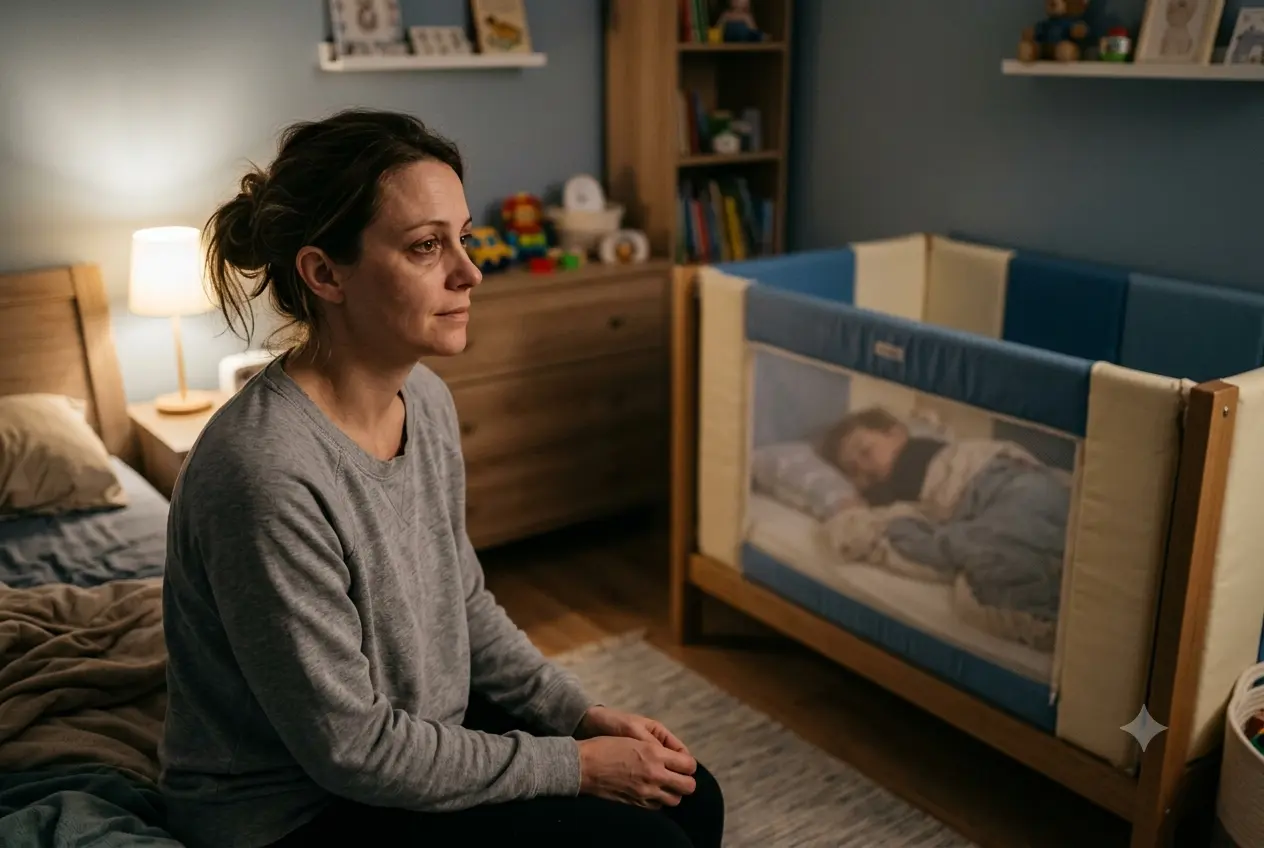
Most of us take sleep for granted. You climb into bed, pull up the covers, and the biggest risk you face is your partner stealing the blanket. But for a lot of families, bedtime is the most stressful stretch of the whole day. If you care for a child or adult who climbs, wanders, has seizures, or simply can’t understand why staying in bed matters, the hours after lights-out aren’t a break. They’re a shift.
I’ve spoken with parents who slept on the floor outside a bedroom door for years. Others who set alarms every ninety minutes, or who rearranged an entire house around one person’s safety. What almost none of them mention at first is the toll it takes on their own health.
Does Sleep Deprivation Harm Family Caregivers Too?
Yes, and the research is detailed on this. Ongoing sleep deprivation is linked to higher blood pressure, weakened immunity, weight gain, and a measurable drop in mental health. Caregivers who lose sleep protecting someone else are putting their own health at real risk. This is a two-person problem.
The safety of the person you care for and your own long-term wellbeing are tied together far more tightly than most people realize. Solve one badly, and you tend to erode the other.
Why Standard Bed Rails and Gates Fail Children with Complex Needs
Standard bed rails, baby gates, and mattress-on-the-floor setups all have their place, but they were designed for typical situations. They tend to fail in exactly the moments they’re needed most. A determined climber gets over the rail. A gate doesn’t protect a person mid-seizure down the hallway.
Does Nighttime Wandering Put Children with Autism at Greater Risk?
Yes, significantly. Nighttime elopement is one of the most underreported safety crises in caregiving. When someone can leave a bed and a room unnoticed at 3 a.m., the risks stretch well beyond a bump or a bruise. The National Autism Association documents how frequently wandering becomes a genuine emergency, and nighttime is when caregivers are least likely to catch it in time.
How Do Sensory Needs Affect Nighttime Safety?
For someone with sensory processing differences, an open, echoey bedroom can feel overwhelming rather than calming, making it even harder to settle down. Research on sensory processing disorder confirms that environmental triggers directly disrupt sleep quality. When a space feels unsettling, sleep suffers. A poor sleeper is a more restless, more mobile one. Safety and comfort turn out to be the same conversation.
What Equipment Actually Makes a Difference for High-Risk Sleepers?
Purpose-built safety beds are specifically designed for people who climb, wander, or experience seizures at night. Unlike standard beds or adapted cribs, they combine reinforced padded panels, soft sturdy sides, breathable materials, and viewing panels, so you can check in without opening anything up. Done well, it feels less like a restriction and more like a den.
Working with a safety bed specialist like Safespaces means the bed is built around the individual rather than the other way around. That’s the gap this equipment is designed to fill.
Why Does Height Adjustment Matter in a Safety Bed?
Caregiver musculoskeletal injuries are among the most common occupational hazards in caregiving roles, and most of them happen during transfers. Height-adjustable beds reduce bending and lifting, which protects the long-term health of the person doing the caring. Small design choices add up over years of daily use.
Does an Enclosed Sleep Space Actually Help the Person Sleep Better?
Many families report that the enclosed design helps their loved one settle faster and stay asleep longer, partly because the space feels contained and predictable. Studies on enclosed sleep environments for children with autism suggest that reducing spatial uncertainty at night can meaningfully improve sleep duration and reduce nighttime disturbances. Better sleep for one person almost always means better sleep for everyone in the house.
How to Build a Healthy Bedtime Routine Around Specialist Equipment
Equipment is only part of the picture. The other part is routine.
Pediatric guidance from the American Academy of Pediatrics consistently points to consistency as the foundation of good sleep: the same wind-down steps, in the same order, at roughly the same time every night.
A few things tend to help:
- Keep the hour before bed low-stimulation. Dim the lights and cut the screens. Research on blue light and melatonin suppression confirms that screens close to bedtime push sleep onset back.
- Watch temperature and comfort. Discomfort you can’t see is a frequent hidden cause of night waking.
- Pay attention to daytime factors too. Caffeine, late naps, and irregular schedules all follow a person into the night.
If seizures are part of the picture, coordinate with your medical team. The CDC’s epilepsy management resources are a good starting point, and your neurologist can advise on positioning and monitoring that work alongside whatever sleep setup you choose.
Why Choosing Specialist Sleep Equipment Isn’t Giving Up
Here’s what families most need to hear: choosing specialist equipment is not giving up. It isn’t a sign you’ve failed to manage things “naturally.” It’s the same logic as a stair gate, a smoke alarm, or a car seat. You’re removing a known risk so everyone can actually rest.
The families who make this change describe the same thing afterward. Not just fewer scary moments at night, but a household that feels calmer during the day too. When you’re not braced for the next crisis, you have room to enjoy the person you love instead of only protecting them.
Safe sleep is health, full stop, for the person in the bed and for the one who’s been keeping watch.
Frequently Asked Questions
Why do children with autism or complex needs have more trouble sleeping safely at night?
Children with autism are significantly more likely to experience sleep difficulties than neurotypical children, with research suggesting rates as high as 80%. Sensory sensitivities, irregular melatonin production, and difficulty with transitions all play a role. Nighttime wandering adds a physical safety layer on top of the sleep quality problem, which is why standard solutions often fall short.
Is nighttime wandering actually dangerous, or is it just inconvenient?
It’s genuinely dangerous. The National Autism Association reports that wandering is one of the leading causes of injury and death among individuals with autism, and nighttime incidents are particularly high-risk because caregivers are asleep and response time is slow. Water and traffic are the most common hazards once someone leaves the home undetected.
Can a specialist safety bed really improve sleep quality, or does it just reduce risk?
Both, according to families who use them. The enclosed design reduces sensory overstimulation and creates a predictable, contained environment, which many individuals with autism respond to positively. Published research on enclosed sleep spaces suggests meaningful improvements in sleep duration and nighttime disturbances. Risk reduction and sleep quality tend to improve together.
How does caregiver sleep deprivation affect their long-term health?
The effects are significant and well-documented. Chronic sleep loss raises blood pressure, weakens immune function, contributes to weight gain, and increases the risk of depression and anxiety. Caregivers who consistently lose sleep are at elevated risk for burnout and physical illness, which directly affects the quality of care they can provide. Protecting a caregiver’s sleep isn’t a luxury; it’s part of the care plan.
What bedtime routine changes actually help children with complex needs sleep better?
Consistency is the most evidence-backed factor. The American Academy of Pediatrics recommends the same wind-down steps in the same order every night. Reducing screen exposure in the final hour matters too, blue light suppresses melatonin production and delays sleep onset. Temperature comfort and eliminating daytime caffeine round out the practical changes most families see real results from.
About The Author:
Teresa Kariuki is a Georgia-based blogger with a focus on health, fitness, and caregiving technology. Her mission is to explore how the latest tech innovations can simplify wellness and provide better support for caregivers. Follow her latest updates and professional journey at about.me/teresakariuki.