TL;DR: A great smile starts with a healthy foundation, not the flashiest procedure. This guide walks you through the 5 main routes in cosmetic dentistry in 2026: building your oral health base, choosing between Invisalign and braces, transforming your look with porcelain veneers, whitening your teeth without wrecking them, and replacing missing teeth with implants. Read it, then run through the Smile Success Checklist at the bottom to figure out exactly where to start.
You’re unhappy with your teeth. Maybe you’ve been avoiding photos for years. Maybe you cover your mouth when you laugh. So you open a browser and start searching “veneers” or “teeth whitening kit“, and suddenly you’re 45 minutes deep with no clearer idea of what you actually need.
Cosmetic dentistry is a $35.7 billion industry in 2026, according to Fortune Business Insights market data. And a lot of that money goes toward procedures people jumped into too fast. The right procedure exists for almost every problem. But the right procedure for you depends on where your mouth is starting from, what your timeline looks like, and what you’re actually willing to commit to maintaining.
That’s what this guide is for. We’re walking through every major cosmetic dentistry option in plain terms, costs, timelines, what works, and what can backfire, so you can go into your consultation knowing exactly what questions to ask.
What does a healthy foundation for cosmetic dentistry actually look like?
Before any cosmetic work can happen, your gums and enamel need to be in stable shape. A cosmetic dentist won’t (and shouldn’t) place veneers over a tooth with active decay, bond to enamel that’s worn thin, or whiten teeth sitting next to infected gums. You’d be renovating a house with a bad foundation.
This means getting the basics right first: brushing twice a day with a fluoride toothpaste, flossing daily, limiting acidic and sugary drinks, and keeping up with professional cleanings every 6 months. It also means treating any existing gum disease or cavities before booking a cosmetic consultation.
Think of it practically. If you want veneers but you have uncontrolled gum inflammation, your dentist will send you back to square one anyway. Getting that baseline sorted first isn’t a detour; it saves you time and money. You can read more about how mouth care affects your whole body to understand why oral health goes well beyond your teeth.
A “cosmetic-ready” mouth looks like this: no active cavities, no bleeding gums, stable bone levels, and enamel that isn’t critically thin. Once you’re there, every cosmetic option opens up.
Invisalign vs. braces: which one actually fits your life?
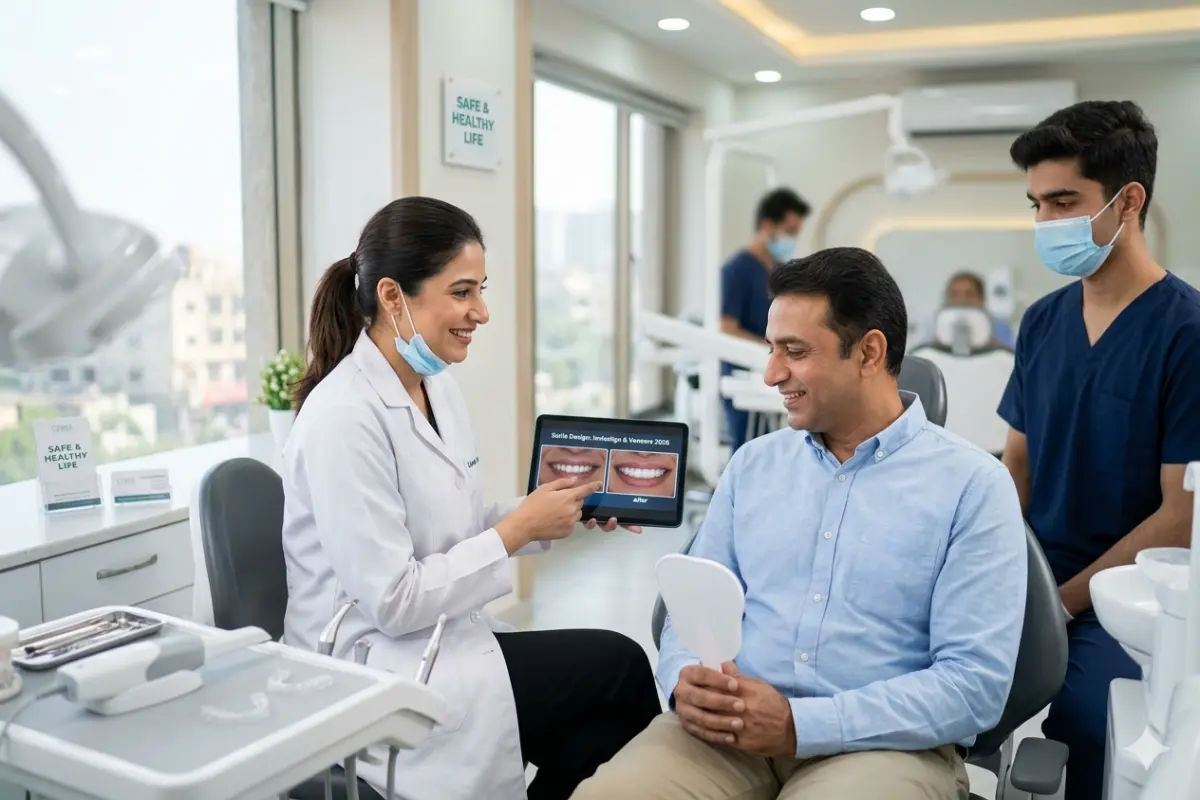
Invisalign works well for mild to moderate alignment issues in adults who will consistently wear the trays for 22 hours a day. Traditional braces work for a wider range of cases. including complex bite problems, and removing the compliance variable entirely. Your orthodontist’s case assessment, not your preference for clear trays, should drive the decision.
According to the AAO’s 2025 patient census, 1.91 million adults were in active orthodontic treatment in the United States, up from 1.64 million two years prior. One in three orthodontic patients today is an adult. The options have genuinely expanded.
Invisalign’s appeal is obvious. The trays are nearly invisible, removable for meals, and generally require fewer in-person appointments. Adults in professional settings overwhelmingly prefer them. But a 2025 systematic review published in the Angle Orthodontist identified patient compliance as the single most influential variable in Invisalign success, more than aligner design, more than attachment configuration. If you travel constantly, have an unpredictable schedule, or honestly know you’ll struggle to keep trays in for 22 hours daily, braces will probably get you to the finish line faster.
That’s not speculation. A 2025 randomized controlled trial found that in complex cases, braces patients finished treatment 4.8 months earlier than Invisalign patients. For simpler alignment issues with a motivated patient, Invisalign can be comparably fast.
On cost: traditional braces run $3,000 to $7,000. Invisalign sits slightly higher at $4,000 to $8,000. Most dental insurance plans now treat both equally under orthodontic benefits, typically covering 50% up to a lifetime maximum of $1,000 to $3,500.
The honest way to think about it: Invisalign is a tool that works brilliantly in the right hands and the right mouth. Your orthodontist will tell you which category you’re in.
Porcelain veneers: what you’re actually committing to
Veneers are thin shells of porcelain, about the thickness of a contact lens, bonded to the front surface of your teeth. They can correct permanent staining, chips, minor gaps, and shape irregularities in as few as 2 appointments. The results are genuinely dramatic. Porcelain mimics the light-reflecting properties of natural enamel in a way nothing else matches.
But this is a permanent decision. To place veneers, your dentist removes a thin layer of enamel from each tooth, typically 0.5 to 0.7mm. That enamel doesn’t grow back. You’ll have veneers, or some form of dental coverage, on those teeth for the rest of your life. Anyone who presents this to you as a casual procedure is leaving something out.
Porcelain veneers cost $900 to $2,500 per tooth nationally in 2026, per data from the American Academy of Cosmetic Dentistry. A full smile makeover covering 6 to 10 visible teeth typically runs $9,000 to $25,000. They’re rarely covered by insurance, though HSA and FSA funds can often be applied.
The good news on longevity: porcelain veneers carry a survival rate exceeding 90% at 5 years, and typically last 10 to 15 years with proper care. That works out to roughly $600 to $2,000 per year over a 15-year lifespan, comparable to other personal appearance investments when you look at it that way.
Who’s a good candidate? Someone with healthy underlying teeth, realistic expectations about maintenance, and a commitment to avoiding habits that stress porcelain: grinding, biting nails, and chewing ice. If you have significant alignment issues, your dentist may recommend fixing those first; orthodontics can actually eliminate the need for veneers in some cases.
You can also explore the site’s post on how to get the smile you’ve always wanted for more on cosmetic options, including Lumineers and bonding.
Is teeth whitening actually safe?
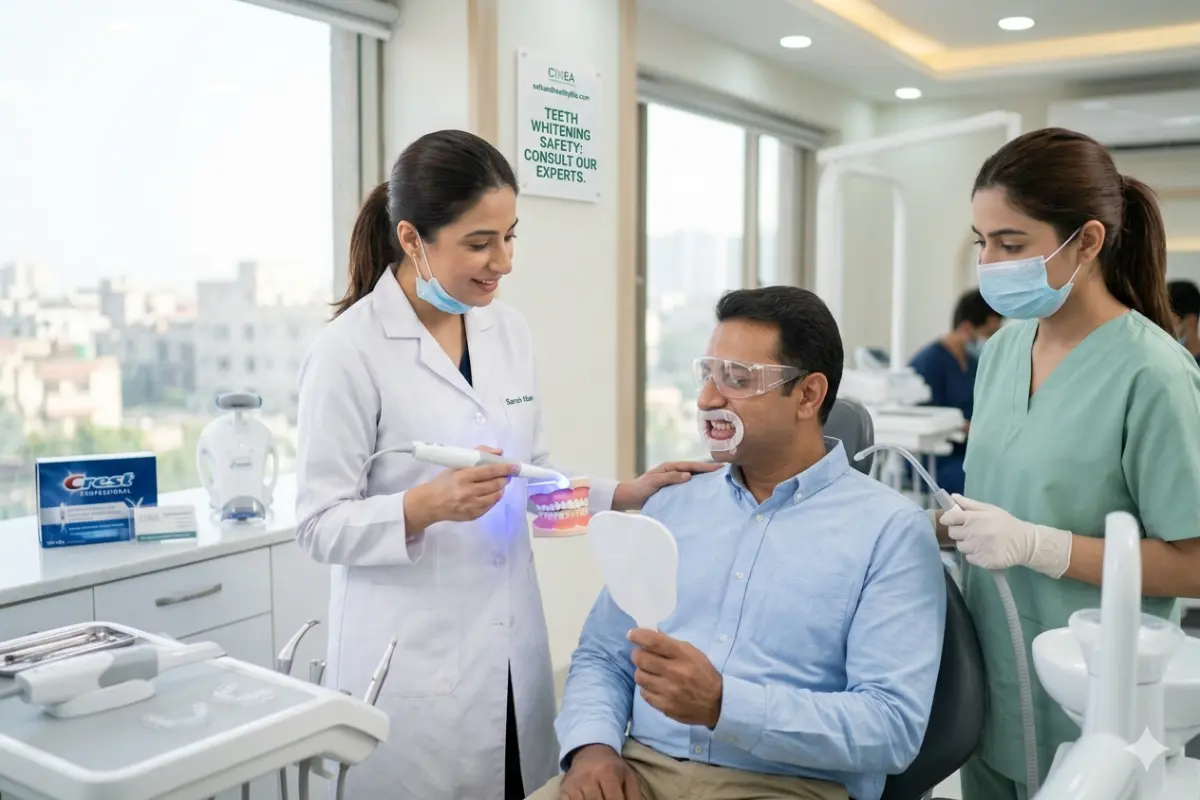
Professional whitening is safe and effective. Many popular home remedies, such as charcoal, lemon juice, and baking soda, can damage enamel permanently. The safest over-the-counter options carry the ADA Seal of Acceptance. When in doubt, go to your dentist.
Let’s settle the charcoal question. Zero studies are proving activated charcoal whitens teeth. What it does have is an abrasive texture that can scratch enamel over time, which eventually makes teeth look more yellow as the dentin underneath becomes exposed. The ADA does not recommend charcoal toothpaste due to a lack of safety data.
Lemon juice is worse. The acid in lemon juice erodes enamel, and once enamel is gone, it doesn’t regenerate. You’re not whitening your teeth with lemon juice; you’re thinning the enamel until the yellow dentin shows through. That’s the opposite of the intended effect.
Professional in-office whitening uses hydrogen peroxide gel at a controlled pH, sometimes with an LED light to accelerate the reaction. It’s fast (about 45 minutes), effective, and monitored. The cost runs $300 to $600, and results typically last 1 to 2 years. For at-home options, custom trays from your dentist are the next safest step down.
If you prefer over-the-counter products, look for the ADA Seal of Acceptance on the packaging. That seal means the product has been independently tested for both safety and effectiveness. Most major whitening strip brands carry it. Charcoal toothpaste currently does not.
One practical note: whitening only works on natural tooth enamel. It won’t change the color of crowns, veneers, or bonding. If you have restorations, whiten first, then match the restorations to your new shade.
Dental implants: the most permanent fix for missing teeth
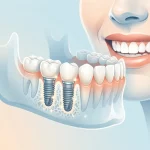
A dental implant is a titanium post surgically placed into the jawbone, topped with a crown. It looks and functions like a natural tooth, prevents bone loss that occurs after extraction, and carries a 95 to 97% success rate. The process takes months, but it’s the closest thing to a permanent, one-time solution that currently exists.
Missing teeth aren’t just cosmetic. When a tooth is extracted, and nothing replaces it, the jawbone in that area starts to resorb; it literally shrinks because it no longer has stimulation. Studies show dental implants can reduce bone resorption by up to 50% in the first year after placement, compared to leaving the gap empty or using dentures. That structural preservation affects your facial profile over time.
Over 3 million Americans currently have dental implants, with around 500,000 new placements annually. A January 2026 peer-reviewed study in the journal Materials analyzing 158,824 implants found a clinical success rate of 97.83%, even in cases requiring simultaneous bone augmentation. That’s an extremely high bar for any surgical procedure.
Compare that to dentures. Traditional dentures rest on the gumline and rely on adhesives or suction for stability. Around 20% of denture wearers need their fittings readjusted within 3 years due to bone changes in the mouth. They typically need full replacement every 5 to 7 years.
Cost is the honest obstacle for implants. A single tooth replacement runs $3,000 to $5,000. Multiple implants or full-arch solutions scale up from there. Most insurance plans cover little to no of it. The timeline also requires patience; healing between the implant placement and final crown can take 3 to 6 months.
For the full picture of what the surgical process looks like, our post on what to expect from a dental procedure walks through consultation, surgery, and recovery in plain terms.
✅ The Smile Success Checklist
Work through these before your first cosmetic consultation. Each one either unlocks the next step or tells you where to focus first.
- 🦷Enamel and gum health
Is your sensitivity under control? Any active cavities or bleeding gums? These need to be addressed before any cosmetic work. - 📐Alignment
Do you have a bite issue (functional, needs orthodontics) or just a spacing and appearance issue (may be addressable with veneers or bonding)? - ⚪Whitening baseline
Have you tried professional whitening first? Many people find that whitening alone gets them 80% of the way there at a fraction of the cost. - 💰Budget
Have you compared the long-term cost of repeated whitening vs. a one-time veneer investment? The math often surprises people. - 📅Maintenance commitment
Are you genuinely prepared for 6-month checkups, wearing a night guard if needed, and replacing veneers or aligners on schedule?
If you can check all 5, you’re ready to walk into a consultation with a clear brief — and a dentist who respects you will appreciate that.
Looking for the right provider to start this process? Our guide to choosing the right dental provider covers exactly what to look for before you commit. And if you’re building better habits in the meantime, don’t sleep on keeping your smile healthy on the go; maintenance is what protects whatever investment you make.
The right cosmetic procedure doesn’t just change how your teeth look. Confidence is real, and for a lot of people, a smile they’re proud of genuinely changes how they show up in the world. The point of this guide is to make sure that investment lands in the right place for you, not the most expensive place, not the most popular one, but the right one.
Start with the checklist. Then book a consultation.
Frequently Asked Questions
How much does a full smile makeover cost in 2026?
It depends heavily on what procedures you need. Professional whitening alone runs $300 to $600. A full set of porcelain veneers (6 to 10 teeth) typically costs $9,000 to $25,000. Orthodontics add $3,000 to $8,000. A single dental implant runs $3,000 to $5,000. Most cosmetic procedures aren’t covered by dental insurance, so budget planning before your consultation is worth doing carefully.
Can I get veneers if I haven’t fixed my gum disease yet?
No, and a responsible cosmetic dentist won’t proceed until gum disease is treated and stable. Bonding veneers to teeth with active gum disease puts the work at risk and can accelerate bone loss. Get a full periodontal evaluation first. Once your gums are healthy for at least a few months, cosmetic work becomes viable.
How long does Invisalign take for adults?
Treatment length varies by case complexity, but most adult cases run 12 to 22 months. Mild alignment issues can sometimes be resolved in 6 to 12 months. More complex cases may require refinement rounds that add time and cost. A 2025 systematic review identified patient compliance (wearing aligners 22 hours/day consistently) as the single biggest variable in whether treatment finishes on schedule.
What teeth whitening products are actually ADA-approved?
Look for the ADA Seal of Acceptance on the packaging; it means the product has been independently tested for both safety and effectiveness. Most major whitening strip brands (like Crest and Colgate) carry it. Charcoal toothpaste currently does not. The ADA does not recommend charcoal-based products due to insufficient safety data and the risk of enamel wear.
Are dental implants worth the cost compared to dentures?
For most people who qualify, yes, over a 10 to 15-year horizon. Dentures typically need relining or replacement every 5 to 7 years and don’t prevent jawbone loss. Implants carry a 95 to 97% success rate, preserve bone structure, and function like natural teeth. The higher upfront cost ($3,000 to $5,000 per tooth) becomes more competitive when you account for the long-term maintenance and replacement costs of dentures.
About The Author:
Tany Clarck is a renowned blogger who specializes in the medical genre, especially in dental health. He has more than a thousand articles to his credit about perfect health. On numerous occasions, he has spoken about TMJ disorder, Oral hygiene, and similar mega trends related to dentists in Grand Prairie.
Medical disclaimer: This content is for informational purposes only and is not a substitute for professional medical advice.