Want better cardiovascular fitness and stamina, but without grinding your joints into dust? That’s real tension. Low-impact sports cut right through it. Knees, hips, ankles, lower back, all of them take a beating from repetitive pounding.
These alternatives let you build genuine aerobic capacity while sparing that connective tissue. Recovering injury, managing something chronic, or just tired of feeling wrecked after workouts, doesn’t matter. The pathway to real endurance exists here.
1. Swimming
Few activities touch swimming for sheer endurance-building comprehensiveness. The water handles almost your entire body weight, buoyancy does the heavy lifting, so impact stress simply vanishes. Meanwhile, your muscles push against water resistance the whole time. Upper body, core, legs, cardiovascular system, all of it fires at once.
That’s unusually efficient. The repetitive stroke patterns train aerobic capacity across long durations, and intensity is easy to adjust to change your pace, switch your stroke. Done. Many swimmers notice real gains in lung capacity and heart health within months of consistent work. There’s also a structural bonus, water resistance quietly strengthens the muscles that stabilize joints, which pays dividends in everything else you do.
2. Cycling
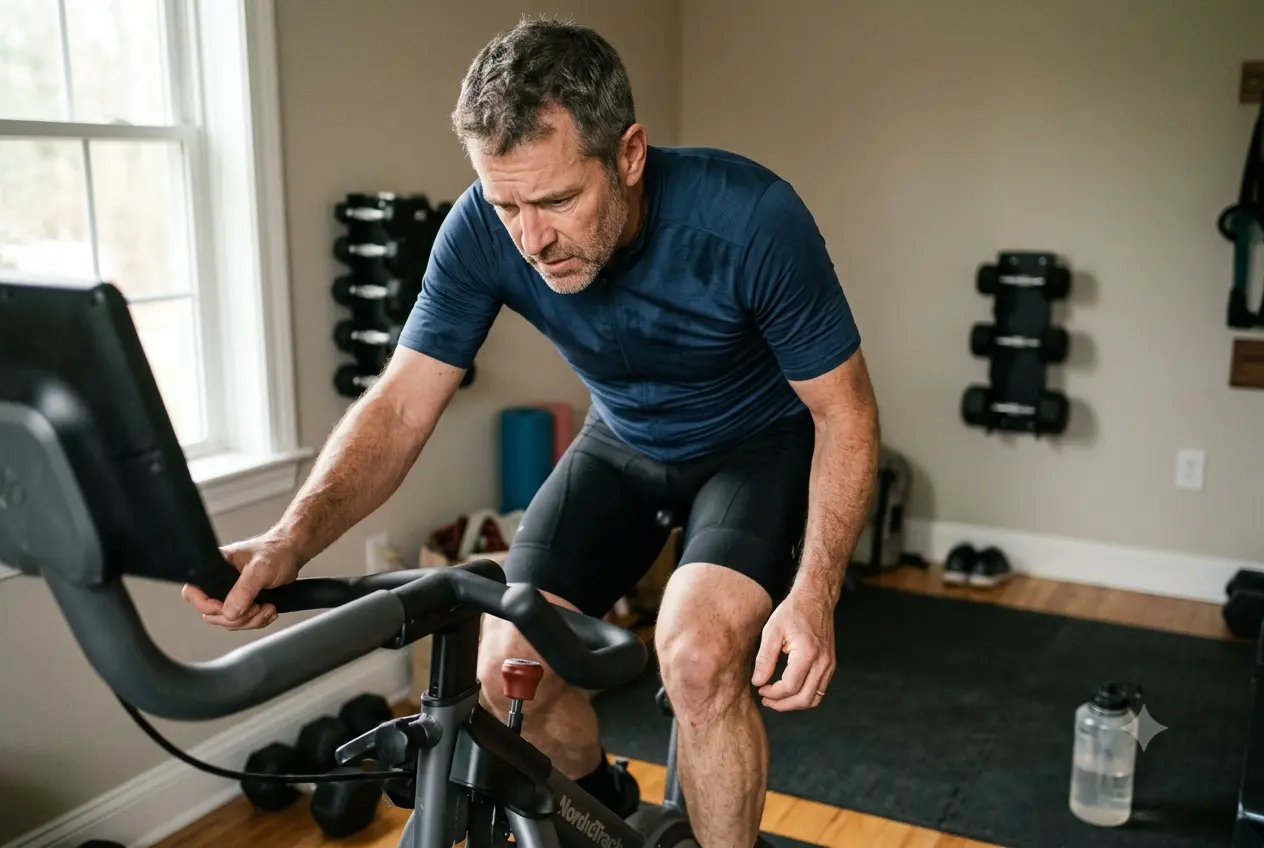
Road bike, mountain bike, stationary trainer, doesn’t matter. Cycling delivers serious endurance gains with joint impact that’s basically negligible. Your weight sits on the saddle. Your legs move in smooth circles. Nothing absorbs shock through your knees the way running does. Sustained moderate-intensity riding is precisely the stimulus that builds lasting aerobic capacity, it’s not complicated.
Resistance is adjustable on most setups, so progressive challenge is always available as fitness climbs. Outdoor riding adds terrain variability and weather; indoor riding gives you control and convenience. Both work. Quads, hamstrings, glutes, calves, they all develop, while joints stay protected from unnecessary wear.
Can Low-Impact Sports Actually Cause More Damage Than Running?
Yes, in specific situations. Poor bike fit, high swimming volume, and incorrect rowing posture can each lead to overuse injuries that develop silently over weeks. The “low-impact” label doesn’t protect you if your mechanics or training load are off.
Most articles treat low-impact sports as automatically safe. They’re not. The difference between running and cycling isn’t that one injures you and the other doesn’t. The difference lies in which tissues bear the load and how quickly damage accumulates when something’s wrong.
Here’s where it goes wrong in each sport:
Cycling and anterior knee pain. A European Journal of Sport Science study found that a saddle set too low increases knee adduction forces and compressive load at the patellofemoral joint. Patellofemoral Pain Syndrome accounts for roughly 25% of all overuse injuries in cyclists. The fix is a proper bike fit, not fewer miles. A knee flexion angle of 25-30° at the bottom of the pedal stroke is the target, per biomechanics research published in 2025.
Swimmer’s shoulder. This isn’t a rare diagnosis. NIH data from a systematic review shows shoulder injury rates in competitive swimmers range from 40% to 91%, with the supraspinatus tendon as the primary casualty. More concerning: a PubMed study on training volume and tendon thickness found that elite swimmers training more than 35 km per week were 4 times more likely to develop tendinopathy than those swimming less. The injury builds silently, long before pain becomes noticeable.
Rowing and the lumbar spine. The drive position in rowing loads your lower back under both compression and shear, especially if you have an anterior pelvic tilt. Seated doesn’t mean spinal-safe. Coaching cues that fix this: hinge from the hips, not the lower back, and brace your core through the entire drive.
The volume trap. Low-impact sports create a false ceiling on training load. You don’t feel wrecked afterward, so you add more time. But connective tissue damage accumulates without the soreness signal that usually warns you to back off. That’s the real hidden danger, not any single session, but the gradual buildup across weeks.
The fix in all cases is the same: mechanics first, volume second, intensity third.
3. Rowing
Don’t let the seated position fool you. Rowing is brutally demanding. Around ninety percent of the body muscles get recruited, legs drive first, then the core braces, then the back and arms pull through. That coordinated sequence builds muscular and cardiovascular endurance simultaneously. But here’s the thing: since you’re seated throughout, joint impact is essentially zero.
That makes rowing accessible across a wide range of fitness backgrounds and physical limitations. The smooth movement pattern also cuts injury risk sharply compared to jarring activities. Aerobic capacity and muscular endurance both respond quickly, meaningful improvements often show up within weeks. Competitive rowing adds a cognitive layer, too; the mental focus required is its own kind of endurance training.
4. Elliptical Training
The elliptical mimics running. But your feet never leave the pedals, so impact disappears. Cardiovascular intensity is comparable to running, without joint punishment. That’s the deal. Many people find they can sustain longer sessions on the elliptical simply because the reduced pounding means less soreness and fatigue accumulating in connective tissue.
Resistance and incline adjustments make interval work easy, vary the intensity, and build endurance faster. Some machines add moving handles, which pull the upper body in and raise overall muscle engagement. Regular use builds cardiovascular fitness alongside muscular endurance in the legs, glutes, and core. It’s unglamorous, but it works consistently.
Why Do Endurance Gains From Low-Impact Sports Plateau Faster?
Endurance gains from low-impact sports slow down when you keep adding time instead of changing intensity. Most people in pools, on bikes, or on ellipticals train in a comfortable aerobic zone that stops producing meaningful adaptation after a few months. The solution is intentional intensity distribution, not more hours.
This is the section no basic fitness article covers. Getting started is covered everywhere. What happens at month 4 when the scale stops moving, and your endurance feels stuck, that’s usually ignored.
The heart rate ceiling problem. Cycling in particular keeps most recreational riders in zone 2 (roughly 60-70% of max heart rate) for the vast majority of sessions. Zone 2 builds aerobic base. But VO2max adaptation, the ceiling that determines how fit you can actually become, requires spending time at 85-95% of max heart rate. If you never go there, your ceiling stays put.
Swimming trains you blind. Water cools your body, which suppresses the rise in heart rate you’d normally see at the same effort level on land. Most heart rate monitors don’t work reliably in water. So swimmers often genuinely don’t know what intensity they’re training at. Perceived effort in the pool is not the same as cardiovascular load.
Cross-training between 2 low-impact sports produces faster gains than doubling volume in one. Research published in Sports Medicine shows that VO2max transfer between sports exists but is mode-specific. Cycling and running transfer reasonably well. Swimming transfers minimally, because the horizontal body position changes cardiac demand. If you swim exclusively, your fitness gains stay in the pool.
Heart rate drift is your early warning. If the same pace or resistance requires 10 or more extra beats per minute after 8 weeks of consistent training, your body has adapted. You’re not getting a meaningful stimulus anymore. Something needs to change, and the right lever is usually intensity, not session length.
What periodization looks like in practice:
| Week | Focus | Intensity split |
|---|---|---|
| 1-2 | Base volume | 80% zone 2, 20% zone 3 |
| 3-4 | Introduce threshold | 70% zone 2, 20% zone 3, 10% zone 4 |
| 5-6 | VO2max stimulus | 60% zone 2, 20% zone 3, 20% zone 4-5 |
| 7 | Recovery | 90% zone 1-2, easy movement only |
| 8 | Test/retest | Track a benchmark effort vs. week 1 |
Rotate this structure every 8 weeks. Don’t just add minutes. Add stimulus.
5. Pickleball
Pickleball has grown into a particularly popular choice, low-impact, lateral movement, sustained activity. Equipment matters when precision and control during long match play are the priority, and athletes serious about performance often use professional luxury pickleball paddles to extract the most from each session.
Myths vs. reality: what most people get wrong about low-impact endurance training
| Myth | Reality |
|---|---|
| Swimming is the best all-around endurance builder | Research in Sports Medicine shows swim training produces minimal VO2max transfer to land-based activities. It’s excellent in isolation, weak for cross-sport fitness |
| More sessions per week always means faster endurance gains | Recovery is where adaptation happens. 4 well-structured sessions beat 7 mediocre ones, every time |
| Elliptical training can fully replace running for runners | It maintains aerobic base but doesn’t replicate the neuromuscular patterns running depends on. Returning runners still need a gradual run-walk transition |
| Low-impact means low effort | Perceived effort is lower because pounding is lower. Physiological demand, measured by heart rate and oxygen consumption, can be identical or higher than running at the same duration |
| Joint-friendly sports are only for older or injured people | Elite triathletes and ultrarunners use cycling and swimming as primary training tools specifically because they stack volume without accumulating joint breakdown |
The biggest myth of all: that choosing a low-impact sport means you’re off the hook for programming. You still need progression, intensity variation, and periodization. The only thing that changes is which tissues absorb the load.
Conclusion
Low-impact sports build real endurance. No joint carnage is required. Swimming, cycling, rowing, elliptical training, cross-country skiing, each one offers distinct advantages, and none of them demand that your knees pay the price. Which is right for you depends on fitness level, equipment access, and what you’ll stick with.
Rotating between several options prevents boredom and reduces repetitive strain, both common reasons people quit. Start with one. Add others as capacity grows. That approach builds balanced, long-term fitness without burnout. Any of these sports, trained consistently, will move the needle on cardiovascular capacity, muscular endurance, and overall health.
About The Author:
George Wilson is a fitness expert who loves to write about nutrition and gym equipment. Getting inspired by his fellow blogger friend, he decided to start his own fitness website, HealthoClock.Net, which helps readers to know which equipment is the best and most affordable.