
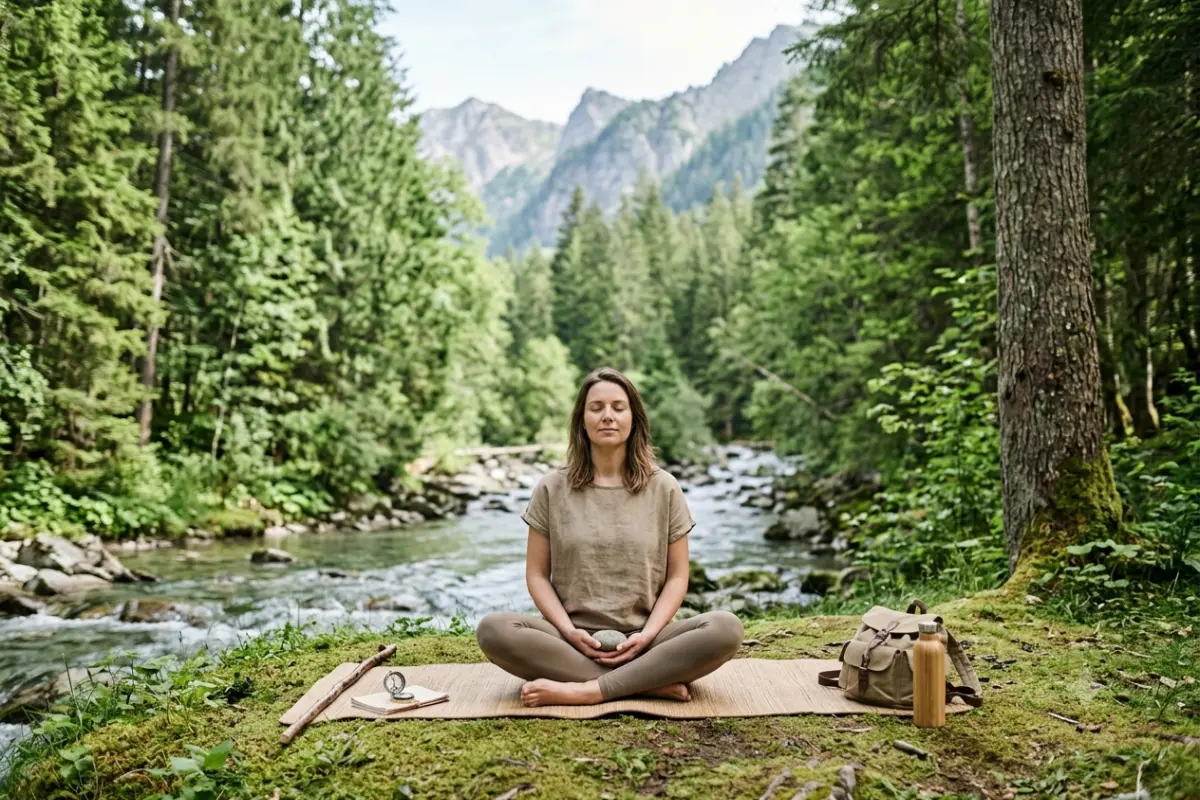
TL;DR: Modern life leaves us disconnected and exhausted, but nature-based healing retreats offer a proven path back to balance. This post explores how immersive natural settings combined with mindfulness practices can measurably lower your stress and restore mental clarity. Read on to discover the science behind ecotherapy, and make sure to tick our exclusive Nature-Based Healing Retreats Checklist to plan your own transformative journey.
There is something unsettling about the way modern life pulls us in a thousand directions at once. Millions of people wake up to buzzing phones, spend their days toggling between screens, and fall asleep to the ambient hum of city noise, never quite finding that elusive sense of peace. The constant stream of notifications, emails, and alerts does not just interrupt our days; it fragments our attention and chips away at our mental reserves. Mental health professionals are not just noticing this trend, they are sounding the alarm. In my own journey managing digital marketing platforms, I have felt this profound exhaustion firsthand. Finding actionable mental health tips becomes essential when your days are entirely dictated by algorithmic feeds and client metrics. This is why a growing number of people are looking for a complete reset through immersive Nature-Based Healing Retreats.
What Are Nature-Based Healing Retreats?
Nature-based healing retreats are structured wellness programs set in natural environments that combine immersive outdoor experiences with holistic therapies like meditation, yoga, and breathwork to restore physical, mental, and emotional health. These intentional programs recognize that true well-being requires a deeper intervention than a standard, passive vacation.
When you sign up for this type of experience, you are not just booking a hotel room near the woods. You are entering a carefully designed ecosystem built around human restoration. Peer-reviewed research published in the International Journal of Environmental Research and Public Health shows that structured wilderness programs provide significantly higher psychological recovery rates than typical leisure travel. These programs don’t treat wellness as a single-dimension problem. Instead, they acknowledge that deep recovery happens when we address physical health, mental clarity, emotional balance, and spiritual connection simultaneously.
How Do Nature-Based Healing Retreats Reduce Cortisol Levels?
Nature-based healing retreats reduce cortisol levels by lowering sympathetic nervous system activity and activating the parasympathetic nervous system. Being surrounded by natural elements like trees, mountains, or flowing water prompts the brain to slow down its production of fight-or-flight hormones, resulting in measurable physiological relaxation.
Scientists can actually measure what happens to your body when you spend time in these environments. The changes are not subtle; they are significant and reproducible. A landmark study published in Frontiers in Psychology discovered that spending just twenty to thirty minutes in a natural setting drops salivary cortisol levels by more than twenty percent.
Average Cortisol Drop After 20 Minutes in Nature: ~21.3%
Additional clinical data from the National Institutes of Health shows that forest immersion lowers ambient blood pressure readings and improves heart rate variability. When I first stepped away from my screens to spend a week in a quiet, forested area, I felt my physical tension dissolve within forty-eight hours. The chronic tightness in my shoulders vanished, proving that our bodies are hardwired to respond to the natural world.
Core Pillars of a Holistic Wellness Program
What sets these retreats apart is the intentional design of the entire experience. A typical day might include morning yoga as the sun rises over the mountains, followed by nutrient-dense meals designed to nourish rather than just fill. Throughout the day, participants engage in holistic wellness practices that ancient wisdom traditions have refined over centuries.
Breathwork sessions help to calm an overstimulated nervous system.
Sound therapy uses resonant frequencies to encourage deep, cellular relaxation.
Guided visualization helps unlock the body’s own healing intelligence.
What is particularly powerful is how the natural environment itself becomes part of the therapy. Walking meditation through old-growth forests and silent contemplation beside a mountain stream act as portals to different states of consciousness.
The group dynamic adds another essential element. Sharing this journey with others who understand the struggle creates bonds that often outlast the retreat itself. Between structured activities, there is space, blessed, unscheduled space, to sit with yourself without the usual escapes and distractions. When seeking transformative healing experiences, people increasingly turn to impactful spiritual retreats in North Carolina (or wherever they live) that combine natural settings with comprehensive wellness programs.
Why Is Unplugging From Technology Essential for Cognitive Recovery?
Unplugging from technology is essential for cognitive recovery because it stops the constant sensory bombardment caused by notifications, messages, and digital feeds. This break allows the brain’s prefrontal cortex to rest, which reduces daily anxiety, improves attention spans, and restores deep creative thinking.
The thought of completely unplugging from technology terrifies most people initially. What if there is an emergency?
What if something important happens?
What if people need me?
These anxious thoughts typically flood in during the first few hours of a retreat. But what happens next is almost universal: relief. Profound, unexpected relief washes over people when they realize just how much mental bandwidth their devices were consuming.
Research shared by the American Psychological Association confirms that natural environments restore cognitive energy and drastically reduce mental fatigue. When you remove digital friction, your mind naturally clarifies. You start noticing the sound of the wind, the texture of the soil, and the rhythm of your own thoughts.
Building Sustainable Habits for Long-Term Benefits
Here is where nature-based healing retreats distinguish themselves from quick fixes and temporary escapes: they plant seeds that keep growing long after you have left. Unlike a spa weekend that feels great but fades quickly, these immersive experiences tend to catalyze real, lasting changes in how people live.
The techniques participants learn are not theoretical; they are completely embodied. When you have actually felt the difference between a stressed nervous system and a regulated one, that knowledge viscerally stays with you. You return to your daily life equipped with practical tools for managing daily stress, allowing you to maintain your mental clarity even in dense city environments.
Conclusion
The movement toward nature-based healing retreats is not just a wellness trend; it is a response to something fundamental that is missing in how we live now. As cities grow denser, technology becomes more invasive, and the pace of life accelerates beyond what feels sustainable, these retreats offer a genuine pathway back to wholeness. Science keeps validating what we intuitively know, that we were not designed for this level of disconnection from the natural world. What makes these experiences particularly valuable is that they are not about escaping reality. Instead, they are about gaining the tools, insights, and practices needed to engage with reality more skillfully.
Are you ready to step away from the digital noise and reclaim your peace? Download and tick our exclusive Nature-Based Healing Retreats Checklist today to start planning your path back to balance.
Frequently Asked Questions
What Exactly Happens to Your Body During a Nature-based Retreat?
During a retreat, your nervous system shifts out of its survival mode and enters a state of deep rest. Your body experiences a drop in cortisol production, blood pressure stabilizes, and muscle tension throughout your shoulders and back releases naturally.
How Long Does it take for Nature Therapy to Start Working?
Clinical studies show that your body begins to relax within just twenty minutes of entering a natural setting. However, experiencing a deep cognitive reset and lasting emotional relief usually requires a stay of three to four consecutive days.
Do I Have to Completely Unplug from My Phone During a Retreat?
While full digital detoxes are highly recommended for optimal cognitive recovery, most retreats offer flexible options. Unplugging for even a few designated hours each day can still provide significant mental health benefits.
What is the Difference Between a Nature Retreat and a Regular Vacation?
A regular vacation often involves hectic travel schedules, digital connectivity, and passive entertainment. A nature retreat is intentionally structured around wellness practices, digital disconnection, and evidence-based therapies designed to heal the mind and body.
Are Nature-based Healing Programs Supported by Scientific Research?
Yes, extensive international research supports the validity of ecotherapy. Major health institutions and psychological associations have published numerous data sets proving that green spaces reduce stress, prevent burnout, and boost immune function.
About The Author:
Beth Shamaiengar is a contributing editor at Health Journal. She holds a Bachelor’s degree in Journalism from the University of North Carolina at Chapel Hill and, before joining the Health Journal, became an award-winning writer and editor during 11 years with other publications. She also spent nearly a decade volunteering in PTA leadership roles in local schools, building her skills in marketing, event planning, project management, and communicating with a variety of audiences.