
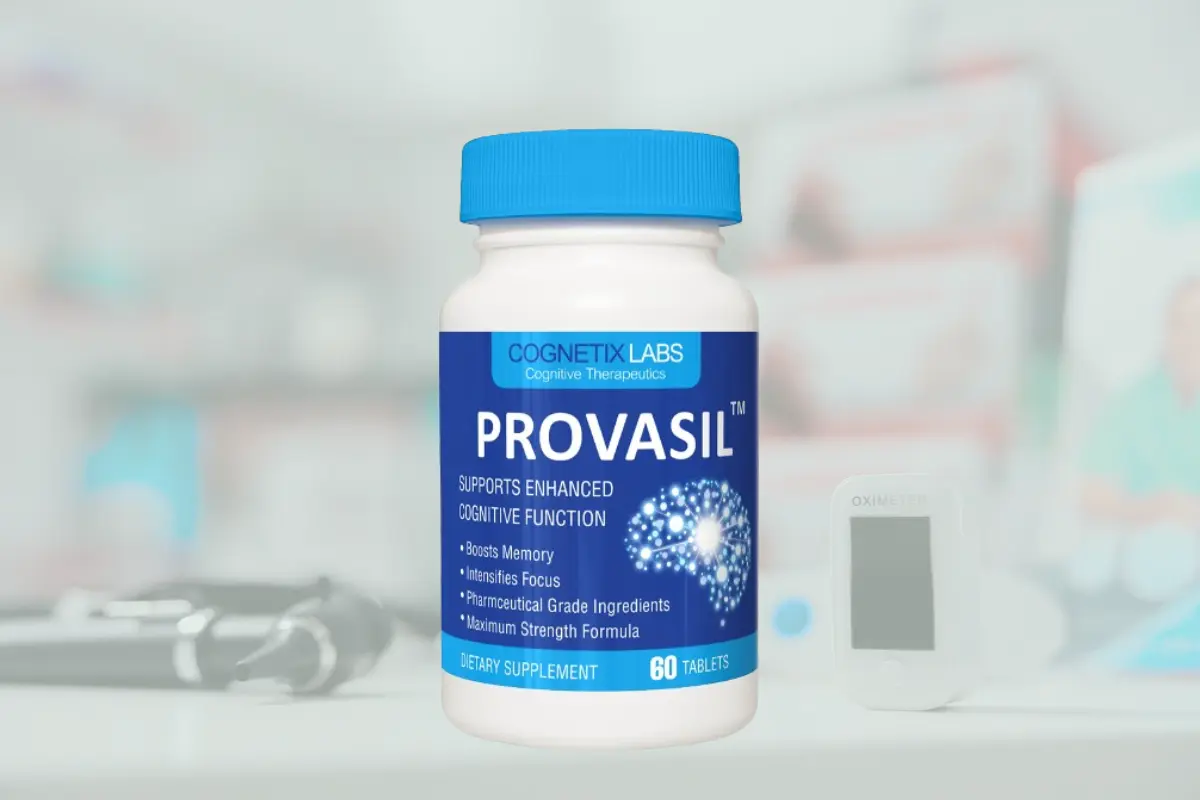
Last Updated: April 23, 2026 | Reviewed for Medical Accuracy
TL;DR: Provasil is a natural nootropic supplement designed to sharpen memory and focus. Most people tolerate it well, but ingredients like Bacopa monnieri and Ginkgo biloba can cause mild stomach upset, especially when taken on an empty stomach. If you take blood thinners, anti-seizure medications, or antidepressants, talk to your doctor first. I tried it myself and noticed a modest lift in focus and mental clarity. Read on for the full Provasil side effects breakdown and my honest verdict.
I still remember the afternoon I sat staring at my laptop screen, completely blanking on a word I use every single week. It was one of those moments that makes you realize your brain isn’t firing the way it used to. Brain fog. Slow recall. That nagging feeling that your mental edge is slipping, little by little.
So I started looking into nootropics. Provasil kept coming up. But before I even thought about ordering it, I wanted one thing: an honest answer about Provasil side effects.
The brain health supplement market is enormous right now. It’s projected to hit $35.94 billion by 2035, with natural nootropics leading the charge. That kind of growth means a lot of products making a lot of promises. And it means you need to be smart about what you put in your body.
This post gives you the full picture on Provasil, from the ingredients to the real side effects to who should avoid it entirely. I’ve done the research and tried it myself, so you don’t have to go in blind.
What Are the Most Common Provasil Side Effects?
Provasil side effects are generally mild and not experienced by most users. The most likely issues come from two ingredients: Bacopa monnieri and Ginkgo biloba. Both are well-researched herbs that can cause minor digestive discomfort, particularly when taken without food. Serious adverse effects have not been reported in clinical use.
Here’s what the research actually says.
Bacopa monnieri is one of the active ingredients in Provasil, and it’s the one most likely to cause noticeable side effects. According to NCBI StatPearls, the most common issues are gastrointestinal: increased stool frequency, nausea, and abdominal cramps. The Merck Manual confirms that upset stomach, nausea, diarrhea, and fatigue are the known side effects, and NCBI’s LiverTox database adds that dry mouth, headache, and dizziness may also occur, though these tend to be short-lived.
The good news: a 2025 review published on PMC found that Bacopa is generally non-toxic, with no serious adverse events reported in clinical trials.
For Ginkgo biloba, the picture is similar. Most people are fine, but there are some drug interactions worth knowing about (more on that in the next section).
When I started Provasil, I did notice some mild stomach gurgling in the first few days. Taking it with a meal fixed that completely. After about ten days, I didn’t notice any discomfort at all.
The testing group at TotalShape had a similar experience: the only side effect reported was mild gastrointestinal discomfort when taken without food, and it resolved quickly. No one reported anything serious.
What’s Actually in Provasil? A Look at the Ingredients
Provasil contains 15 active ingredients. That’s a long list for a supplement, and it’s worth knowing what you’re taking. Here’s a breakdown of the key ones and what science says about each.
Bacopa Monnieri is a herb used in Ayurvedic medicine for centuries. A systematic review cited by Flawless Bloom found it improved free recall and memory retention in healthy adults after 12 weeks of use. It’s one of the better-researched ingredients in the formula.
Phosphatidylserine is a phospholipid that helps brain cells signal to each other. A clinical trial involving 149 adults aged 50 to 75 found that 100mg three times daily for 12 weeks improved memory in people with mild, age-related memory decline. It supports focus, attention, and recall.
Ginkgo Leaf contains flavonoids that support blood flow to the brain. Research suggests it may enhance cognitive function in older adults, though results across studies are mixed.
DHA (Docosahexaenoic Acid) is an omega-3 fatty acid that makes up a significant portion of brain cell membranes. Low DHA levels are linked to faster cognitive decline.
L-Tyrosine supports the production of dopamine and norepinephrine, two neurotransmitters that affect mood, alertness, and working memory.
N-Acetyl-L-Carnitine (ALCAR) has antioxidant properties and may influence acetylcholine levels, which are key for memory formation.
Panax Ginseng Root is an adaptogen that helps the body manage stress and may support mental clarity. An online review found it could improve brain function in people with mild cognitive impairment, though more research is still needed.
Vitamin B12 and Folate are both directly linked to brain health. Deficiencies in either can accelerate cognitive decline. Provasil addresses this with both in one formula, which is genuinely useful for older adults whose B12 absorption tends to drop with age.
Choline Bitartrate is a precursor to acetylcholine. It supports memory and learning, especially in people with lower baseline choline levels.
Resveratrol is a plant compound with antioxidant properties. Some research shows it may support memory and cerebrovascular health, particularly in older adults.
If you’re interested in pairing this with natural supplement stacks that work alongside your diet, it helps to understand how each ingredient plays a role.
Who Should Avoid Provasil?
Provasil is not right for everyone. People taking blood thinners, anti-seizure medications, or certain antidepressants should avoid Provasil (or at least get a doctor’s sign-off first) because of its Ginkgo biloba content. Pregnant and breastfeeding women, and those with thyroid conditions, should also steer clear.
Here’s the breakdown.
Blood thinner users: Mayo Clinic is clear that Ginkgo may interact with anticoagulants and antiplatelet drugs, herbs, and supplements, potentially raising the risk of bleeding. That includes common medications like aspirin, warfarin, and ibuprofen. GoodRx’s review of Ginkgo interactions specifically flags warfarin, anti-seizure meds, and nifedipine as combinations to avoid without medical supervision.
Antidepressant users: Ginkgo may interfere with SSRIs like fluoxetine and with certain SNRIs. Speak with your doctor before combining these.
People with thyroid conditions: The 2025 PMC review on Bacopa notes that Bacopa monnieri should be used with caution (or avoided entirely) by people with thyroid conditions or those taking thyroid hormone medications.
Pregnant or breastfeeding women: Research on nootropics consistently recommends that none of these substances should be used during pregnancy or breastfeeding due to limited safety data.
Those with peptic ulcers: Bacopa’s cholinergic effects may aggravate gastrointestinal conditions, so use with caution if you have an existing stomach condition.
If you don’t fall into any of these groups, Provasil is generally considered safe for healthy adults.
Does Provasil Actually Work? My Honest Experience
I took Provasil for eight weeks. I want to give you the real picture, not a sales pitch.
In weeks one and two, I noticed very little. I’d heard that Bacopa in particular needs time to build up in your system, so I wasn’t expecting an overnight transformation. Week three was when I started to notice something: I felt a bit sharper in the mornings, less likely to lose my train of thought mid-sentence. My recall felt slightly quicker.
By week six, the improvement felt more consistent. I was focusing better during long working sessions and felt less mentally fatigued by mid-afternoon. It wasn’t a dramatic change, but it was real enough that I noticed when I stopped.
That said, I want to be honest with you about what the research says. A Johns Hopkins expert quoted by WebMD says there’s “no strong evidence” that memory supplements deliver on their promises, and notes that the cognitive circuits involved in human memory are incredibly complex. He also points out that belief and confidence can create real placebo effects.
The TotalShape review group found no significant improvement in cognitive test scores, though most reported moderate improvement in well-being and mental clarity.
My honest take: Provasil won’t turn you into a genius. But if you’re experiencing mild, age-related cognitive slowdown and you’re looking for a well-formulated natural option to support your brain alongside a healthy lifestyle, it’s worth trying. The 60-day money-back guarantee means you’re not risking your money to find out.
How Do You Take Provasil to Minimize Side Effects?
To minimize Provasil side effects, always take it with food. Start with a smaller dose in the first week to let your body adjust. Stay consistent for at least four to six weeks before judging the results. And never combine it with blood thinners or anti-seizure medications without speaking to your doctor first.
Here’s how to get the most out of it safely.
Always take it with a meal. This is the single most effective thing you can do to avoid stomach discomfort. Bacopa’s GI side effects are largely driven by its cholinergic action on the digestive system, and food buffers that significantly.
Start slow. If you’re sensitive to supplements, consider starting with one capsule instead of the full recommended dose for the first week. Let your body get used to the formula before increasing.
Support it with your diet. Provasil works best as part of a brain-healthy lifestyle. Pairing it with brain-supporting foods like salmon, walnuts, blueberries, and leafy greens gives your brain the nutrients it needs from multiple directions.
Be consistent. Bacopa needs at least four to six weeks of consistent use to show its cognitive effects. Don’t expect results in the first week, and don’t stop too early.
Prioritize sleep. No supplement replaces good sleep for brain health. Treat Provasil as a complement to healthy habits, not a substitute for them.
Talk to your doctor. If you take any prescription medication, run the ingredient list past your doctor or pharmacist before starting.
How Does Provasil Compare to Other Memory Supplements?
Provasil stands out from many competitors in a few key ways. It contains 15 active ingredients rather than the three or four you find in cheaper formulas. It’s manufactured in an FDA-compliant, GMP-certified facility in the USA. And it’s listed in the NIH’s Dietary Supplement Label Database, which means it meets established quality and labeling standards.
The 60-day money-back guarantee also puts it ahead of many supplements that offer 30 days or nothing at all. That’s a sign the manufacturer is confident in what they’re selling.
Where Provasil has room to improve: independent clinical trials on the full formula are limited. Most of the evidence for its ingredients comes from research on those compounds individually, not on Provasil as a combined product. That’s true of most supplement brands, but it’s worth knowing.
It’s also on the pricier end, at around $49.95 per month. If budget matters to you, look at whether bulk purchasing discounts bring that cost down.
For a deeper look at how to evaluate any supplement before you buy, it helps to apply the same critical lens: check the ingredient quality, the manufacturing standards, and the return policy before committing.
For context on the benefits of natural supplementation more broadly, it’s always worth understanding how ingredients interact with your unique body chemistry. And if you’re also looking at getting the best fitness supplements that work alongside a cognitive formula, pair them thoughtfully.
Is Provasil Worth Trying? The Bottom Line
For healthy adults with no major drug interactions, Provasil is a reasonably safe, well-formulated nootropic that’s worth trying. It won’t replace sleep, exercise, or a good diet. But as part of a brain-healthy lifestyle, its 15-ingredient formula targeting memory, focus, and oxidative stress offers more than most single-ingredient alternatives.
Results vary by individual, and you’ll need at least four to six weeks of consistent use to judge fairly.
Here are the three things I want you to take away from this review.
First: the Provasil side effects that actually matter are mild GI discomfort, primarily from Bacopa and Ginkgo. Taking it with food solves this for most people.
Second: if you’re on blood thinners, anti-seizure meds, thyroid medication, or antidepressants, talk to your doctor before trying Provasil. This isn’t optional.
Third: set realistic expectations. Provasil can support brain health. It’s not a miracle cure. Use it alongside the habits that actually protect your brain long-term.
Before you order, scroll through the Provasil side effects checklist below. Tick off each item to make sure this supplement is the right fit for you before you buy.
✓ Provasil Side Effects: Pre-Purchase Checklist
Tick every box that applies to you before ordering. All 10 checked means you’re good to go.
0%
Drug Interactions
I am not currently taking blood thinners (warfarin, aspirin, clopidogrel, or similar)
I am not taking anti-seizure or anticonvulsant medications
I am not taking antidepressants (SSRIs, SNRIs, or MAOIs)
Health Conditions
I do not have a thyroid condition or take thyroid medication
I am not pregnant or breastfeeding
I do not have a history of peptic ulcers or serious GI conditions
Usage Readiness
I plan to take it with food, especially in the first two weeks
I understand it may take four to eight weeks to notice effects
I have checked the ingredient list for any personal allergies
I am prepared to consult my doctor if I have any doubts
Frequently Asked Questions
Q. Can Provasil cause headaches or dizziness?
A. Headaches and dizziness are not commonly reported with Provasil, but they are listed as possible short-lived side effects of Bacopa monnieri, one of its key ingredients, according to NCBI’s LiverTox database. If you experience these symptoms after starting Provasil, try reducing your dose or taking it with a larger meal. If symptoms persist, stop use and speak with your doctor.
Q. Is Provasil safe to take every day long-term?
A. Bacopa monnieri has been shown to be safe and well-tolerated in clinical trials lasting up to 12 weeks, with no serious adverse events, according to a 2025 clinical review on PMC. Longer-term safety data on the full Provasil formula is limited, as is the case with most dietary supplements. It’s sensible to cycle off periodically and consult your doctor if you plan to take it beyond three months.
Q. Can I take Provasil with antidepressants?
A. This depends on the type of antidepressant. Mayo Clinic notes that Ginkgo biloba, an ingredient in Provasil, may interfere with certain antidepressants, including fluoxetine (Prozac). GoodRx’s interaction guide also flags SSRIs and SNRIs as combinations requiring medical advice. Always check with your prescribing doctor before adding Provasil to your routine if you take any antidepressant medication.
Q. How long does it take for Provasil to work?
Bacopa monnieri, one of the main active ingredients, typically requires at least four to twelve weeks of consistent daily use before cognitive benefits become measurable. A systematic review on Bacopa found improved free recall and memory retention in healthy adults after 12 weeks at doses between 300 and 450mg daily. Don’t judge Provasil in the first week. Give it six to eight weeks of consistent use before deciding if it’s working for you.
Q. Does Provasil interact with blood pressure medication?
A. A physician consulted on JustAnswer noted that Provasil is not expected to significantly affect blood pressure on its own. However, Ginkgo biloba, which is in the formula, can interact with certain blood pressure drugs, including calcium channel blockers like nifedipine, according to GoodRx’s interaction data. If you take any blood pressure medication, disclose Provasil to your doctor and pharmacist before starting.
About The Author:
Elena Swan is a freelance health and wellness writer specializing in mental illness. She likes researching complex health topics and presenting the information in a way that everyday people can understand so they can apply it to their own lives. View her portfolio at elenaswanwrites.com.
Disclaimer: This post is based on personal experience and publicly available research. It is not medical advice. Always consult a qualified healthcare provider before starting any new supplement, especially if you are on prescription medication.