

TL;DR: Most weight loss attempts fail within a year because they fight biology rather than working with it. This guide covers the metabolic science behind sustainable weight loss in 2026: why protein, sleep, and daily movement matter more than any diet “hack,” how losing just 5-10% of body weight rewires your cardiovascular risk, and the one action plan you can start this week.
You’ve probably tried something fast. A two-week cut. An aggressive calorie drop. A trending protocol you found online at midnight.
And maybe it worked, for a bit. Then your body fought back.
That’s not a willpower problem. It’s biology. And in 2026, we understand it well enough to stop losing that fight.
The science of sustainable weight loss has shifted away from speed and toward systems: what you eat, how you sleep, how much you move outside the gym, and how you manage the hormones quietly running the show. This guide brings all of it together in one place.
Why does losing weight feel so hard to keep off?
Sustainable weight loss isn’t just about eating less and moving more. It’s managing a biological system designed to protect your stored energy.
When you cut calories aggressively, your body adapts. It lowers its energy output through a process called adaptive thermogenesis, essentially becoming more efficient at running on less fuel. Research from Oregon State University confirms this mechanism frequently causes the “plateaus” people hit in clinical weight loss programs. The body’s metabolism adjusts to match reduced intake, making continued fat loss harder.
Meaningful change requires working with this system, not against it. That means gradual deficits, high protein, quality sleep, and daily low-intensity movement, not aggressive restriction that triggers the adaptive response.
What actually happens when you lose even a little weight?
Losing 5-10% of your body weight produces real, measurable changes in your health, even before you hit your goal weight.
Research published in Translational Behavioral Medicine tracked 401 overweight adults through a behavioral weight loss program. Those who lost 5-10% of initial body weight saw significant drops in triglycerides, total cholesterol, and LDL cholesterol. Participants who lost above 10% saw even greater improvements.
On the inflammation side, Springer’s Diabetology and Metabolic Syndrome found that obesity drives chronic low-grade inflammation through gut microbiome imbalances and immune system activation. Losing weight starts to reverse that.
Better blood pressure. Better blood sugar control. Lower cardiovascular risk. These changes happen at 5%. You don’t need to reach your “ideal” number to start winning biologically.
What should you actually eat to lose weight?
Sustainable weight loss isn’t about starvation. It’s about eating food that keeps your metabolism working and your muscles intact.
Current science points to 3 nutritional priorities:
Protein first. A 2024 meta-analysis in Clinical Nutrition ESPEN covering 47 studies and over 3,200 participants found that higher protein intake significantly prevents muscle loss during weight loss, and an intake above 1.3g per kg of body weight per day is associated with muscle preservation. Below 1.0g/kg is associated with muscle decline. The Endocrine Society’s 2025 research reinforced this, finding that women and older adults on weight loss programs are especially at risk of muscle loss and that adequate protein intake counteracts it.
Fat quality over fat avoidance. The old fear of fat is outdated. Healthy fats, olive oil, avocado, fatty fish, and nuts support hormone function and keep you full. What actually holds people back is hidden sugar in processed “diet foods” and refined carbs that spike blood sugar and drive cravings.
Fiber as a lever. Soluble fiber slows glucose absorption, blunts insulin spikes, and extends satiety. Whole grains, legumes, and vegetables are your tools here.
You can dive deeper into practical eating strategies in our guide on metabolism-boosting strategies.
How do sleep and stress quietly destroy weight loss progress?
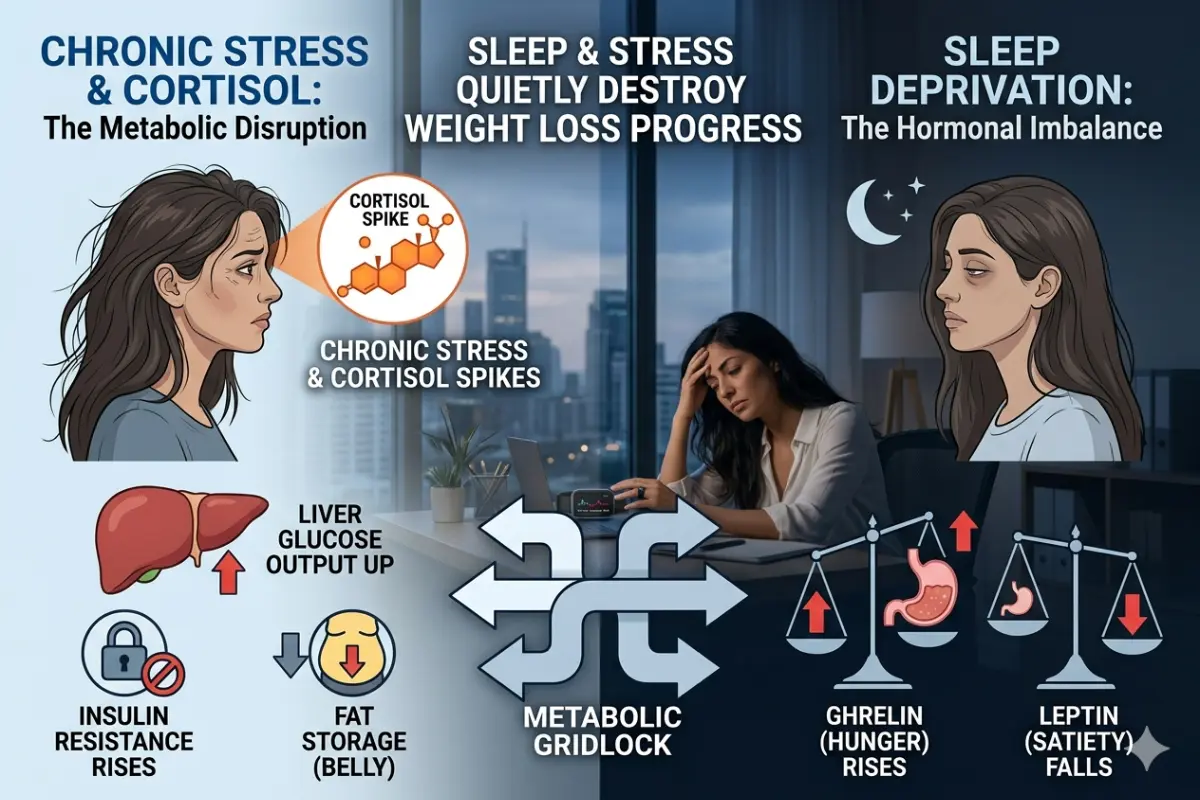
This is the one most people skip. And it costs them everything.
Scientific American’s research review found that sleep-deprived dieters lose more muscle and gain more fat than well-rested ones, even on the same diet. Why? Sleep deprivation triggers elevated cortisol levels, particularly later in the day. That cortisol signals the body to store fat and break down muscle tissue for energy instead.
The hormonal cascade doesn’t stop there. Research published in PMC shows that short sleep increases ghrelin (the hormone that makes you hungry) and decreases leptin (the hormone that says you’re full). You wake up biologically hungrier, biologically less satisfied, and hormonally primed to store fat.
Practical target: 7-9 hours, consistent schedule. Even shifting your bedtime by 30 minutes can alter cortisol patterns in meaningful ways, as Stanford’s Lifestyle Medicine research documents.
Why does daily movement beat one hour at the gym?
Non-Exercise Activity Thermogenesis, or NEAT, is the energy your body burns from everything that isn’t structured exercise, walking to the kitchen, fidgeting, taking stairs, and standing instead of sitting. Research from the American Journal of Physiology identifies NEAT as a major variable in total daily energy expenditure, one that varies enormously between people.
Sleep deprivation tanks NEAT. Advanced Women’s Health Clinics research explains that reduced energy from poor sleep leads to less spontaneous movement throughout the day, fewer steps, more sitting, lower calorie burn, creating a compounding deficit in your favor when you get it right, or against you when you don’t.
10,000 steps a day isn’t a fitness goal. It’s a metabolic baseline. Walking works on NEAT, keeps cortisol moderate, and has zero recovery cost, unlike an intense gym session that can elevate hunger hormones.
For people looking to build structured routines alongside daily movement, our home workout guide is a good starting point.
How does portion control prevent energy crashes?
One of the most underrated tools in sustainable weight loss is stabilizing blood sugar, and portion control is how you do it.
Large meals, especially carbohydrate-heavy ones, create sharp blood glucose spikes followed by rapid drops. Those drops produce fatigue, hunger, and cravings for fast energy. That’s the crash-and-grab cycle that wrecks most diet attempts by 3 p.m.
TexomaCare Weight Loss research confirms that eating large portions drives insulin spikes and fat storage. Healthline’s blood sugar review shows that pairing carbohydrates with protein, fiber, or healthy fat flattens the glucose curve and reduces the insulin load your body has to manage.
The plate method is simple: half the plate as non-starchy vegetables, a quarter as lean protein, a quarter as slow-digesting carbohydrates. Eat every 4-6 hours. Skip refined carbs alone.
This is how you stay energetic through the afternoon instead of running on empty and raiding the snack drawer.
Pair this approach with the right snack choices, and our list of healthy office snacks can help fill the gaps without the blood sugar rollercoaster.
What’s different about sustainable weight loss for women?
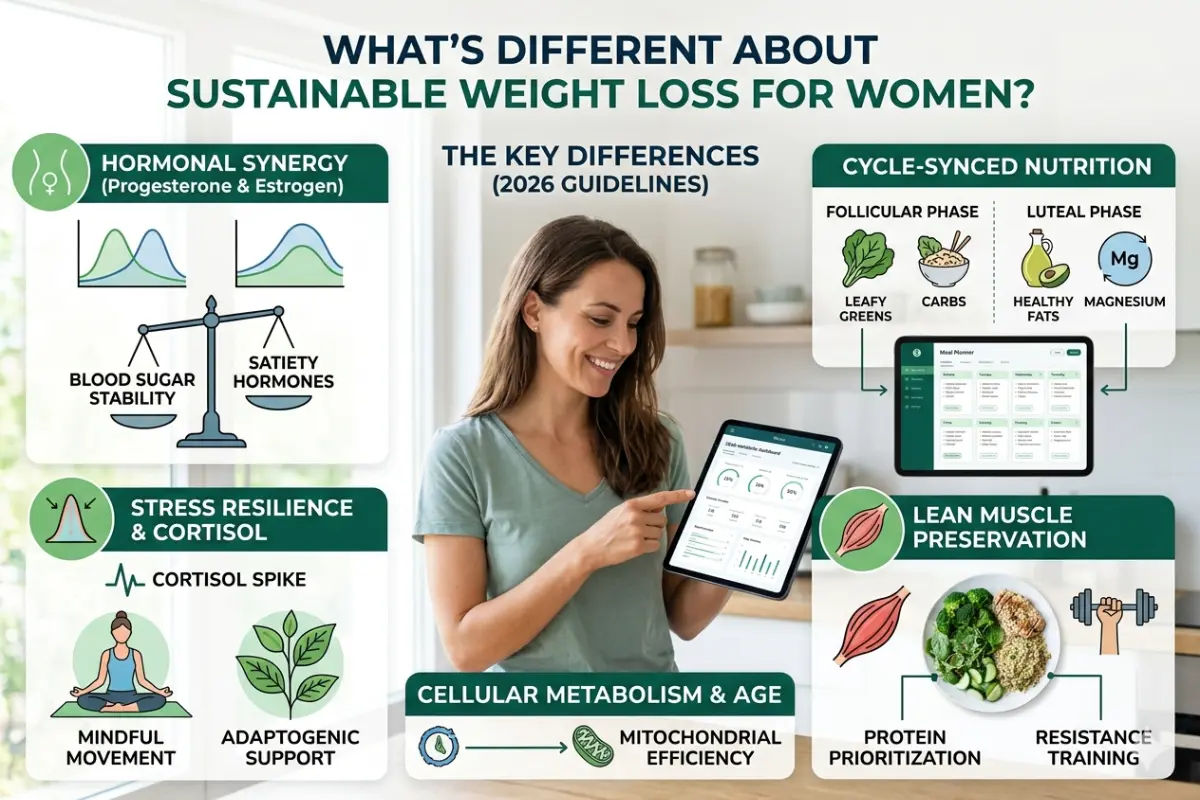
Women’s weight loss physiology has specific variables that most generic guides skip entirely.
Hormones shift the equation. As estrogen declines with age, muscle mass drops faster, Kettering Health research puts it at 3-8% muscle loss per decade after age 30, accelerating around menopause. Lower muscle mass means a slower resting metabolism. Cortisol rises. Insulin sensitivity decreases. Fat redistributes toward the abdomen.
Resistance training is non-negotiable. World Health Net research confirms that women often maintain lean mass more effectively than men during caloric deficits, especially when combining resistance training with a protein-forward diet. Two days of full-body weight training per week can protect metabolism and bone density simultaneously.
Bone density matters during weight loss. Aggressive calorie restriction without adequate calcium, vitamin D, and protein can accelerate bone loss. PMC research links this to declining estrogen and reduced nutrient absorption efficiency during weight loss phases in older women.
The goal for women: lose fat, keep muscle, protect bone. That’s a different priority stack than simply chasing scale numbers.
Our guide on maintaining weight loss over time covers the long-term habits that support this.
Do “shortcuts” like HCG diets or hypnosis actually work?
Honestly? Some show short-term numbers. None addresses the root cause.
HCG (Human Chorionic Gonadotropin) diet protocols are severely calorie-restricted, usually below 800 calories per day, with HCG injections claiming to redirect fat burning. The FDA has found no evidence that HCG itself aids weight loss. What you’re responding to is the extreme restriction. And extreme restriction triggers adaptive thermogenesis, muscle breakdown, and rebound weight gain.
Hypnosis and psychological techniques can genuinely help, but as tools to support behavior change, not as standalone solutions. They work best when the foundational habits (protein intake, sleep, daily movement, blood sugar management) are already in place.
The same applies to GLP-1 medications like semaglutide, which have legitimate clinical use for people with obesity-related metabolic disease. Optimized Health’s 2026 review is clear: these medications are most effective when used as part of a comprehensive medical plan with lifestyle foundations already in place. A prescription doesn’t override poor sleep or no protein.
If you’re considering medication, our guide on how physicians choose weight loss medication gives a clear-headed breakdown.
The sustainable weight loss action plan
Week 1 priorities:
Set a protein target first. Aim for 1.2-1.5g per kg of bodyweight per day, spread across 3 meals. Chicken, eggs, fish, legumes, Greek yogurt.
Build your walking baseline. Track your current daily steps for 3 days. Then add 1,500 steps per day above that average for the next 2 weeks. No gym required.
Fix one meal. Pick lunch. Apply the plate method: half vegetables, quarter protein, quarter slow carb. Build one or two high-protein lunch options you actually enjoy eating (grilled chicken salad, lentil soup, Greek yogurt with vegetables).
Set a sleep schedule. Same bedtime, same wake time, 7 days. Give it 10 days before judging the effect.
Goal-setting that works: Set behavioral targets, not scale targets. “I will eat 120g of protein today” is trackable and within your control. “I will lose 2 pounds this week” depends on water, hormones, and variables you can’t manage daily.
Conclusion
Sustainable weight loss in 2026 is a biological project, not a willpower test. The research is clear: losing 5-10% of body weight improves cardiovascular markers, blood sugar, and inflammation. Protein preserves the muscle that keeps your metabolism running. Sleep regulates the hormones that control hunger and fat storage. Daily movement burns more calories than most people realize. Portion control prevents the blood sugar crashes that sabotage good intentions every afternoon.
Speed gets headlines. Sustainability gets results.
Tick the checklist below and start with the one habit that feels most achievable this week. One good habit beats five abandoned ones every time.
Frequently Asked Questions
How much weight can I realistically lose per week without losing muscle?
Public health guidelines recommend a daily deficit of 500-750 calories, which produces roughly 0.5-0.7kg of weight loss per week. Going faster than this increases the risk of muscle loss, especially without adequate protein intake. Research in Clinical Nutrition ESPEN shows that maintaining protein above 1.3g per kg of body weight significantly reduces that risk. Slow and consistent preserves the metabolic engine that keeps weight off long-term.
Does it matter when I eat, or just what I eat?
Both matter. Nutrisense research shows that meal timing affects insulin sensitivity, with earlier meals in the day producing better metabolic outcomes for many people. Eating the same carbohydrate load in the evening can produce a higher glucose spike than eating it in the morning. That said, consistency and food quality matter more than perfect timing. Start with what you eat, then optimize when.
Why am I always tired on a diet, and how do I fix it?
Fatigue on a diet usually has 3 causes: too few calories overall, insufficient protein (which the body responds to by breaking down muscle), or blood sugar crashes from high-carb, low-protein meals. Fix it by ensuring you hit your protein target, pairing carbohydrates with protein or fat, and not cutting calories below 1,400-1,500 per day without medical supervision. Poor sleep compounds all of this, Scientific American’s research shows sleep deprivation promotes muscle loss and fat gain even with the same diet.
Is walking really enough exercise for weight loss?
Walking alone won’t maximize body composition, but it’s more powerful than most people assume. It increases NEAT, keeps cortisol low, improves insulin sensitivity, and has no recovery cost. The American Journal of Physiology identifies NEAT as a major variable in total daily energy expenditure. Combining 8,000-10,000 steps per day with 2 resistance training sessions per week is a highly effective combination for sustainable fat loss.
What’s the biggest nutrition mistake that keeps people from losing weight?
Underestimating hidden sugar in processed foods. Research cited by Nutrola’s 2026 review shows people underestimate their calorie intake by 30-50% on average, much of that from sugar in “healthy” products like flavored yogurts, protein bars, granolas, and diet drinks. Reading ingredient labels and prioritizing whole foods over packaged alternatives is one of the highest-leverage moves you can make.
About The Author:
Robert W. Bache (aka “Medicare Bob”) is the founder and Chief of Sales for Senior Healthcare Direct, an AmeriLife company. As an independent insurance broker, Bache and his team provide unbiased assistance to current and soon-to-be Medicare beneficiaries, helping them navigate, compare, and find the right Medicare plan options. Bache’s agency, Senior Healthcare Direct, works with 30-plus companies and has served tens of thousands of clients in more than 40 states.
Disclaimer: This content is for informational purposes only and is not a substitute for professional medical advice.