
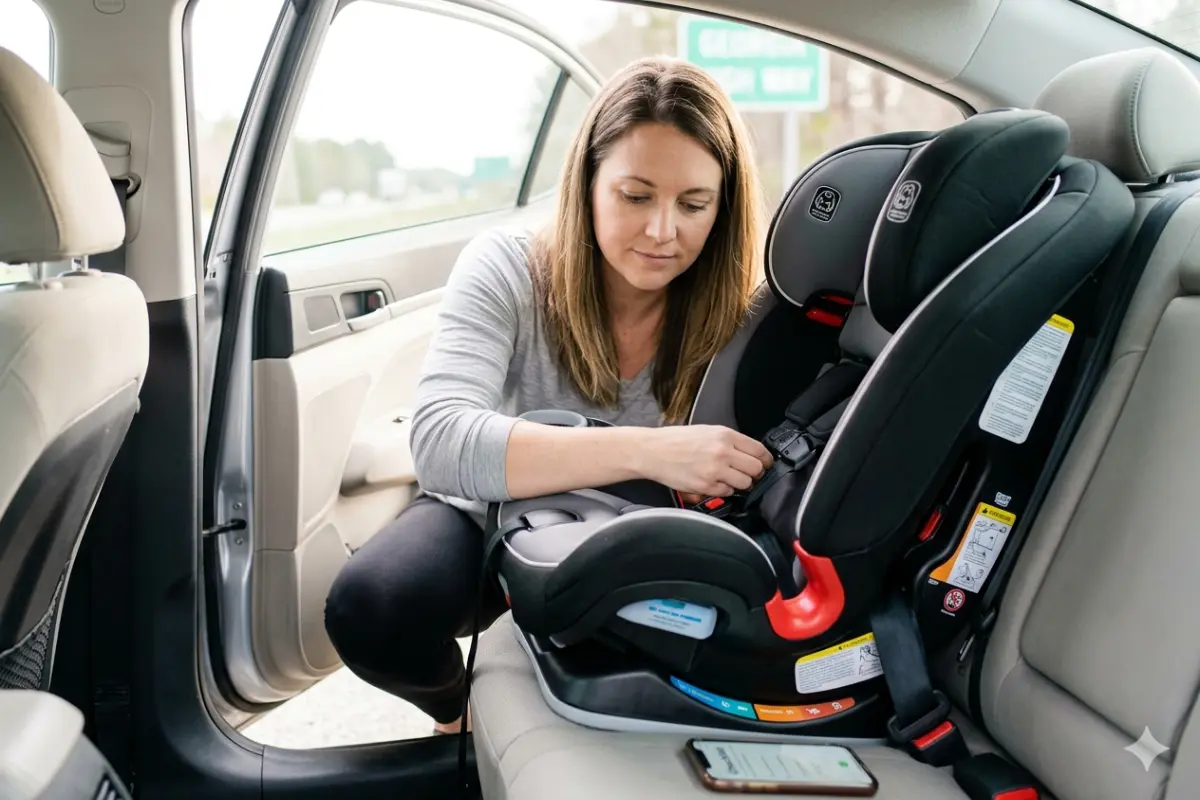
TL;DR: After a car accident in Georgia with your child on board, replacing the car seat is often the safest move. NHTSA recommends replacement after any moderate or severe crash, and most manufacturers go even further. Georgia law requires children to ride in a properly functioning restraint. Insurance typically covers the replacement cost. This guide explains exactly when to replace, how to file a claim, and what to look for in a new seat.
After a car accident in Georgia with your child in the vehicle, your first concern is always their safety. Once that is seen to, another question comes up: Can you still use the car seat, or does it need to be replaced?
Even if the seat looks fine, crash forces cause damage you can’t see, and that damage could affect how well the seat protects your child in the future. Let’s take a closer look at when you should replace a car seat or booster seat, what Georgia law says, and how insurance or personal injury claims should factor into your decisions.
Why Car Seat Safety Is Critical After a Crash
Car seats are designed to absorb crash energy in a single impact. After that, even if there’s no visible damage, the seat might not offer the same protection as before. Internal stress fractures, compressed padding, or weakened harness components can go unnoticed, but still matter in a future collision.
The National Highway Traffic Safety Administration (NHTSA) recommends replacing the seat after most moderate or severe crashes, but many car seat manufacturers go even further, advising replacement after any and all car accidents, regardless of severity. And when your child’s safety is on the line, it’s just not worth the risk.
How to Know When a Car Seat Must Be Replaced
Car seats should almost always be replaced after a moderate or severe crash. The only exception is when the crash is considered “minor,” and all five of the following conditions are met:
- The vehicle could be driven away from the scene
- The door nearest the car seat was not damaged
- No one in the vehicle was injured
- The airbags did not deploy
- There is no visible damage to the car seat
If even one of those conditions isn’t met, the NHTSA recommends replacing the seat. When in doubt, check your seat’s manual or contact the manufacturer directly.
Major brands take different positions on this. According to Consumer Reports, Graco says to replace after any crash regardless of severity, Britax says any seat involved in a crash should not be reused, and Chicco recommends erring on the side of caution and replacing after even a minor crash. Checking your specific brand’s guidance is an important step.
What Does Georgia Law Say About Car Seat Replacement After an Accident?
Georgia law doesn’t specifically require car seat replacement after a crash, but it does require that children under 8 be secured in a restraint system that’s appropriate for their age, height, and weight.
If a seat has been compromised, even without visible damage, it may no longer meet that legal standard. Continuing to use it could put your child at risk and potentially open the door to legal liability if another accident occurs.
For most families, the safest (and most legally sound) option is to follow NHTSA guidelines and manufacturer recommendations, both of which generally support replacing the seat after a crash.
How to Inspect Your Car Seat for Safety After a Crash
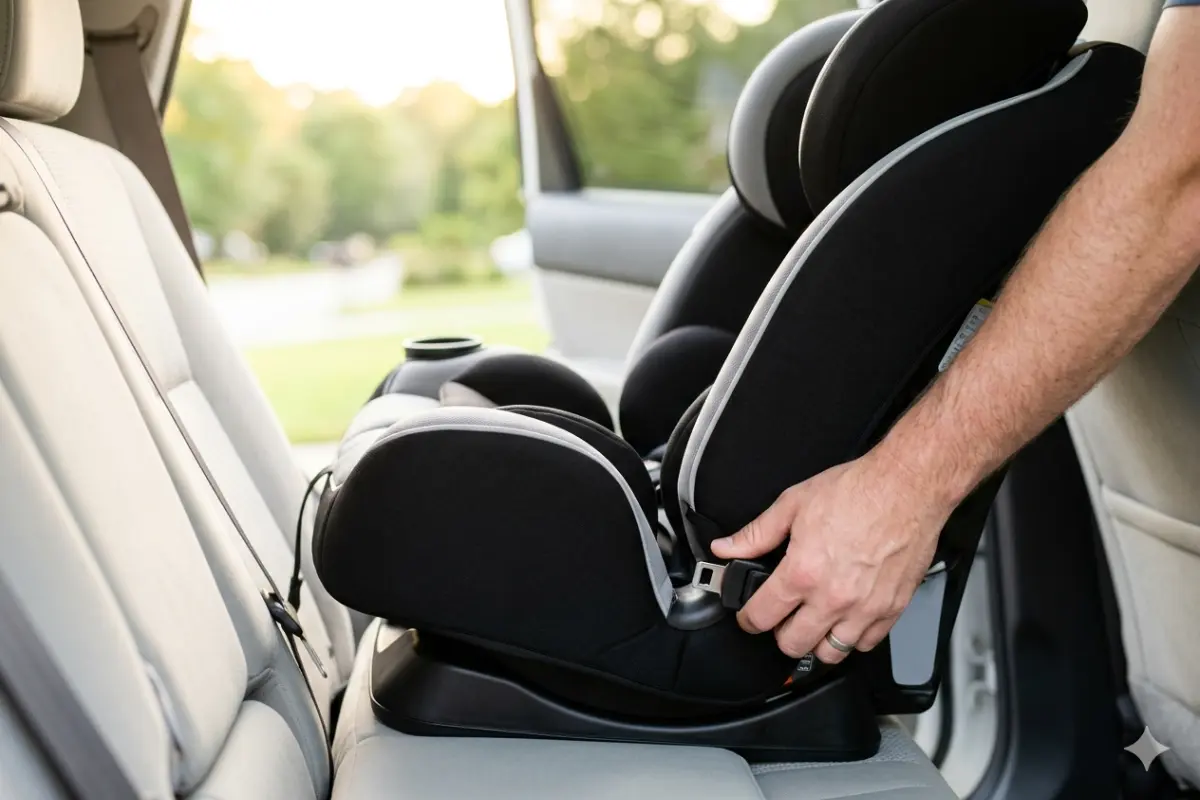
After a crash, a car seat might look fine on the outside but still be unsafe to use. Start by checking for visible signs of damage like cracks in the shell, stress marks, loose harness points, or damaged padding. If any of these are present, the seat should not be reused.
Even if everything appears intact, that doesn’t guarantee it’s safe. Internal components like the energy-absorbing foam or the seat’s structure may have been compromised in ways you can’t see. You will need to disassemble the seat to know for sure, but many are sealed or otherwise not possible to open.
If your seat manual doesn’t provide clear post-crash guidance, contact the manufacturer’s customer service. Many will walk you through inspection steps or confirm whether replacement is necessary.
Insurance Considerations for Car Seat Replacement
If you were involved in a car accident, the cost of replacing a child’s car seat will probably be covered by your insurance, but how it’s handled depends on who was at fault. If another driver was responsible, their insurance should pay for the replacement as part of your property damage claim. If you were at fault or the situation is less clear, your own policy may cover it under collision or comprehensive coverage, depending on your plan.
To strengthen your claim, provide documentation: photos of the seat, the purchase receipt, the model number, and the expiration date. Don’t throw away the seat until the claim is resolved. If the insurer pushes back, a personal injury attorney can help make sure the cost of a replacement car seat or booster seat is fully included in your damages.
Tips for Choosing a Safe Replacement Car Seat
Replacing a car seat is your opportunity to make sure your child is in the right seat for their current age and size:
- Rear-facing car seats are safest for infants and toddlers under age 2
- Forward-facing seats with a harness work well for most kids between 2 and 4
- Booster seats are usually appropriate for children 5 to 8, or until they’re big enough for the seat belt to fit properly
Always check the manufacturer’s weight and height limits. Use the NHTSA’s car seat finder tool to confirm you’re choosing the right type for your child’s current size. Avoid buying used seats, which may have hidden crash damage or be past expiration. If you need help, many Georgia fire stations and health departments offer free car seat inspections and fittings.
Need Help After a Car Accident in Georgia? Contact an Experienced Lawyer Today
If you were involved in a car accident in Georgia, especially one that affected your child’s car seat, you could be entitled to more than just vehicle repairs. A properly handled personal injury claim can include the cost of replacing your child’s car seat, medical bills, property damage, and compensation for other expenses.
Unfortunately, insurance companies don’t always make this easy. That’s where knowledgeable personal injury attorneys can step in to make sure you’re treated fairly and nothing important gets left out of your claim.
If you’re unsure about your rights or you’ve had trouble getting your car seat replacement covered, don’t hesitate to reach out. A brief consultation with an attorney can help protect your child’s safety and your peace of mind.
Frequently Asked Questions
Does Georgia law require you to replace a car seat after a crash?
Georgia doesn’t have a specific law requiring car seat replacement after a crash. However, Georgia law does require children under 8 to ride in an age-appropriate restraint system. If a car seat has been structurally compromised by a crash, it may no longer meet that standard. Following NHTSA guidelines and your seat’s manufacturer recommendations is the safest and most legally sound approach after any car accident.
What are the NHTSA criteria for a minor car crash?
According to NHTSA, a crash qualifies as minor only when all five conditions are met: the vehicle drove away from the scene, the door nearest the car seat was undamaged, no one in the vehicle was injured, the airbags did not deploy, and there is no visible damage to the seat. If even one of those conditions is not met, NHTSA recommends replacing the seat. When in doubt, always check with your seat’s manufacturer directly.
Will my insurance pay for a replacement car seat in Georgia?
In most cases, yes. If another driver caused the crash, their liability insurance should cover the seat as part of your property damage claim. If you were at fault or fault is unclear, your own collision or comprehensive coverage may apply. Document everything: photograph the seat, keep your purchase receipt, and note the model number and expiration date. If your insurer disputes the claim, a Georgia personal injury attorney can help ensure it’s included in your full damages.
Can a car seat that looks undamaged still be unsafe after a crash?
Yes. Internal components like energy-absorbing foam and structural elements can be weakened in a crash without any visible signs of damage. Many car seat shells are sealed and cannot be fully inspected at home. Consumer Reports notes that even major manufacturers acknowledge visible inspection alone is not sufficient to confirm a seat is safe after a collision. When in doubt, contact the manufacturer or replace the seat.
What should I look for when choosing a replacement car seat after an accident in Georgia?
Choose a seat appropriate for your child’s current age, weight, and height. Rear-facing seats are recommended for children under 2. Forward-facing seats with a harness suit most children aged 2 to 4. Booster seats are typically right for children aged 5 to 8. Always check manufacturer weight and height limits, and avoid second-hand seats which may carry hidden crash damage. Use the NHTSA car seat finder tool to confirm the right type for your child’s size.
About The Author:
John Curtain is a specialist law writer who works on key areas of automotive law, personal injury, and other areas in the industry. He enjoys writing about many different subjects and sharing his experience across 10 years of knowledge.