Home coffee roasting has become increasingly popular among coffee enthusiasts who want greater control over flavor, freshness, and quality. Roasting coffee at home allows individuals to customize their coffee experience while ensuring that beans are used at their peak freshness. While the process may seem intimidating initially, many beginners find that home roasting is both rewarding and surprisingly accessible. Understanding the basics of roasting can help coffee lovers produce flavorful coffee while tailoring roast levels to their personal preferences. With the right techniques and attention to detail, home roasting can become an enjoyable and cost-effective hobby.
Why Should You Roast Coffee at Home?
Home roasting gives you three things store-bought coffee can’t: peak freshness, full control over roast level, and the freedom to try beans you’d never find on a shelf. You decide when the roast stops. You decide how light or dark your cup tastes.
One of the biggest advantages of home roasting is freshness. Coffee begins losing some of its aromatic qualities after roasting, which means freshly roasted beans often provide a superior flavor experience. Home roasting also allows complete control over roast levels, from light to dark. Additionally, many coffee enthusiasts enjoy the opportunity to experiment with different bean varieties and flavor profiles. The ability to customize every aspect of the process makes home roasting appealing to many consumers.
How Do You Pick Quality Green Coffee Beans?
Good roasting can’t fix bad green coffee. Buy from suppliers who publish the origin, the processing method, and the harvest year. Learn which regions you like. Then match your beans to your taste instead of buying whatever is cheapest that week.
The final product’s quality starts with the quality of the green coffee beans. Selecting beans from reputable sources helps ensure better flavor and consistency. Different bean origins offer unique characteristics that influence the final cup. Researching regions, processing methods, and tasting notes can help beginners identify beans that match their preferences. Roasting can only enhance the qualities already present in the raw beans. Strong results start with quality ingredients.
What Actually Happens to Coffee Beans During Roasting?
Roasting drives water out of the bean and triggers chemical reactions that build flavor. Light roasts keep more of the bean’s origin character. Dark roasts trade that character for bolder, heavier flavors. Time and temperature are the two levers that decide where you land.
Roasting transforms green coffee beans through the application of heat. As beans roast, moisture evaporates, chemical reactions occur, and flavor compounds develop. Different roast levels produce different flavor profiles. Light roasts generally retain more of the bean’s original characteristics, while darker roasts create bolder and more intense flavors. Understanding how temperature and time affect roasting outcomes helps individuals make informed adjustments. Knowledge is an important part of achieving consistent results.
What Equipment Do You Need to Roast Coffee at Home?
You need a heat source, a way to keep beans moving, and a way to cool them fast. That’s it. Dedicated roasters, stovetop drums, and certain air popper setups all work. Machines that let you watch temperature and adjust heat will make you better, faster.
Home roasting can be performed using several methods, including dedicated coffee roasters, stovetop devices, and certain air-popper systems designed for roasting applications. Regardless of the method chosen, consistency and control are important. Equipment that allows users to monitor temperature and roasting progress often produces better results. Beginners do not necessarily need expensive equipment, but investing in reliable tools can improve the overall experience and outcome.
Where Should You Buy Green Coffee in Bulk?
Many home roasters look for affordable wholesale coffee beans suppliers when purchasing green coffee in larger quantities. Wholesale purchases can reduce costs while providing access to a wider range of bean varieties. Buying in larger amounts often makes experimentation more economical for enthusiastic home roasters. Careful sourcing helps ensure both value and consistent quality throughout the roasting process. Smart purchasing decisions contribute to long-term success.
How Much Green Coffee Should You Actually Buy at Once?
Buy only what you’ll roast in six to eight months. Green coffee isn’t shelf-stable forever. Most specialty green holds peak quality for roughly six to twelve months after arrival, then drifts toward papery and flat. Three small lots beat one giant sack.
Green Coffee Has a Clock On It
Green coffee is a raw seed, not a pantry staple. It ships at a moisture level that the Specialty Coffee Association places at roughly 10 to 12 percent. In a dry, heated house, that moisture slowly leaves. It doesn’t come back.
Roasters call the result “past crop.” It tastes like paper or cardboard. Royal Coffee’s team notes that these aged flavors pull down cup quality scores and get worse with moisture loss and poor storage.
Your Roast Profile Has to Age With the Bean
Here’s the part experienced roasters know. Roast the same lot in January, then again in August. It won’t behave the same way.
Drier beans need less heat. First crack arrives earlier. Your “perfect recipe” quietly stops working.
So recalibrate every lot every couple of months. If a bag you’ve roasted for months suddenly cracks 40 seconds early, blame the coffee, not the machine.
Storage That Actually Protects Your Money
| Storage method | Protection level | Best for |
|---|---|---|
| Jute or burlap sack | Low. Breathes freely | Coffee you’ll roast within weeks |
| Sealed barrier liner (GrainPro style) | High. Blocks moisture movement | Your normal working stock |
| Airtight food-grade bucket | Good, if truly sealed | Repacked smaller lots |
| Vacuum or freezer storage | Highest, if done right | Rare lots you want to archive |
Stable temperature beats cold temperature. One controlled storage study found green coffee held at 20°C aged fastest over twelve months.
Keep beans off concrete floors and out of sunlight. Keep them away from anything with a strong smell. Green coffee soaks up odors.
A Simple Way to Size Your Order
- Count how much roasted coffee you brew each week.
- Multiply by 30 to cover about seven months.
- Add roughly 15 percent, because beans lose weight during roasting.
- Split that total across two or three different lots.
Someone brewing 250g a week needs about 8.5kg of green for seven months. That’s three 3kg bags, not one 10kg sack.
What you gain: Bulk buying carries a flavor clock, not just a storage cost. Buy to your drinking speed, not to the discount.
What Are First Crack and Second Crack?
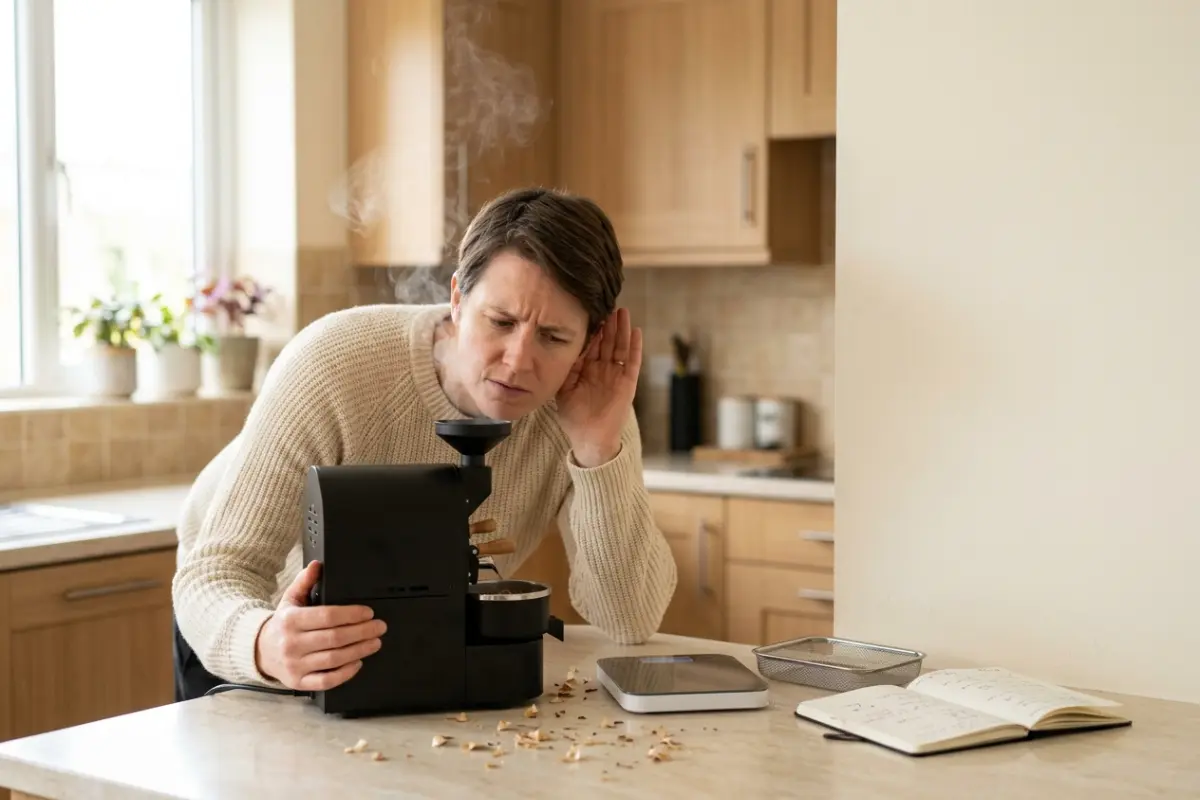
First crack is a popping sound that marks the start of real roast development. Second crack is a quieter, sharper crackle that arrives later and signals dark roast territory. Most light and medium roasts finish somewhere between the two.
During roasting, beans produce audible cracking sounds known as the first crack and second crack. These milestones help indicate roast development. Many lighter roasts are finished shortly after the first crack, while darker roasts continue toward or into the second crack. Learning to recognize these stages allows greater control over the final flavor profile. Careful observation helps improve consistency from batch to batch. Experience gradually builds confidence in managing roast levels.
Why Does Cooling Speed Matter So Much?
Beans keep roasting from their own stored heat after they leave the machine. Fast cooling locks in the roast level you chose. Slow cooling pushes the beans past it. Aim to cool in a few minutes, not ten.
Once the desired roast level is reached, beans should be cooled quickly to stop further roasting. Effective cooling helps preserve the intended flavor profile and prevents overdevelopment. Many home roasters use cooling trays or other methods that rapidly reduce bean temperature. Consistent cooling is an important part of the overall roasting process. Proper technique contributes to better flavor and more predictable results.
How Long Should You Rest Coffee Before Brewing?
It depends on roast level and brew method. Filter coffee is often good after 4 to 8 days. Espresso usually needs longer, often 7 to 14 days for lighter roasts. Dark roasts release gas fastest, so they’re ready soonest.
Freshly roasted coffee often benefits from a short resting period before brewing. During this time, gases produced during roasting gradually dissipate. Many coffee enthusiasts find that flavor improves after allowing the beans to rest for several days. Patience during this stage often results in a more balanced cup. Understanding the importance of resting helps maximize the quality of home-roasted coffee.
Keep Detailed Notes
Successful home roasters often maintain records of bean origins, roasting times, temperatures, and tasting results. Detailed notes make it easier to repeat successful batches and refine roasting techniques over time. Documentation helps transform roasting from guesswork into a more predictable process. Consistent tracking accelerates learning and improvement. Good records support better results with every batch.
Your Advanced Workflow Checklist
- Fit a thermocouple and log every roast with software like Artisan.
- Record ambient temperature and, if possible, watts used.
- Weigh green and roasted every time, and track weight loss percent. Sweet Maria’s notes that readings above roughly 18 percent usually mean you’ve gone past a full city roast or you’re stripping moisture with too much airflow.
- Reduce heat before first crack, not after it.
- Cup the same coffee at three rest intervals before judging the profile.
- Change one variable per batch, and write down what you changed.
What you gain: Roasting isn’t a recipe you follow. It’s a heat curve you steer, and your most important moves happen before the event you were told to wait for.
Final Thoughts on Roasting Coffee at Home
Home coffee roasting offers a unique opportunity to enjoy exceptional freshness while customizing flavor to personal preferences. By selecting quality beans, understanding roast development, using appropriate equipment, and refining techniques through practice, coffee lovers can create delicious coffee from the comfort of home. With patience and attention to detail, home roasting can become a rewarding hobby that delivers both satisfaction and excellent coffee.
About The Author:
Jennifer is a certified cooking enthusiast and a legit photographer from Ohio, USA. She is a food lover and thus makes blogs about it at Imaddictedtocooking, which includes her own photos for the demonstration of how the recipes are made. Contact her at @jenniferimaddi1