
Last updated: 4th May, 2026
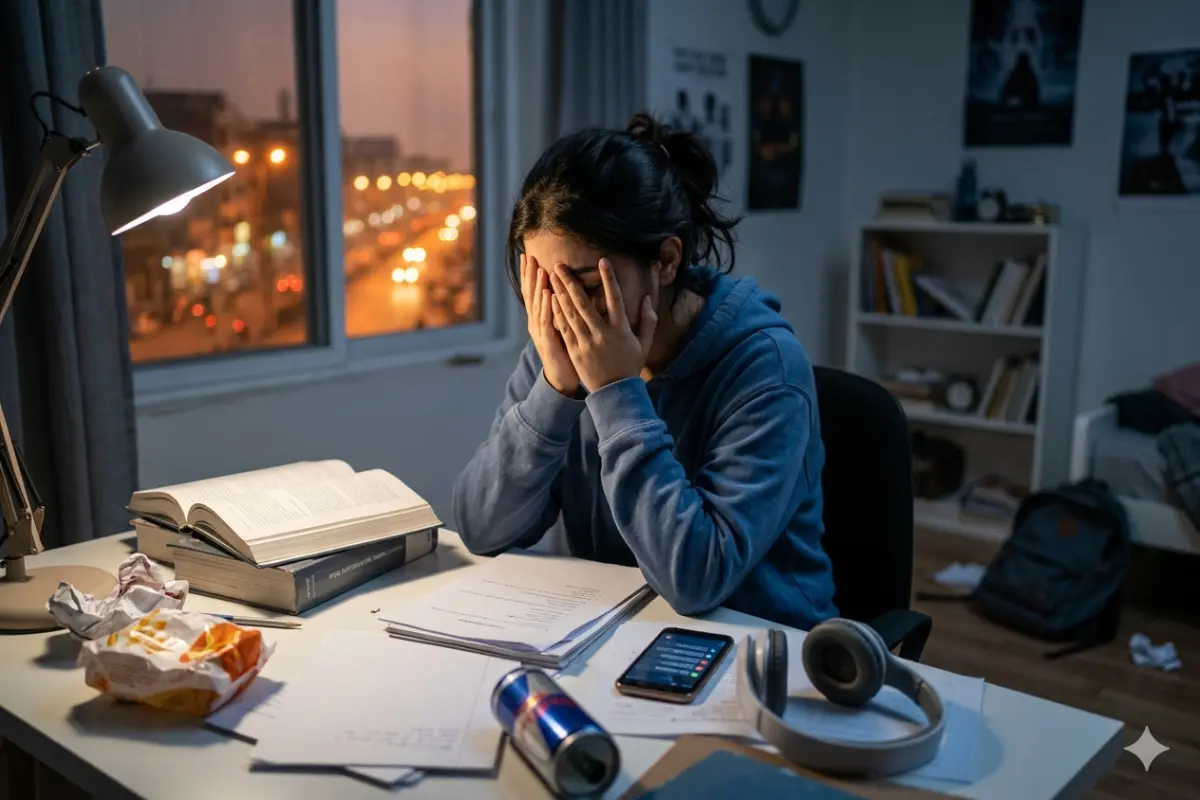
TL;DR: Nearly 83% of US teenagers name school and grades as their top stressor, but the signs of teen stress are easy to confuse with normal teenage behaviour. This post covers 10 warning signs your teen may be under too much stress, the silent physical signs most parents miss, what is driving teen stress in 2025 and 2026, and exactly what you can do to help. Tick the Silent Signs of Stress in Teens checklist at the bottom to see how many signs apply to your child right now.
Does your teenager seem fine on the surface, but something feels off? You are not imagining it. Over 40% of high school students in the US report persistent feelings of sadness or hopelessness, according to CDC data that has remained stubbornly high into 2025. And fewer than half of all teens today rate their own mental health as excellent or very good.
The hardest part for any parent is knowing the difference between normal teenage moodiness and something that genuinely needs attention. The 10 signs of stress in teens are not always dramatic. Some are loud and visible. Others are quiet and easy to dismiss as just teenage stuff.
This guide covers all of it. We will walk through the 10 signs, the physical symptoms that often get missed, what is fuelling teen stress right now, and the practical steps you can take today to help your child. If you are reading this because something feels wrong, trust that instinct. You know your teenager better than anyone.
How Do You Know If Your Teen Is Stressed or Just Being a Teenager?
Teen stress becomes a concern when emotional or behavioural changes are persistent, intense, and getting in the way of normal daily life. Occasional moodiness, irritability, or tiredness is expected during adolescence. But when those feelings last for weeks, affect sleep or school performance, and leave your teenager unable to enjoy the things they used to love, that is the line between normal and too much.
The challenge is that teenagers are not always going to tell you they are struggling. They may not even know themselves. Research shows that teens often do not recognise when stress has crossed into territory that needs support. That is why it falls to parents to notice the signs before a teenager can name what they are feeling.
Here is what to watch for.
10 Signs Your Teen Is Under Too Much Stress
Sometimes it is hard to tell what is normal and what is not. There can be both emotional and behavioural changes that tell you, as a parent, to pay more attention to your child’s daily behaviour. But sometimes things are going on that are not visible at all.
If your teenager is showing any of these signs, they may be carrying more stress than they should be expected to handle alone.
1. Expressing Sadness or Crying for No Apparent Reason
Random crying can signal something more serious than hormones. If your child seems sad regularly, or cries for reasons that are not clear to you, and this happens over more than just a short period, they may be dealing with stresses they have not told you about. It is worth gently opening the door to that conversation.
2. Easily Irritable or Annoyed
If you feel like you are walking on eggshells every time you talk to your teenager because you never know when they might get angry or upset, they are most likely dealing with too much stress. This is the time to take them by the hand and get them some support, whether through stress management techniques they can practise daily, counselling, or a professional who can teach them how to handle what is overwhelming them.
3. Loss of Interest in Things They Once Loved
While retreating to their room and watching TV or playing video games is common for teenagers, losing interest in even those things is a different matter. If you cannot get your child to engage with anything they normally enjoy, you may need to step in and get them some help.
4. Demonstrations of Low Self-Esteem
Occasional feelings of not being good enough are normal in the teenage years. But when those feelings rule your child’s days and stop them from being able to lead a healthy, connected life, it is time to help them learn how to build back their self-esteem and sense of worth.
5. Inability to Handle Rejection or Failure
Everyone faces rejection and failure. It is our job as parents to help our children understand these experiences and use them as learning moments. If your teenager is extremely sensitive to failure, constantly needs reassurance, or falls apart at any sign of not being good enough, something deeper is driving that sensitivity.
6. Negative Thoughts About the Future
It is normal for teenagers to have concerns about school, college, or what their future looks like. What is not normal is when they frequently describe their life, current and future, as hopeless and grim. If they cannot see possibilities ahead, or they are frequently talking about death in general, their own death, or suicide, you must get them professional help immediately. Do not wait.
7. Behavioural Changes in Sleep Patterns
Teenagers need extra sleep while their bodies grow and change. But if that sleep becomes excessive, or they are unusually tired for long stretches and complain of no energy, stress may be the cause. This can also work the other way: if your teenager cannot sleep at all. Sleeping too much or too little can both be signs that they need help coping with what they are carrying.
8. Engaging in Harmful Behaviours or Acting Out
The occasional attitude from a teenager is quite common. But if their acting out involves risky or consistently disruptive behaviour, they may need more help than you can provide alone. If you notice signs of self-harm such as cutting, burning, excessive piercing, or compulsive tattooing, get immediate help. Do not let it reach the point of a suicide attempt. Get your child support for the stresses they are dealing with, even if those stresses seem small to you.
9. Changes in Their Close Friends and Crowds
It is perfectly normal to outgrow friendships and make new ones. But sudden and significant changes deserve a closer look. If your normally social teenager suddenly wants to be isolated, there is a reason. If they seem to have found a new crowd overnight that concerns you, watch for signs of drug and alcohol use and get help before it becomes a serious problem.
10. Lack of Care About Themselves and Their Future
When a teenager stops caring about how they look, whether they go to school, what their grades are, or what their future holds, that is a significant warning sign. This kind of withdrawal and self-neglect can show up quietly at first. But it often signals that a teenager has become too overwhelmed to invest in their own life.
What Are the Silent Physical Signs of Teen Stress?
Teen stress does not only show up in behaviour and emotions. It often shows up in the body first. Physical symptoms like chronic headaches, stomachaches, and muscle tension are common signs of stress in teenagers that get missed because they look like medical problems rather than emotional ones.
According to Johns Hopkins Medicine, anxiety and stress symptoms include sleep problems, muscle tension, headaches, and stomachaches. These are the exact complaints that send parents to the GP, but the GP finds nothing wrong. That is often the point where stress should be considered.
Here are the silent physical signs to watch for:
Frequent headaches or migraines. If your teenager is complaining of regular head pain with no clear medical cause, stress may be a factor. Stress manifests in physical discomfort, including persistent headaches, and teens do not always connect the two.
Stomachaches and digestive issues. When people are stressed, their emotions can trigger physical symptoms, including stomach pain. A teenager who regularly comes home from school with a stomachache may not be avoiding school. They may be physically responding to the pressure they feel there.
Chronic fatigue. Tiredness that persists even after a full night of sleep is a recognised physical indicator of chronic stress. Stress can lead to ongoing fatigue and a lack of motivation that looks like laziness from the outside but is something quite different.
Frequent illness. Stress weakens the immune system. A teenager under chronic stress becomes more vulnerable to colds and infections, and getting sick repeatedly can be a sign that the body is under sustained pressure.
Muscle tension and body pain. Tense shoulders, a stiff neck, or muscle aches without physical cause are common in stressed teenagers. The body holds stress as physical tension, especially in adolescents who have not yet learned how to release it.
When these physical complaints are persistent, have no clear medical explanation, and seem to cluster around stressful periods like exam weeks or difficult social situations, stress is the most likely cause.
For more information on how the body signals when it needs a reset, read our guide on signs your body needs a break.
What Is Causing So Much Stress in Teenagers Today?
The biggest causes of teen stress today are academic pressure, social media use, and global uncertainty. Academic pressure is the single largest stressor, with 83% of teenagers naming school and grades as a significant or top source of stress. Social media doubles the risk of poor mental health for teens who spend more than 3 hours per day on it, according to the US Surgeon General. And concerns about the wider world, including climate, political conflict, and now AI, are generating a new layer of anxiety that previous generations did not face.
I have noticed that when teenagers come home from school exhausted every single day, it is rarely just tiredness. It is the accumulated weight of constant performance pressure: the pressure to get perfect grades, make the team, build a social media presence, and figure out what they are going to do with their entire life, all at once. That is a genuinely enormous amount to carry.
Here is the picture behind the numbers. The APA’s 2024 Stress in America report found that nearly 50% of youth experience anxiety or depression directly because of their stress. Between 2016 and 2020, childhood anxiety grew by 29% and childhood depression grew by 27%, and those trends have not reversed.
The APA’s 2025 report added a new dimension: 62% of parents with teenagers aged 13 to 17 reported increased stress related to AI, including concerns about what it means for their children’s education and future employment. That concern is filtering down to teenagers themselves.
Social media plays a double role. It connects teenagers and has real social value. But it also asks them to compare their internal experience with everyone else’s carefully curated external presentation of themselves. That comparison is one no teenager can win. Teens who spend more than 3 hours per day on social media face double the risk of poor mental health outcomes, according to the US Surgeon General’s advisory.
When Should You Be Worried? Red Flags That Need Immediate Action
Seek professional help immediately if your teenager talks about suicide, makes a suicide plan, talks about death frequently, or engages in self-harm. These are not phases. They are emergencies. Most other stress signs call for a watchful, supportive response over time. These do not. Act the same day.
The WHO reports that suicide is the third leading cause of death among people aged 15 to 29. That statistic exists because too many families waited to see if things would improve on their own. When a teenager is showing these signs, the right move is always to get professional support immediately.
Beyond these red flags, consider seeking professional help when:
- Signs have been present for more than two weeks without improvement
- Your teenager cannot manage basic daily tasks, including school, eating, and hygiene
- They have completely withdrawn from all friends and family
- You notice signs of drug or alcohol use as a coping mechanism
- Your gut is telling you something is seriously wrong
You can start with your family doctor, a school counsellor, or by calling the 988 Suicide and Crisis Lifeline (call or text 988 in the US) if the situation is urgent.
Our complete stress management guide covers the full spectrum of stress response and when professional support is the right step.
How Can You Help a Stressed Teenager? A Parent Action Guide
The most important thing you can do for a stressed teenager is make them feel heard without immediately trying to fix everything. Most teenagers shut down when a parent jumps straight to solutions. They need to feel like their experience is valid first.
Here are six actions that work, backed by clinical guidance:
1. Listen more than you talk. When your teenager opens up, resist the urge to solve the problem immediately. Providing a safe space for teens to vent without judgment is one of the most powerful things a parent can do. Sometimes being heard is the support they need.
2. Model healthy stress responses yourself. Teenagers are still learning from their parents even when they act like they are not. When you are feeling stressed, talk about it out loud and name the coping skill you are using. “I’m stressed about this deadline. I’m going to take a 10-minute walk before I tackle it.” This teaches the skill by example.
3. Protect their sleep. Teens need at least 8 hours of sleep a night, and poor sleep makes every aspect of stress worse. Limiting screens an hour before bed is one of the most evidence-backed interventions available to parents.
4. Encourage movement, not just structured exercise. Physical activity is one of the most effective natural stress relievers available to teenagers. It does not have to be a sport. Activities like yoga, hiking, biking, or even a regular walk consistently reduce stress hormones and improve mood.
5. Limit social media exposure thoughtfully. This does not have to be a battle. Help your teenager understand the comparison trap that social media creates, and agree on boundaries around daily use together. Teaching teens to be savvy digital consumers is more effective long-term than just taking the phone away.
6. Know when to involve a professional. There is no shame in getting help. Only 19 to 20% of teenagers with depression receive treatment that meets minimum quality standards, which means the vast majority of struggling teens get no real support. A therapist, school counsellor, or paediatrician can make a transformative difference.
For more specific strategies to use at home, read our full guide on helping your teen cope with pressure.
Silent Signs of Stress in Teens: Tick the Checklist
Use this checklist to see how many signs of stress currently apply to your teenager. Tick each one that has been present for two weeks or more.
Emotional and behavioural signs:
- Crying or expressing sadness for no clear reason
- Unusual irritability, anger, or emotional outbursts
- Loss of interest in activities they used to enjoy
- Low self-esteem or constant negative self-talk
- Extreme sensitivity to failure or rejection
- Negative or hopeless thoughts about the future
- Withdrawing from friends and family
- Sudden changes in friend groups
- Risky or disruptive behaviour
- General lack of care about their future
Physical and silent signs:
- Frequent unexplained headaches or migraines
- Regular stomachaches or digestive complaints
- Chronic tiredness that sleep does not fix
- Getting sick more often than usual
- Muscle tension, stiff neck, or unexplained body aches
- Significant changes in appetite or weight
- Sleeping too much or too little
- Complaints of dizziness or a racing heart
If you ticked 3 or more: Talk to your teenager this week. Open the conversation gently without pressure.
If you ticked 5 or more: Consider reaching out to your child’s school counsellor or your family doctor in the next few days.
If you ticked any of the red flag signs (self-harm, talk of death or suicide): Seek professional support today.
Conclusion
Stress in teenagers is not a phase to wait out. It is a signal that deserves your attention. The 10 signs in this post are not a diagnosis. They are an invitation to look more closely at your child and ask how they are really doing.
Three things to remember:
First, the earlier you notice and respond to stress signs, the easier they are to address.
Second, your teenager does not need you to fix everything. They need you to be present, consistent, and non-judgmental.
Third, getting professional help is not a last resort. It is often the single most useful thing a parent can do.
Go back to the checklist above and tick off the signs that apply to your teenager right now. If you are seeing several of them, that checklist is your starting point for the conversation.
For a complete framework of stress management strategies you can use together as a family, our complete stress management guide covers every approach from daily habits to when to seek professional care.
You are not overreacting. You are paying attention. That is exactly what your teenager needs.
Frequently Asked Questions
What are the most common signs of stress in teenagers?
The most common signs of stress in teenagers include persistent sadness or crying, irritability and mood swings, loss of interest in activities they previously enjoyed, changes in sleep patterns, and withdrawal from friends and family. Physical symptoms like frequent headaches and stomachaches are also common but often missed. Over 40% of high school students in the US report persistent feelings of sadness or hopelessness, according to CDC data, and many of these students are carrying stress that goes unrecognised by the adults around them.
Can stress in teens cause physical symptoms like headaches and stomachaches?
Yes. Stress and anxiety regularly trigger physical symptoms in teenagers, including headaches, stomachaches, muscle tension, and fatigue, according to Johns Hopkins Medicine. When these symptoms have no clear medical cause and cluster around stressful periods like exam weeks or social conflict, stress is the most likely explanation. Chronic stress also weakens the immune system, making stressed teenagers more susceptible to frequent colds and infections.
How is normal teenage moodiness different from stress overload?
Normal teenage moodiness is temporary, tied to specific situations, and does not significantly affect daily functioning. Stress overload is persistent, often present for weeks at a time, and interferes with sleep, school performance, friendships, and the ability to enjoy life. Teens experiencing stress overload often cannot identify a single cause for how they feel, because the weight is cumulative rather than tied to one event. The key question to ask is: Is this affecting their daily life in a consistent way?
When should a parent seek professional help for a stressed teenager?
Seek professional help immediately if your teenager shows signs of self-harm, talks about suicide or death, or has made a suicide plan. Beyond these red flags, consider professional support if stress signs have persisted for more than two weeks, if your teenager cannot manage basic daily tasks, or if they have withdrawn completely from friends and family. Only 19 to 20% of teenagers with depression receive quality mental health treatment, which means the majority of teenagers who need help do not get it. Early intervention consistently produces better outcomes.
What are the biggest causes of stress in teenagers today?
The three biggest causes of teen stress today are academic pressure, social media, and uncertainty about the future. Academic pressure is the single largest stressor, with 83% of teenagers identifying school and grades as a top source of stress. The US Surgeon General has warned that teens spending more than 3 hours daily on social media face double the risk of poor mental health outcomes. The APA’s 2025 Stress in America report also identified AI-related anxieties about education and future employment as a significant new stressor for teenagers and their families.
About The Author:
Elena Swan is a freelance health and wellness writer specializing in mental illness. She likes researching complex health topics and presenting the information in a way that everyday people can understand so they can apply it to their own lives. View her portfolio at elenaswanwrites.com.